
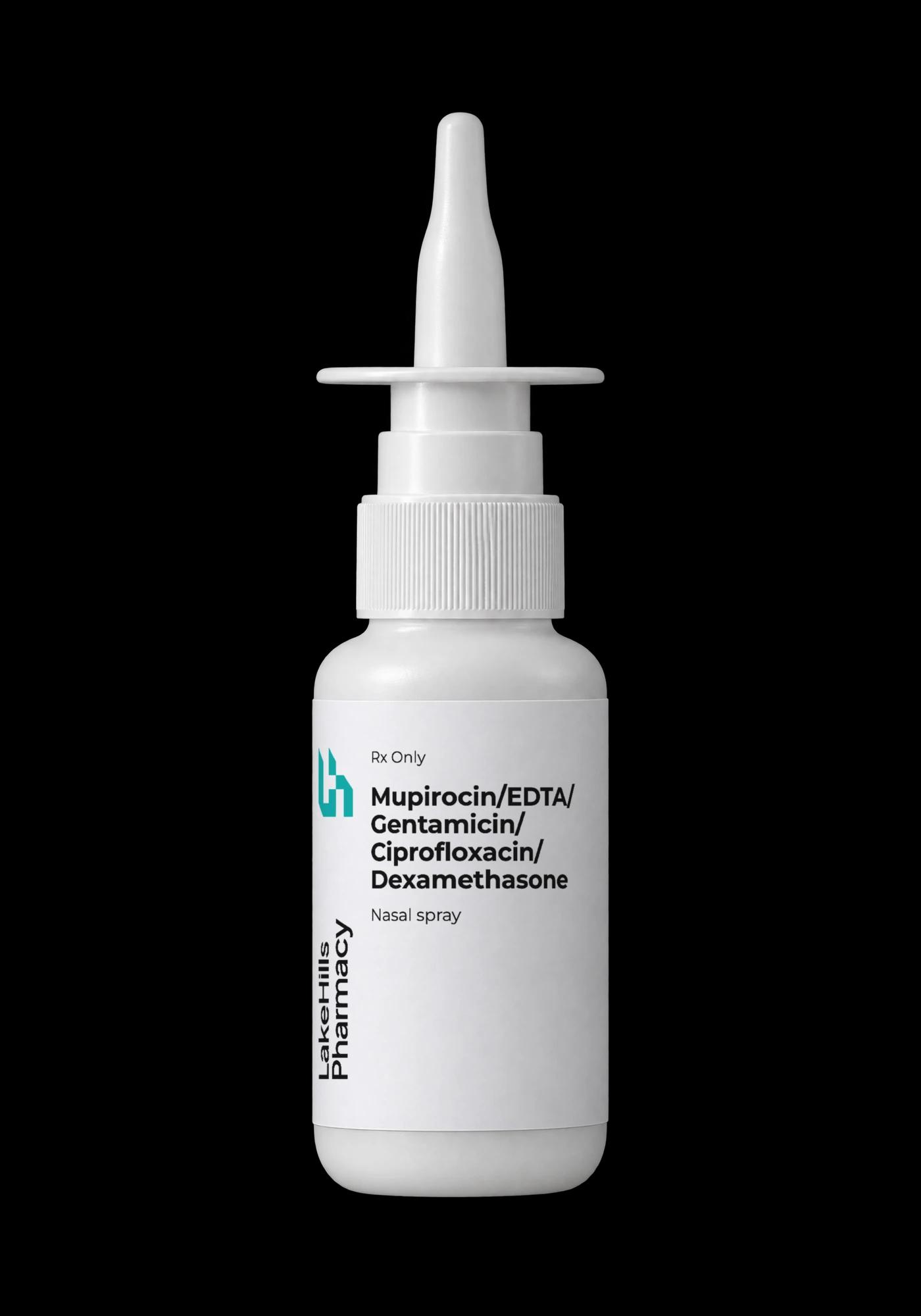
Mupirocin/
- Immunology
- Nasal spray
- Rx only
- Active ingredients
- Dosage form
- Nasal spray
- Route
- Nasal
- Care area
- Drug class
- Other
- DEA schedule
- Non-controlled


Compounded and dispensed by an NABP-accredited, LegitScript-certified pharmacy. Verify accreditation (opens in a new tab)
About compounded medications
All formulations are patient-specific prescriptions compounded by Lake Hills Pharmacy under FDA section 503A. Individual ingredients are FDA-approved; compounded products are not reviewed by the FDA for safety, effectiveness, or quality. For licensed healthcare providers only.
Available Dosage Strengths
Strengths are compounded to the prescriber's order.
Clinical information
Boxed Warning · EDTA (Edetic Acid)
The boxed warnings on parenteral edetate products concern intravenous or intramuscular chelation therapy at therapeutic doses and do not describe the low-concentration, excipient-level use of EDTA in nasal preparations. The source documents do not state which edetate salt Lake Hills uses.
Edetate calcium disodium injection labeling warns that it can produce toxic effects that can be fatal when used at higher than recommended doses or continued after toxicity appears. In lead encephalopathy and with elevated intracranial pressure, rapid intravenous infusion must be avoided and intramuscular administration is preferred. Edetate calcium disodium must not be confused with edetate disodium, which has caused fatal hypocalcemia.
Boxed Warning · Gentamicin
The boxed warning applies to parenteral (systemic) gentamicin; systemic absorption from topical or nasal use is expected to be lower but can occur through inflamed mucosa. Gentamicin injection labeling warns of potential nephrotoxicity, ototoxicity (both vestibular and auditory, often irreversible) and neurotoxicity, including numbness, skin tingling, muscle twitching and convulsions. Risk is greater with renal impairment, high doses, prolonged therapy, advanced age and dehydration.
Neuromuscular blockade and respiratory paralysis can occur, especially with anesthesia or neuromuscular blockers. Serum concentrations and renal function should be monitored, and concurrent use of other neurotoxic or nephrotoxic drugs and potent diuretics such as ethacrynic acid and furosemide should be avoided. Aminoglycosides can cause fetal harm in pregnancy.
Boxed Warning · Ciprofloxacin
The boxed warning applies to systemic (oral and intravenous) fluoroquinolone use; systemic exposure from nasal or other topical use is expected to be lower. Systemic fluoroquinolones, including ciprofloxacin, have been associated with disabling and potentially irreversible serious adverse reactions that can occur together: tendinitis and tendon rupture, peripheral neuropathy, and central nervous system effects. Ciprofloxacin should be stopped immediately and fluoroquinolones avoided in patients who experience these reactions.
Fluoroquinolones may exacerbate muscle weakness in myasthenia gravis and should be avoided in patients with known myasthenia gravis. Because of these risks, ciprofloxacin is reserved for acute bacterial sinusitis, acute exacerbation of chronic bronchitis and uncomplicated urinary tract infection only when no alternative treatment options exist.
Product Overview
Mupirocin / EDTA / Gentamicin / Ciprofloxacin / Dexamethasone Nasal Spray is a nonsterile nasal spray containing mupirocin, edetate (EDTA) and gentamicin, with ciprofloxacin and dexamethasone. Lake Hills Pharmacy compounds it as a 503A pharmacy, pursuant to a patient-specific prescription.
Prescribers use compounded intranasal antimicrobial preparations for chronic rhinosinusitis and nasal bacterial colonization.
FDA labeling of the actives covers other forms and routes: mupirocin calcium 2% nasal ointment (Bactroban Nasal) for eradication of nasal MRSA colonization in adults and health-care workers as part of an infection-control program; gentamicin by injection and as topical and ophthalmic preparations; edetate as an excipient chelating agent and, as edetate calcium disodium injection, for lead poisoning; ciprofloxacin orally, intravenously, and as otic and ophthalmic preparations; and dexamethasone orally, by injection and in ophthalmic and otic preparations.
EDTA is included as a chelating agent that may disrupt bacterial biofilm; this role is not FDA labeled.
Active Ingredients & Strengths
Strength is set on each prescription; contact Lake Hills Pharmacy for available strengths.
Dosing & Administration
Use in the nose as prescribed. No FDA-labeled dose exists for this combination by the nasal-spray route; dosing and duration are individualized by the prescriber.
Key Safety Information
- Do not use in patients with hypersensitivity to any component, including other aminoglycosides or quinolones.
- Gentamicin: aminoglycosides can be absorbed through inflamed mucosa. Injectable gentamicin carries a boxed warning for nephrotoxicity, ototoxicity (hearing loss, tinnitus, vertigo) and neuromuscular blockade. Use caution with renal impairment, existing hearing or balance problems, myasthenia gravis, and other ototoxic or nephrotoxic drugs such as loop diuretics, vancomycin, other aminoglycosides and cisplatin.
- Ciprofloxacin: systemic fluoroquinolones carry a boxed warning for disabling and potentially irreversible tendinitis and tendon rupture, peripheral neuropathy, central nervous system effects and exacerbation of myasthenia gravis. Tendon risk is higher with corticosteroids, age over 60 and organ transplant. Systemic exposure from nasal use is expected to be lower, but patients should stop and report tendon pain, numbness or tingling.
- Dexamethasone: intranasal corticosteroids can cause epistaxis, nasal irritation, candidiasis and, rarely, septal perforation; excessive use can suppress the HPA axis and raise cataract and glaucoma risk. Use caution with active infections and recent nasal surgery or trauma.
- Interactions: ciprofloxacin is a CYP1A2 inhibitor (tizanidine is contraindicated; theophylline, caffeine and clozapine levels can rise); dexamethasone is a CYP3A4 substrate and inducer.
- Mupirocin: avoid eye contact. Local burning, stinging, rhinitis, headache and taste changes can occur. Prolonged or repeated antimicrobial use can select resistant organisms and cause fungal superinfection.
- Pregnancy: systemic aminoglycosides can cause fetal harm, including congenital deafness. Use in pregnancy or breastfeeding only if the prescriber judges it necessary.
Storage, Stability & BUD
- Storage: controlled room temperature, 20°C to 25°C (68°F to 77°F), protected from light; do not freeze.
- Beyond-use date: per the prescription label.
- USP default BUD (USP <795>): 35 days at controlled room temperature or refrigerated for a preserved aqueous preparation, 14 days refrigerated for a nonpreserved aqueous preparation, or 90 days for a nonaqueous preparation; the category follows the Lake Hills base and vehicle.
- Lake Hills may assign extended dating based on its own stability data.
Patient Counseling
Use this medication exactly as your prescriber directs. Do not change the amount or how often you use it without talking to your prescriber.
- Use only in the nose and keep the spray out of your eyes. Do not share the bottle.
- Call your prescriber for hearing changes, ringing in the ears, dizziness or balance problems, rash, nosebleeds that do not stop, tendon pain, or numbness or tingling.
- Finish the course as directed and do not use beyond the date on the label.
References
- Bactroban Nasal (mupirocin calcium ointment) 2% Prescribing Information, GlaxoSmithKline.
- Gentamicin Sulfate Injection USP Prescribing Information.
- Calcium Disodium Versenate (edetate calcium disodium injection) Prescribing Information.
- Cipro (ciprofloxacin) Prescribing Information, Bayer.
- Ciprodex (ciprofloxacin and dexamethasone) otic suspension Prescribing Information.
- USP General Chapter <795> Pharmaceutical Compounding: Nonsterile Preparations.
Active ingredients
Mupirocin
Overview
Mupirocin is a topical antibacterial produced by Pseudomonas fluorescens. FDA-approved products are mupirocin 2% ointment, mupirocin calcium 2% cream, and mupirocin calcium 2% nasal ointment (Bactroban Nasal). Mupirocin is also compounded into nasal preparations pursuant to patient-specific prescriptions.
Indications & Uses
- Mupirocin 2% ointment: topical treatment of impetigo due to Staphylococcus aureus and Streptococcus pyogenes.
- Mupirocin calcium 2% cream: secondarily infected traumatic skin lesions (up to 10 cm in length or 100 cm2 in area) due to susceptible S. aureus and S. pyogenes.
- Mupirocin calcium 2% nasal ointment: eradication of nasal colonization with methicillin-resistant S. aureus (MRSA) in adult patients and health-care workers as part of a comprehensive infection-control program during institutional outbreaks.
- Prescribers use compounded mupirocin in nasal sprays and sinus preparations; these forms are not FDA labeled.
Mechanism of Action
Mupirocin reversibly binds bacterial isoleucyl-transfer RNA synthetase, halting protein and RNA synthesis. It is bacteriostatic at low concentrations and bactericidal at the high concentrations achieved topically. Its unique target means no cross-resistance with other antibiotic classes; low- and high-level resistance arise with prolonged or repeated use.
Pharmacokinetics
Systemic absorption through intact skin and nasal mucosa is minimal. Absorbed mupirocin is rapidly metabolized to the inactive metabolite monic acid, which is renally excreted; the plasma half-life after intravenous dosing in studies is under an hour. Absorption may increase through damaged skin or inflamed mucosa.
Contraindications
- Hypersensitivity to mupirocin or any component of the formulation.
Warnings & Precautions
- Hypersensitivity: systemic allergic reactions, including anaphylaxis, urticaria and angioedema, have been reported; stop use if they occur.
- Not for ophthalmic use; avoid contact with the eyes.
- Prolonged use may result in overgrowth of nonsusceptible organisms, including fungi, and selection of mupirocin-resistant staphylococci.
- Clostridioides difficile-associated diarrhea has been reported with nearly all antibacterial agents.
- Mupirocin ointment contains polyethylene glycol; absorption from large open wounds can be a concern in moderate or severe renal impairment.
Drug Interactions
No clinically important drug interactions are known. Labeling for the nasal ointment notes that concurrent use with other intranasal products has not been studied.
Adverse Effects
Nasal use: headache, rhinitis, nasal congestion, pharyngitis, taste disturbance, burning or stinging, cough and pruritus. Skin use: burning, stinging, pain, itching, rash and contact dermatitis.
Pregnancy & Lactation
Systemic absorption is minimal, and maternal use is not expected to cause meaningful fetal exposure. It is not known whether mupirocin passes into breast milk; if used on the nipple area, the area should be washed before nursing.
Monitoring
Clinical response, local tolerance and signs of superinfection; nasal or wound cultures and susceptibility testing when therapy is prolonged or repeated.
References
- Bactroban (mupirocin) ointment 2% Prescribing Information, GlaxoSmithKline.
- Bactroban (mupirocin calcium) cream 2% Prescribing Information, GlaxoSmithKline.
- Bactroban Nasal (mupirocin calcium ointment) 2% Prescribing Information, GlaxoSmithKline.
EDTA (Edetic Acid)
Overview
Edetic acid (ethylenediaminetetraacetic acid, EDTA) is a chelating agent used as its salts. Edetate calcium disodium injection (Calcium Disodium Versenate) is FDA approved for lead poisoning. Edetate disodium is widely used as an excipient chelator and stabilizer in ophthalmic, nasal and other preparations; approved edetate disodium injections are no longer marketed in the US. EDTA is compounded into nasal and sinus preparations pursuant to patient-specific prescriptions.
Indications & Uses
- Edetate calcium disodium injection (IV or IM): reduction of blood levels and depot stores of lead in lead poisoning (acute and chronic) and lead encephalopathy, in pediatric and adult patients.
- Edetate disodium as an excipient: chelation of trace metals to stabilize formulations and enhance preservative activity.
- Prescribers include EDTA in compounded nasal preparations as a chelating agent that may disrupt bacterial biofilm and enhance antimicrobial activity; this use is not FDA labeled.
Mechanism of Action
EDTA forms stable, water-soluble complexes with divalent and trivalent metal ions. Edetate calcium disodium exchanges its calcium for lead and other metals with higher binding affinity, and the chelate is excreted in urine. Against bacteria, EDTA chelates the calcium and magnesium that stabilize outer-membrane lipopolysaccharide and the biofilm matrix, increasing permeability to coadministered antimicrobials.
Pharmacokinetics
Oral absorption is poor (under 5%). After parenteral dosing, EDTA distributes mainly in extracellular fluid, does not appreciably enter cells or the cerebrospinal fluid, is not metabolized, and is excreted unchanged by glomerular filtration, about half within an hour and nearly all within 24 hours. Absorption from intact nasal mucosa is expected to be low.
Contraindications
- Edetate calcium disodium injection: anuria, active renal disease and hepatitis.
- Hypersensitivity to edetate salts or any component.
Warnings & Precautions
- Nephrotoxicity, including acute tubular necrosis, can occur with parenteral dosing; maintain adequate urine flow and limit dose and duration.
- Product confusion: edetate disodium given in error for edetate calcium disodium has caused fatal hypocalcemia and cardiac arrest.
- Chelation can deplete zinc and other trace metals with repeated parenteral courses.
- Parenteral use can cause hypotension, arrhythmia and ECG changes; monitor cardiac status.
- Topical and nasal use: local irritation can occur; systemic exposure is expected to be low at excipient-range concentrations.
Drug Interactions
Edetate calcium disodium can interfere with zinc insulin preparations by chelating zinc. Other nephrotoxic drugs add to renal risk with parenteral use. In compounded preparations EDTA chelates metal ions and may enhance the activity of coadministered antimicrobials and preservatives.
Adverse Effects
Parenteral: nephrotoxicity, fever, chills, malaise, fatigue, myalgia, headache, nausea, vomiting, hypotension, injection-site pain, zinc depletion, and histamine-like reactions such as sneezing, nasal congestion and lacrimation. Topical or nasal: local burning, stinging or irritation.
Pregnancy & Lactation
Adequate human data in pregnancy are lacking; animal studies at high parenteral doses showed fetal effects attributed to zinc depletion. Parenteral edetate calcium disodium in pregnancy is reserved for clear need. Lactation data are not available; systemic exposure from nasal use is expected to be low.
Monitoring
Parenteral use: renal function, urinalysis, serum electrolytes including calcium, blood lead levels, ECG during infusion and zinc status with repeated courses. Nasal use: local tolerance.
References
- Calcium Disodium Versenate (edetate calcium disodium injection) Prescribing Information.
- FDA Public Health Advisory on edetate disodium and edetate calcium disodium medication errors (2008).
- Handbook of Pharmaceutical Excipients: edetic acid and edetate disodium.
Gentamicin
Overview
Gentamicin is an aminoglycoside antibiotic derived from Micromonospora purpurea, used as the sulfate salt. FDA-approved products include gentamicin injection (IV or IM), 0.1% cream and ointment, and 0.3% ophthalmic solution and ointment. Gentamicin is compounded into nasal and sinus preparations pursuant to patient-specific prescriptions.
Indications & Uses
- Injection: serious infections caused by susceptible strains of Pseudomonas aeruginosa, Proteus species, Escherichia coli, Klebsiella, Enterobacter, Serratia, Citrobacter and Staphylococcus species, including bacterial neonatal sepsis, bacterial septicemia, and serious infections of the CNS, urinary tract, respiratory tract, gastrointestinal tract including peritonitis, skin, bone and soft tissue.
- Topical 0.1%: primary and secondary superficial skin infections due to susceptible organisms.
- Ophthalmic 0.3%: external ocular infections such as conjunctivitis, keratitis and blepharitis due to susceptible bacteria.
- Prescribers use compounded gentamicin in nasal sprays and sinus irrigations; these forms are not FDA labeled.
Mechanism of Action
Gentamicin binds the bacterial 30S ribosomal subunit, causing misreading of messenger RNA and production of faulty proteins, and is rapidly bactericidal. Killing is concentration dependent with a post-antibiotic effect. Activity is mainly against aerobic gram-negative bacilli and staphylococci; anaerobes and streptococci alone are resistant.
Pharmacokinetics
Gentamicin is poorly absorbed orally and from intact skin, but absorption increases through denuded skin, wounds and inflamed mucosa. After parenteral dosing it distributes into extracellular fluid, with low CNS penetration, and accumulates in the renal cortex and inner-ear fluids. It is not metabolized and is excreted unchanged by glomerular filtration; half-life is about 2 to 3 hours with normal renal function and much longer in renal impairment and neonates.
Contraindications
- Hypersensitivity to gentamicin or any component, or a history of hypersensitivity or serious toxic reaction to other aminoglycosides (cross-sensitivity).
Warnings & Precautions
- Use caution in neuromuscular disorders such as myasthenia gravis and parkinsonism because of neuromuscular blockade.
- Some injection products contain sodium metabisulfite, which can cause allergic-type reactions in sulfite-sensitive patients.
- Topical and mucosal use: systemic absorption, with ototoxicity and nephrotoxicity, has been reported with application to large wounds, burns and mucosa; use caution in renal impairment or existing hearing loss.
- Prolonged use can select resistant organisms and cause fungal superinfection. Clostridioides difficile-associated diarrhea has been reported with nearly all antibacterial agents.
Drug Interactions
Additive nephrotoxicity or ototoxicity with other aminoglycosides, vancomycin, amphotericin B, cisplatin, cyclosporine, polymyxin B, colistin and loop diuretics. Enhanced neuromuscular blockade with anesthetics, neuromuscular blocking agents and botulinum toxin. Penicillins and cephalosporins can inactivate aminoglycosides when mixed in the same solution or in severe renal impairment.
Adverse Effects
Systemic: nephrotoxicity (rising creatinine, casts, proteinuria), ototoxicity (tinnitus, hearing loss, vertigo, ataxia), neurotoxicity, neuromuscular blockade, rash, fever and electrolyte losses such as hypomagnesemia. Topical: erythema, pruritus and irritation; mucosal use can cause local burning.
Pregnancy & Lactation
Aminoglycosides cross the placenta and can cause fetal harm; total irreversible bilateral congenital deafness has been reported with streptomycin. Gentamicin passes into breast milk in small amounts, and oral absorption by the infant is poor; watch the infant for diarrhea or thrush.
Monitoring
Systemic use: peak and trough serum concentrations, serum creatinine and BUN, urinalysis, electrolytes, and audiometric and vestibular function with prolonged therapy. Topical or nasal use: clinical response, local tolerance, and hearing or balance symptoms, especially with renal impairment or long courses.
References
- Gentamicin Sulfate Injection USP Prescribing Information.
- Gentamicin Sulfate Cream and Ointment USP 0.1% Prescribing Information.
- Gentamicin Sulfate Ophthalmic Solution USP 0.3% Prescribing Information.
Ciprofloxacin
Overview
Ciprofloxacin is a fluoroquinolone antibacterial. FDA-approved products include oral tablets and suspension (Cipro), intravenous injection, otic preparations (Cetraxal, and Ciprodex with dexamethasone) and ophthalmic solution and ointment (Ciloxan). Ciprofloxacin is compounded into nasal and sinus preparations pursuant to patient-specific prescriptions.
Indications & Uses
- Oral and IV: infections caused by susceptible bacteria, including skin and skin-structure, bone and joint, complicated intra-abdominal, infectious diarrhea, typhoid fever, lower respiratory tract, urinary tract, chronic bacterial prostatitis, inhalational anthrax post-exposure, and plague. For acute bacterial sinusitis, acute exacerbation of chronic bronchitis and uncomplicated urinary tract infection, labeling reserves it for patients with no alternative treatment options.
- Otic: acute otitis externa, and acute otitis media with tympanostomy tubes (Ciprodex).
- Ophthalmic: bacterial conjunctivitis and corneal ulcers.
- Prescribers use compounded ciprofloxacin in nasal sprays and sinus preparations; these forms are not FDA labeled.
Mechanism of Action
Ciprofloxacin inhibits bacterial DNA gyrase (topoisomerase II) and topoisomerase IV, enzymes needed for DNA replication, transcription and repair, and is bactericidal. It is active against many gram-negative organisms, including Pseudomonas aeruginosa, and some gram-positive organisms.
Pharmacokinetics
Oral bioavailability is about 70%; absorption is reduced by multivalent cations. Ciprofloxacin distributes widely into tissues. Elimination half-life is about 4 hours with normal renal function, prolonged in renal impairment. It is cleared renally by filtration and tubular secretion and partly by hepatic metabolism, and it inhibits CYP1A2. Systemic absorption after otic and ophthalmic use is low.
Contraindications
- Hypersensitivity to ciprofloxacin or any quinolone.
- Concomitant use with tizanidine.
Warnings & Precautions
- Tendon risk is higher in patients over 60, those taking corticosteroids, and kidney, heart or lung transplant recipients.
- Psychiatric reactions and CNS effects, including seizures and increased intracranial pressure; use caution in seizure disorders.
- QT prolongation and torsades de pointes; avoid with other QT-prolonging drugs and uncorrected hypokalemia.
- Aortic aneurysm and dissection; avoid in patients at risk unless no alternative exists.
- Dysglycemia, including severe hypoglycemia, particularly in diabetic patients on hypoglycemic agents.
- Hypersensitivity reactions, hepatotoxicity, Clostridioides difficile-associated diarrhea, photosensitivity, crystalluria, and musculoskeletal adverse events in pediatric patients.
Drug Interactions
Contraindicated with tizanidine. Increases levels of theophylline (serious reactions reported), caffeine, clozapine, ropinirole, olanzapine, duloxetine and methotrexate, alters phenytoin levels, and enhances warfarin effect. Antacids, sucralfate, iron, zinc, calcium, magnesium and didanosine reduce oral absorption. NSAIDs increase seizure risk; corticosteroids increase tendon-rupture risk; QT-prolonging drugs add QT risk; antidiabetic agents increase dysglycemia risk; probenecid increases ciprofloxacin levels; cyclosporine may raise serum creatinine.
Adverse Effects
Systemic: nausea, diarrhea, vomiting, abdominal pain, liver-enzyme elevations, rash, headache, dizziness, restlessness, insomnia and photosensitivity; serious reactions are described above. Otic and ophthalmic: local discomfort, pruritus, burning and, with eye drops, white crystalline corneal precipitates.
Pregnancy & Lactation
Available human data have not shown an increased risk of major birth defects with ciprofloxacin; systemic use in pregnancy is reserved for situations where the prescriber judges it necessary. Ciprofloxacin passes into breast milk; labeling for systemic products advises against breastfeeding during treatment and for 2 days after the last dose, or pumping and discarding milk during that time. Exposure from topical use is low.
Monitoring
Renal function for dose adjustment, blood glucose in diabetic patients, INR with warfarin, theophylline levels when coadministered, ECG with QT risk factors, and symptoms of tendon pain, neuropathy, psychiatric changes or diarrhea. For topical use, clinical response and local tolerance.
References
- Cipro (ciprofloxacin) tablets and oral suspension Prescribing Information, Bayer.
- Ciprodex (ciprofloxacin and dexamethasone) otic suspension Prescribing Information.
- Ciloxan (ciprofloxacin ophthalmic solution) Prescribing Information.
Dexamethasone
Overview
Dexamethasone is a long-acting synthetic fluorinated glucocorticoid with about 25 to 30 times the anti-inflammatory potency of hydrocortisone and negligible mineralocorticoid activity. FDA-approved products include oral tablets and solution, dexamethasone sodium phosphate injection, and ophthalmic and otic preparations, including Ciprodex otic suspension with ciprofloxacin. No intranasal dexamethasone product is currently marketed in the US; dexamethasone is compounded into nasal preparations pursuant to patient-specific prescriptions.
Indications & Uses
- Systemic (oral and injection): allergic states, dermatologic, endocrine (including adrenal insufficiency and diagnostic testing for Cushing's syndrome), gastrointestinal, hematologic, neoplastic, nervous system (including cerebral edema), ophthalmic, renal, respiratory and rheumatic disorders responsive to corticosteroids. Oral dexamethasone 20 mg (Hemady) is labeled with other agents for multiple myeloma.
- Ophthalmic and otic: steroid-responsive inflammatory conditions of the eye and ear, alone or with anti-infectives.
- Prescribers use compounded dexamethasone in nasal preparations for inflammatory sinonasal conditions; this route is not FDA labeled.
Mechanism of Action
Dexamethasone binds the cytosolic glucocorticoid receptor; the complex moves to the nucleus and alters transcription of genes involved in inflammation. It suppresses pro-inflammatory cytokines and mediators (through NF-kappa-B and AP-1), induces anti-inflammatory proteins such as annexin-1, reduces prostaglandin and leukotriene synthesis, and suppresses immune-cell migration and function.
Pharmacokinetics
Oral bioavailability is high (about 80 to 90%). Plasma half-life is about 3 to 4 hours, while biologic half-life is 36 to 72 hours. Dexamethasone is metabolized by CYP3A4 and is also a CYP3A4 inducer. Absorption through nasal mucosa occurs and increases with inflamed tissue, larger doses and prolonged use.
Contraindications
- Systemic fungal infections.
- Hypersensitivity to dexamethasone or any component.
- Injection: intramuscular use in idiopathic thrombocytopenic purpura.
Warnings & Precautions
- HPA-axis suppression and adrenal insufficiency, especially on withdrawal after prolonged use; Cushingoid effects with excess exposure.
- Increased susceptibility to infection and masking of infection signs; avoid live vaccines at immunosuppressive doses; risk of reactivating tuberculosis and severe varicella or measles.
- Hyperglycemia, hypertension, fluid retention and hypokalemia; psychiatric effects including mood changes, insomnia and psychosis.
- Posterior subcapsular cataract and glaucoma with prolonged use; osteoporosis; myopathy; peptic ulcer and GI perforation; Kaposi sarcoma reported.
- Intranasal use: epistaxis, nasal irritation, candidiasis and, rarely, septal perforation; avoid after recent nasal surgery or trauma until healed.
Drug Interactions
Strong CYP3A4 inhibitors (ketoconazole, itraconazole, clarithromycin, ritonavir) raise dexamethasone exposure; inducers (rifampin, phenytoin, carbamazepine, phenobarbital) lower it. Dexamethasone induces CYP3A4 and can lower levels of drugs such as some antiretrovirals and kinase inhibitors. Fluoroquinolones increase tendon-rupture risk; NSAIDs increase GI risk; potassium-depleting diuretics and amphotericin B increase hypokalemia; corticosteroids may change warfarin response and raise glucose in patients on antidiabetic drugs.
Adverse Effects
Systemic: fluid retention, hypertension, hyperglycemia, weight gain, increased appetite, insomnia, mood changes, impaired wound healing, skin thinning, myopathy, osteoporosis, cataract, glaucoma, menstrual irregularity and adrenal suppression. Nasal: dryness, burning, epistaxis and headache.
Pregnancy & Lactation
Corticosteroids cross the placenta; some studies associate first-trimester systemic exposure with a small increase in oral clefts, and infants exposed to substantial doses should be observed for hypoadrenalism. Systemic corticosteroids pass into breast milk; at high doses they could affect infant growth or endogenous corticosteroid production, and labeling advises caution. Exposure from short, low-dose nasal use is expected to be lower.
Monitoring
Blood pressure, glucose, electrolytes and weight with systemic use; signs of infection; intraocular pressure and cataract with prolonged use; bone density with long-term therapy; growth in children; HPA-axis function when stopping prolonged therapy. Nasal use: nasal examination for irritation or septal changes with ongoing use.
References
- Dexamethasone Tablets USP Prescribing Information.
- Dexamethasone Sodium Phosphate Injection USP Prescribing Information.
- Hemady (dexamethasone) tablets Prescribing Information.
- Ciprodex (ciprofloxacin and dexamethasone) otic suspension Prescribing Information.
Ask a pharmacist
Are compounded medications FDA approved?
All formulations are patient-specific prescriptions compounded by Lake Hills Pharmacy under FDA section 503A. Individual ingredients are FDA-approved; compounded products are not reviewed by the FDA for safety, effectiveness, or quality. For licensed healthcare providers only.
How do I get a prescription filled here?
You can have your doctor send prescriptions to us any time. We also transfer your medications from another pharmacy. Our pharmacy accepts all major insurance plans.
Can you ship this medication to my state?
It depends on the medication and on your state. Whether we can dispense or ship a medication to you depends on the laws and board of pharmacy rules of your state and on our licensure there. We confirm availability when we receive a prescription.
These answers cover the basics. For anything about a formula, a strength or a prescription, contact our pharmacists.
Mon - Fri: 8:30am - 6:30pm CTSaturday: 9:00am - 2:00pm CTSunday: Closed
12005 Bee Cave Rd, Suite 1-A, Austin, TX 78738