
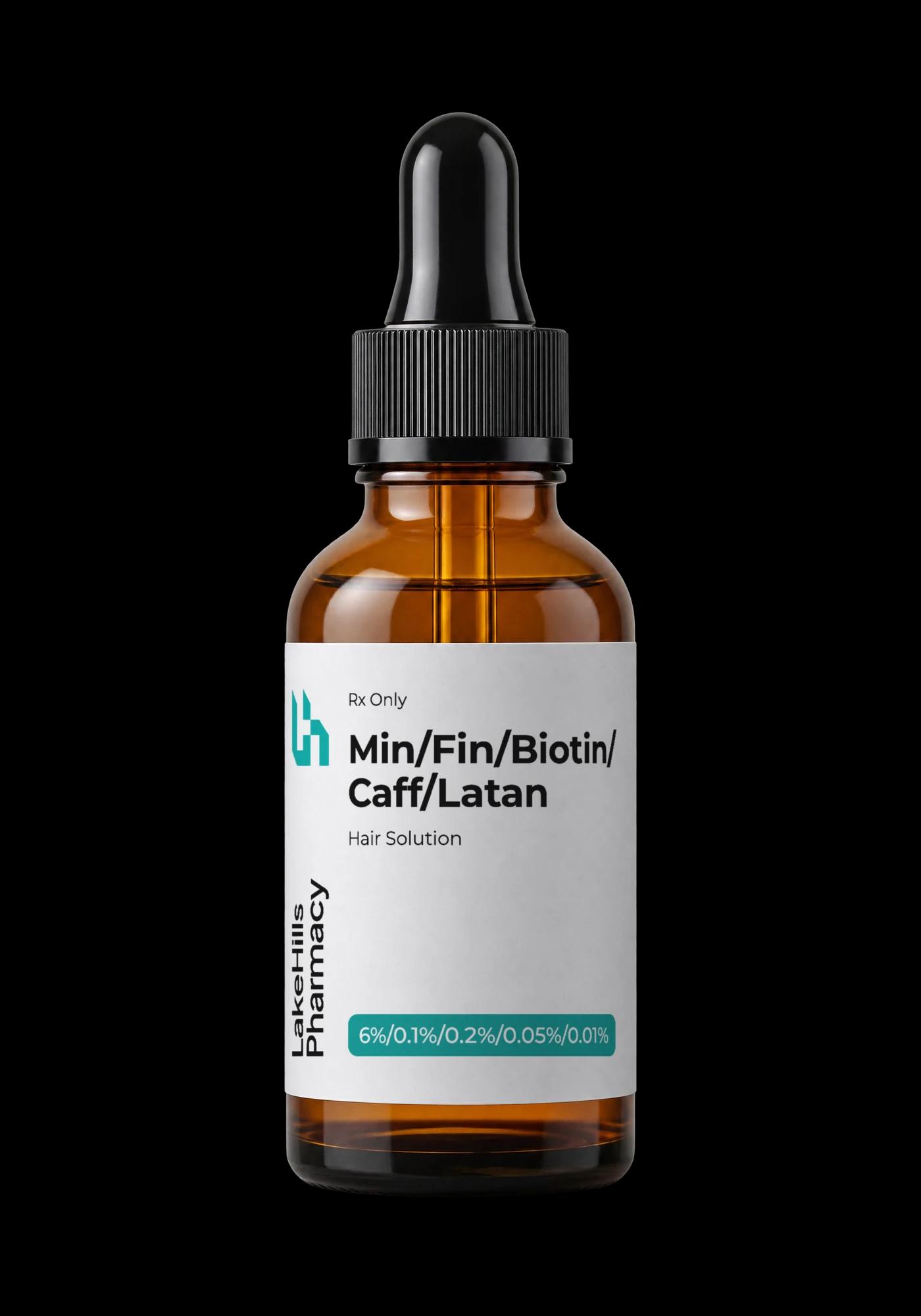
- Active ingredients
- Minoxidil / Finasteride / Biotin / Caffeine / Latanoprost
- Dosage form
- Solution
- Route
- Topical
- Care area
- Drug class
- Vasodilator / PDE5 inhibitor, Other, Vitamin / Nutrient, Prostaglandin
- DEA schedule
- Non-controlled
- Storage
- Room temperature


Compounded and dispensed by an NABP-accredited, LegitScript-certified pharmacy. Verify accreditation (opens in a new tab)
About compounded medications
All formulations are patient-specific prescriptions compounded by Lake Hills Pharmacy under FDA section 503A. Individual ingredients are FDA-approved; compounded products are not reviewed by the FDA for safety, effectiveness, or quality. For licensed healthcare providers only.
Available Dosage Strengths
Solution
6%/
0.1%/ 0.2%/ 0.05%/ 0.01% Unit size: 30 mL
Clinical information
Boxed Warning · Minoxidil
- Oral minoxidil tablets: a potent antihypertensive that can cause pericardial effusion, occasionally progressing to tamponade, and can exacerbate angina pectoris. Reserve for hypertensive patients who do not respond adequately to maximum therapeutic doses of a diuretic and two other antihypertensive agents.
- Give oral minoxidil under close supervision, usually with a beta-blocker to prevent tachycardia and increased myocardial workload, and with a diuretic, frequently a loop diuretic, to prevent serious fluid accumulation. Patients with malignant hypertension and those already on guanethidine should be hospitalized when oral minoxidil is first given.
Product Overview
Minoxidil / Finasteride / Biotin / Caffeine / Latanoprost Hair Solution is a nonsterile topical scalp solution containing minoxidil 6%, finasteride 0.1%, biotin 0.2%, caffeine 0.05% and latanoprost 0.01%. Lake Hills Pharmacy compounds it as a 503A pharmacy, pursuant to a patient-specific prescription.
Prescribers use compounded topical preparations of these ingredients for androgenetic alopecia. Minoxidil is a vasodilator and potassium-channel opener available as an over-the-counter topical solution and foam for hereditary hair loss. Finasteride is a type II 5-alpha-reductase inhibitor that lowers dihydrotestosterone (DHT); it is FDA labeled orally as Propecia for male pattern hair loss, and no topical finasteride product is FDA approved.
Biotin is a B vitamin. Caffeine is a methylxanthine included at a low topical concentration; it does not lower DHT. Latanoprost is a prostaglandin F2-alpha analog labeled as an ophthalmic solution for elevated intraocular pressure.
Active Ingredients & Strengths
- Solution: minoxidil 6% / finasteride 0.1% / biotin 0.2% / caffeine 0.05% / latanoprost 0.01%, 30 mL.
Lake Hills makes this preparation at the single strength listed. The vehicle is a TrichoSol base (TrichoSol is a trademark of PCCA).
Dosing & Administration
Apply to the scalp exactly as prescribed. No FDA-labeled dose exists for this combination or for topical finasteride; dosing is individualized by the prescriber. For reference, over-the-counter topical minoxidil solution labeling directs 1 mL to the affected scalp twice daily.
Apply to a dry scalp and allow it to dry before contact with pillows, partners or children. Wash hands after each application.
Key Safety Information
- Do not use in patients with hypersensitivity to any component, on broken or irritated scalp skin, or in women who are or may become pregnant. Not for use in children.
- Finasteride: topical application produces systemic absorption. Sexual adverse effects (decreased libido, erectile dysfunction, ejaculation disorders), depression and suicidal ideation are in finasteride labeling, and some sexual effects have persisted after stopping. The FDA issued a 2025 alert on these risks with compounded topical finasteride. Patients should report mood changes or thoughts of self-harm promptly.
- Finasteride exposure in pregnancy: finasteride can cause abnormal development of the external genitalia of a male fetus. Women who are or may become pregnant should not handle the solution or touch treated scalp skin. Finasteride lowers serum PSA by about half; prescribers interpret PSA results accordingly.
- Topical minoxidil: scalp irritation, itching, dryness and unwanted facial or body hair can occur. Systemic effects such as chest pain, rapid heartbeat, faintness, dizziness, sudden weight gain or swelling of the hands or feet require stopping use and contacting the prescriber. Use with care in patients with heart disease. Topical minoxidil is highly toxic to cats; keep pets away from treated skin and applicators.
- Latanoprost: keep away from the eyes and eyelids. Eye contact can cause irritation, and latanoprost can darken the iris, eyelids and periocular skin and change eyelashes. Rinse the eye with water if contact occurs.
- Biotin: high biotin intake can interfere with biotin-based laboratory immunoassays (for example troponin and thyroid tests). Systemic exposure from a 0.2% topical solution is expected to be low, but patients should tell the laboratory and prescriber they use a biotin product.
- Caffeine at 0.05% topically has minimal expected systemic effect; local irritation can occur.
Storage, Stability & BUD
- Storage: room temperature, in a tightly closed container away from open flame. Latanoprost is heat-sensitive: keep away from heat, and follow the prescription label if it specifies refrigeration.
- If the vehicle contains alcohol, the solution is flammable; keep away from flame.
- Beyond-use date: per the prescription label.
- USP default BUD (USP <795>): 35 days at controlled room temperature or refrigerated for a preserved aqueous preparation, 14 days refrigerated for a nonpreserved aqueous preparation, or 90 days for a nonaqueous preparation; the category follows the Lake Hills base and vehicle.
- Lake Hills may assign extended dating based on its own stability data.
Patient Counseling
Use this medication exactly as your prescriber directs. Do not change the amount or how often you use it without talking to your prescriber.
- Apply only to the scalp. Wash your hands after each use and let the scalp dry before it touches bedding or other people.
- Women who are or may become pregnant must not touch this solution or treated skin.
- Keep the solution away from your eyes and eyelids. If it gets in an eye, rinse with water.
- Stop and call your prescriber if you have chest pain, a racing heartbeat, dizziness, fainting, sudden weight gain, swelling, sexual side effects, low mood or thoughts of harming yourself.
- Keep away from children and pets. This solution is dangerous to cats.
References
- Propecia (finasteride) tablets Prescribing Information, Organon.
- FDA alert on potential risks of compounded topical finasteride products (2025).
- Rogaine (minoxidil topical solution) Drug Facts labeling.
- Xalatan (latanoprost ophthalmic solution) Prescribing Information.
- FDA Safety Communication on biotin interference with laboratory tests.
- USP General Chapter <795> Pharmaceutical Compounding: Nonsterile Preparations.
- USP General Chapter <800> Hazardous Drugs: Handling in Healthcare Settings.
Active ingredients
Minoxidil
Vasodilator / PDE5 inhibitor
Overview
Minoxidil is a direct-acting arteriolar vasodilator (potassium channel opener). FDA-approved products are oral minoxidil tablets (originally Loniten) for hypertension and OTC topical minoxidil 2% solution and 5% solution and foam for hereditary hair loss. Lake Hills Pharmacy compounds minoxidil, pursuant to patient-specific prescriptions, in oral capsules and topical scalp solutions.
Drug class: vasodilator (potassium channel opener). Non-controlled.
Indications & Uses
Oral minoxidil tablets are labeled for severe hypertension that is symptomatic or associated with target-organ damage and not manageable with maximum therapeutic doses of a diuretic plus two other antihypertensive drugs. OTC topical minoxidil is labeled to regrow hair on the scalp in hereditary hair loss: 2% solution and 5% foam for women, 2% and 5% solution and 5% foam for men.
Prescribers use low-dose oral minoxidil and compounded topical concentrations off label for androgenetic alopecia and other hair loss.
Mechanism of Action
Minoxidil is a prodrug converted by sulfotransferase to minoxidil sulfate, which opens ATP-sensitive potassium channels in vascular smooth muscle, causing hyperpolarization and arteriolar relaxation. The fall in peripheral resistance triggers reflex tachycardia, renin release and sodium and water retention. In hair follicles it prolongs the anagen phase and enlarges follicles; the exact mechanism is not fully defined.
Pharmacokinetics
Oral minoxidil is about 90% absorbed, with peak plasma levels within about 1 hour. It is not protein bound, is metabolized mainly by hepatic glucuronidation and is excreted in urine; it is removed by dialysis. The plasma half-life is about 4 hours, but the blood-pressure effect lasts much longer. After topical scalp use, only about 1 to 2% of the applied dose is absorbed systemically, and absorption increases with damaged skin, higher concentrations and penetration enhancers.
Contraindications
- Oral: pheochromocytoma; hypersensitivity to minoxidil.
- Topical (OTC labeling): do not use if there is no family history of hair loss, hair loss is sudden or patchy, or the cause is unknown; if the scalp is red, inflamed, infected, irritated or painful; or with other medicines on the scalp unless a prescriber directs. Not for use under age 18.
Warnings & Precautions
- Oral: salt and water retention and congestive heart failure; pericardial effusion and tamponade; reflex tachycardia and angina; too-rapid blood-pressure lowering can cause syncope or ischemic events; caution after recent myocardial infarction; hypertrichosis is common; ECG T-wave changes may occur; use lower doses in renal failure and dialysis.
- Topical: stop use and seek care for chest pain, rapid heartbeat, faintness, dizziness, sudden unexplained weight gain, or swelling of the hands or feet. Unwanted facial hair can result from transfer. Temporary shedding may occur at the start of treatment. Avoid eye contact. Hydroalcoholic solutions and foams are flammable.
- Pets: topical minoxidil is highly toxic to cats, even in small amounts from licking treated skin, bedding or spills.
Drug Interactions
- Guanethidine: profound orthostatic hypotension; labeling advises stopping guanethidine before oral minoxidil is started where possible.
- Other antihypertensives, vasodilators, nitrates and PDE5 inhibitors can add to the blood-pressure-lowering effect.
- Topical retinoids and other agents that disrupt the skin barrier may increase absorption of topical minoxidil.
Adverse Effects
Oral: fluid retention and edema, tachycardia, hypertrichosis, pericardial effusion, ECG changes, headache, rash and, rarely, Stevens-Johnson syndrome. Topical: scalp itching, dryness, scaling and redness, allergic or irritant contact dermatitis (often from propylene glycol), facial hypertrichosis, headache and dizziness.
Pregnancy & Lactation
Oral minoxidil crosses the placenta, and hypertrichosis and other effects have been reported in exposed newborns. Minoxidil passes into human milk; the oral minoxidil label states it should not be given to a nursing woman. Use in pregnancy only if the potential benefit justifies the potential risk to the fetus.
Monitoring
Oral: blood pressure, heart rate, body weight, edema and signs of pericardial effusion (dyspnea, chest pain, new murmur or rub), with echocardiography when effusion is suspected. Topical: scalp irritation, unwanted hair growth and cardiovascular symptoms.
References
- Loniten (minoxidil tablets) Prescribing Information, Pfizer.
- Minoxidil Tablets, USP Prescribing Information.
- Women's Rogaine (minoxidil topical solution 2% and topical aerosol 5%) Drug Facts label.
- Men's Rogaine (minoxidil topical solution 5%) Drug Facts label.
Finasteride
Overview
Finasteride is a synthetic 4-azasteroid, a competitive inhibitor of type II 5-alpha-reductase. FDA-approved products are oral tablets: Propecia (1 mg) and Proscar (5 mg). No topical finasteride product is FDA approved; finasteride is compounded into topical scalp preparations pursuant to patient-specific prescriptions. Finasteride is on the NIOSH list of hazardous drugs because of reproductive risk.
Indications & Uses
- Propecia 1 mg tablets: male pattern hair loss (androgenetic alopecia) in men only.
- Proscar 5 mg tablets: symptomatic benign prostatic hyperplasia, alone or with doxazosin, to reduce the risk of acute urinary retention and the need for surgery.
- Prescribers use compounded topical finasteride for androgenetic alopecia; this route is not FDA labeled. Finasteride is not indicated for women or children.
Mechanism of Action
Finasteride inhibits type II 5-alpha-reductase, the enzyme that converts testosterone to dihydrotestosterone (DHT) in the prostate, hair follicles and liver. Oral 1 mg daily lowers serum DHT by roughly 70% and scalp DHT substantially, which reduces androgen-driven follicle miniaturization. It has no affinity for the androgen receptor.
Pharmacokinetics
Oral bioavailability is about 65% and is not affected by food. Finasteride is about 90% protein bound, crosses the blood-brain barrier and appears in semen at low concentrations. It is metabolized by CYP3A4, with a half-life of about 5 to 6 hours in younger men and about 8 hours in men over 70; DHT suppression lasts longer than plasma levels. Topical application produces measurable systemic absorption and serum DHT reduction.
Contraindications
- Pregnancy, and women who are or may become pregnant: finasteride can cause abnormalities of the external genitalia of a male fetus.
- Hypersensitivity to finasteride or any component.
Warnings & Precautions
- Exposure of women: women who are or may become pregnant should not handle crushed or broken tablets or compounded topical finasteride, and should avoid contact with skin treated with topical preparations. Wash any exposed skin with soap and water.
- Sexual adverse effects: decreased libido, erectile dysfunction and ejaculation and orgasm disorders occur; postmarketing reports describe sexual dysfunction that persisted after stopping the drug.
- Mood: depression and suicidal ideation and behavior are listed among postmarketing reports in Propecia labeling; monitor for psychiatric symptoms and reassess therapy if they occur. The FDA issued a 2025 alert on these risks with compounded topical finasteride, including products sold through telehealth.
- PSA: finasteride lowers serum PSA by about 50% within months; for prostate cancer screening, PSA values in treated men are doubled for comparison with normal ranges. Any confirmed PSA rise on therapy warrants evaluation.
- High-grade prostate cancer: 5-alpha-reductase inhibitors were associated with an increased incidence of high-grade prostate cancer in large trials.
- Other: breast tenderness, enlargement and male breast cancer have been reported; male infertility and poor semen quality have been reported. Use caution in hepatic impairment. Not for pediatric use.
Drug Interactions
No clinically important drug interactions are identified in labeling. Finasteride is a CYP3A4 substrate; strong CYP3A4 inhibitors or inducers may change exposure. Dutasteride and other 5-alpha-reductase inhibitors are duplicative.
Adverse Effects
Decreased libido, erectile dysfunction, ejaculation disorders and decreased ejaculate volume, breast tenderness or enlargement, depression, rash, pruritus, urticaria and angioedema. Topical use adds local scalp irritation, itching and redness, with systemic effects similar to oral use reported.
Pregnancy & Lactation
Contraindicated in pregnancy because of risk to a male fetus. Finasteride is not indicated in women, and lactation data are not applicable to its labeled use. Very small amounts reach semen; labeling considers this exposure not a risk to a male fetus.
Monitoring
Baseline and periodic PSA in men at screening age, interpreted with the doubling rule; sexual function; mood and any thoughts of self-harm; breast changes; and, for topical use, local skin reactions and handling precautions in the household.
References
- Propecia (finasteride) tablets Prescribing Information, Organon.
- Proscar (finasteride) tablets Prescribing Information, Organon.
- FDA alert on potential risks of compounded topical finasteride products (2025).
- NIOSH List of Hazardous Drugs in Healthcare Settings.
- USP General Chapter <800> Hazardous Drugs: Handling in Healthcare Settings.
Biotin
Vitamin / Nutrient
Overview
Biotin (vitamin B7) is a water-soluble B vitamin and an essential enzyme cofactor. No single-ingredient biotin drug product is FDA approved; biotin is a component of FDA-approved parenteral multivitamin injections (for example, M.V.I. Adult) and is widely sold as a dietary supplement. Lake Hills Pharmacy uses biotin as a bulk ingredient in compounded preparations, such as a topical scalp solution, pursuant to patient-specific prescriptions.
Drug class: vitamin. Non-controlled.
Indications & Uses
Single-ingredient biotin has no FDA-labeled indication. As part of parenteral multivitamins it is labeled for maintenance vitamin supply in patients receiving parenteral nutrition. Biotin is used medically for biotinidase deficiency, holocarboxylase synthetase deficiency and biotin deficiency. Prescribers include biotin in compounded oral and topical hair and nail preparations; no FDA-labeled dose exists for topical use. The adequate intake for adults is 30 mcg per day.
Mechanism of Action
Biotin is covalently bound to five carboxylases (acetyl-CoA carboxylase 1 and 2, pyruvate carboxylase, propionyl-CoA carboxylase and methylcrotonyl-CoA carboxylase) that function in fatty-acid synthesis, gluconeogenesis and amino-acid catabolism. It is also attached to histones, which may affect gene expression. A pharmacologic role for topical biotin on the scalp has not been established.
Pharmacokinetics
Free biotin is absorbed in the small intestine, mainly by the sodium-dependent multivitamin transporter, which it shares with pantothenic acid. Absorption of free biotin is nearly complete. About half is metabolized to bisnorbiotin and biotin sulfoxide; biotin and its metabolites are excreted in urine, and excess intake is cleared quickly. Biotin crosses the placenta and passes into breast milk. Percutaneous absorption from topical preparations has not been well characterized.
Contraindications
- Hypersensitivity to biotin or any component of the preparation.
Warnings & Precautions
- Laboratory test interference: FDA has warned that biotin in blood samples can cause falsely high or falsely low results in immunoassays that use streptavidin-biotin technology. Affected tests include troponin (falsely low results, with a reported death after a missed myocardial infarction), thyroid tests (results that can mimic Graves' disease) and reproductive and other hormone assays.
- Ask patients about all biotin intake, including multivitamins and hair, skin and nail supplements, and tell the laboratory. Systemic exposure from a low-concentration topical preparation is expected to be small but has not been measured.
Drug Interactions
- Long-term anticonvulsant therapy (carbamazepine, phenytoin, fosphenytoin, phenobarbital, primidone) can lower biotin status by increasing its catabolism and reducing absorption.
- High-dose pantothenic acid or alpha-lipoic acid may compete with biotin for intestinal and cellular uptake.
- Avidin in raw egg white binds biotin and prevents its absorption; cooking denatures avidin.
Adverse Effects
Biotin is well tolerated, and no tolerable upper intake level has been set because no adverse effects have been established at high intakes. Mild gastrointestinal upset has been reported at high oral doses, and hypersensitivity is rare. With topical preparations, local irritation is usually related to the vehicle.
Pregnancy & Lactation
The adequate intake is 30 mcg per day in pregnancy and 35 mcg per day during lactation, and marginal biotin deficiency can develop in pregnancy. Supplementation above these needs has not been shown to be safe in pregnancy and is not recommended without a diagnosed deficiency. Biotin passes into breast milk.
Monitoring
No routine monitoring is needed. Before immunoassay testing, especially troponin and thyroid tests, document biotin use and alert the laboratory; consider biotin interference when results do not match the clinical picture.
References
- US Food and Drug Administration. Safety Communication: The FDA warns that biotin may interfere with lab tests (2017, updated 2019).
- National Institutes of Health, Office of Dietary Supplements. Biotin: Fact Sheet for Health Professionals.
- Institute of Medicine. Dietary Reference Intakes for Thiamin, Riboflavin, Niacin, Vitamin B6, Folate, Vitamin B12, Pantothenic Acid, Biotin, and Choline. National Academies Press; 1998.
- M.V.I. Adult (multiple vitamins injection) Prescribing Information, Hospira.
Caffeine
Overview
Caffeine is a methylxanthine central nervous system stimulant. FDA-approved products include caffeine citrate injection and oral solution (Cafcit) for apnea of prematurity, and caffeine is in over-the-counter alertness aids and in combination analgesics. Caffeine is also compounded at low concentrations into topical scalp preparations pursuant to patient-specific prescriptions; no topical use is FDA labeled.
Indications & Uses
- Caffeine citrate (Cafcit): short-term treatment of apnea of prematurity in infants between 28 and less than 33 weeks gestational age.
- Over-the-counter caffeine 100 to 200 mg: helps restore mental alertness or wakefulness when experiencing fatigue or drowsiness.
- Combination products: an adjunct in certain analgesic and migraine combinations.
- Prescribers include caffeine in compounded topical hair preparations; this use is not FDA labeled.
Mechanism of Action
Caffeine is a nonselective adenosine A1 and A2A receptor antagonist, which accounts for its CNS stimulant, respiratory stimulant and diuretic effects. At higher concentrations it inhibits phosphodiesterases and mobilizes intracellular calcium. In vitro studies have examined caffeine's effects on hair-follicle cells; caffeine does not inhibit 5-alpha-reductase or lower DHT.
Pharmacokinetics
Oral caffeine is almost completely absorbed, with peak levels in 30 to 120 minutes, and distributes into total body water, including the CNS, placenta and breast milk. It is metabolized mainly by CYP1A2 to paraxanthine, theobromine and theophylline. Half-life is about 3 to 7 hours in adults, longer in pregnancy, liver disease and with CYP1A2 inhibitors, shorter in smokers, and about 3 to 4 days in premature neonates. Topical absorption through skin and follicles occurs at low levels.
Contraindications
- Hypersensitivity to caffeine or any component.
Warnings & Precautions
- Cardiovascular: tachycardia, arrhythmia and blood-pressure increase can occur; use caution in arrhythmia and uncontrolled hypertension.
- Seizures: caffeine lowers the seizure threshold; use caution in seizure disorders.
- Neonates (Cafcit): monitor for necrotizing enterocolitis, and rule out other causes of apnea before treatment.
- Use caution in anxiety disorders, peptic ulcer disease, gastroesophageal reflux, and hepatic impairment. Large ingestions can cause serious toxicity.
Drug Interactions
CYP1A2 inhibitors such as fluvoxamine, ciprofloxacin, cimetidine and oral contraceptives raise caffeine levels; smoking and CYP1A2 inducers lower them. Caffeine can raise theophylline and clozapine levels, increases lithium clearance, adds to the effects of other stimulants and sympathomimetics, and antagonizes adenosine and dipyridamole used for pharmacologic stress testing.
Adverse Effects
Insomnia, nervousness, restlessness, tremor, headache, palpitations, tachycardia, nausea, gastric irritation and diuresis. Withdrawal headache and fatigue can follow abrupt cessation of regular intake. Topical use may cause local irritation.
Pregnancy & Lactation
Caffeine crosses the placenta, and its clearance falls in later pregnancy. ACOG advises limiting intake to less than 200 mg per day in pregnancy. Caffeine passes into breast milk; high maternal intake can cause irritability and poor sleep in the infant. Systemic exposure from low-concentration topical use is expected to be small.
Monitoring
Heart rate and rhythm, blood pressure, sleep and anxiety symptoms with systemic use; serum caffeine levels and signs of toxicity in neonates; local skin tolerance with topical use.
References
- Cafcit (caffeine citrate) injection and oral solution Prescribing Information.
- FDA OTC monograph for stimulant drug products (21 CFR Part 340).
- American College of Obstetricians and Gynecologists Committee Opinion on moderate caffeine consumption during pregnancy.
Latanoprost
Prostaglandin
Overview
Latanoprost is a prostaglandin F2-alpha analogue and an isopropyl-ester prodrug. FDA-approved products are 0.005% ophthalmic preparations (Xalatan and generics, the Xelpros emulsion and the preservative-free Iyuzeh) and latanoprost/netarsudil (Rocklatan). Lake Hills Pharmacy compounds latanoprost in a topical scalp solution pursuant to patient-specific prescriptions.
Drug class: prostaglandin analogue (FP-receptor agonist). Non-controlled.
Indications & Uses
Latanoprost ophthalmic solution is labeled to reduce elevated intraocular pressure in open-angle glaucoma or ocular hypertension, at one drop in the affected eye or eyes once daily in the evening; more frequent dosing may reduce the pressure-lowering effect. No FDA-labeled indication or dose exists for scalp use; prescribers include latanoprost in compounded hair-loss solutions.
Mechanism of Action
Corneal esterases hydrolyze latanoprost to latanoprost acid, a selective prostanoid FP-receptor agonist that lowers intraocular pressure by increasing uveoscleral outflow. FP-receptor activity in hair follicles prolongs the growth phase, seen clinically as eyelash growth with ophthalmic use; an effect on scalp hair is not established by labeling.
Pharmacokinetics
After ocular use, latanoprost is absorbed through the cornea and hydrolyzed to the active acid, which peaks in aqueous humor about 2 hours after dosing. Latanoprost acid reaching the circulation has a plasma half-life of about 17 minutes; it is metabolized in the liver by fatty-acid beta-oxidation, and the metabolites are excreted mainly in urine. Absorption after scalp application has not been characterized.
Contraindications
- Hypersensitivity to latanoprost, benzalkonium chloride or any other component of the preparation.
Warnings & Precautions
- Pigmentation: increased brown pigmentation of the iris, which may be permanent, and darkening of eyelid and periocular skin.
- Hair changes: eyelash changes (length, thickness, pigment, number) and hair growth where the solution repeatedly contacts the skin.
- Ocular: intraocular inflammation (iritis, uveitis), macular edema including cystoid macular edema (caution in aphakic or pseudophakic patients with a torn posterior lens capsule or known risk factors), and reactivation of herpetic keratitis.
- Scalp products: avoid contact with the eyes and eyelids, and wash hands after application.
- Stability: commercial latanoprost is stored refrigerated (2 to 8 C) and protected from light before opening, with limited room-temperature storage after opening; latanoprost is heat-labile.
Drug Interactions
- Eye drops containing thimerosal can cause precipitation; separate ophthalmic doses by at least 5 minutes.
- Using two prostaglandin analogues together can paradoxically raise intraocular pressure.
Adverse Effects
Ophthalmic: blurred vision, burning and stinging, conjunctival hyperemia, foreign-body sensation, itching, increased iris pigmentation and punctate keratopathy; systemic effects include upper respiratory symptoms, muscle, joint or back pain, and rash. Skin: redness, irritation, local hair growth and hyperpigmentation at contact sites.
Pregnancy & Lactation
There are no adequate human data in pregnancy; in animal studies, intravenous latanoprost caused embryofetal toxicity, including abortion, at doses well above clinical ocular exposure. It is not known whether latanoprost or its metabolites pass into human milk.
Monitoring
With ophthalmic use, monitor intraocular pressure, iris and eyelid pigmentation and signs of ocular inflammation. With scalp products, monitor for eye irritation, periocular pigment change and unwanted hair growth at contact sites.
References
- Xalatan (latanoprost ophthalmic solution) 0.005% Prescribing Information, Pfizer.
- Xelpros (latanoprost ophthalmic emulsion) 0.005% Prescribing Information, Sun Pharmaceutical Industries.
- Iyuzeh (latanoprost ophthalmic solution) 0.005% Prescribing Information.
More in Hair Restoration
Ask a pharmacist
Are compounded medications FDA approved?
All formulations are patient-specific prescriptions compounded by Lake Hills Pharmacy under FDA section 503A. Individual ingredients are FDA-approved; compounded products are not reviewed by the FDA for safety, effectiveness, or quality. For licensed healthcare providers only.
How do I get a prescription filled here?
You can have your doctor send prescriptions to us any time. We also transfer your medications from another pharmacy. Our pharmacy accepts all major insurance plans.
Can you ship this medication to my state?
It depends on the medication and on your state. Whether we can dispense or ship a medication to you depends on the laws and board of pharmacy rules of your state and on our licensure there. We confirm availability when we receive a prescription.
These answers cover the basics. For anything about a formula, a strength or a prescription, contact our pharmacists.
Mon - Fri: 8:30am - 6:30pm CTSaturday: 9:00am - 2:00pm CTSunday: Closed
12005 Bee Cave Rd, Suite 1-A, Austin, TX 78738