
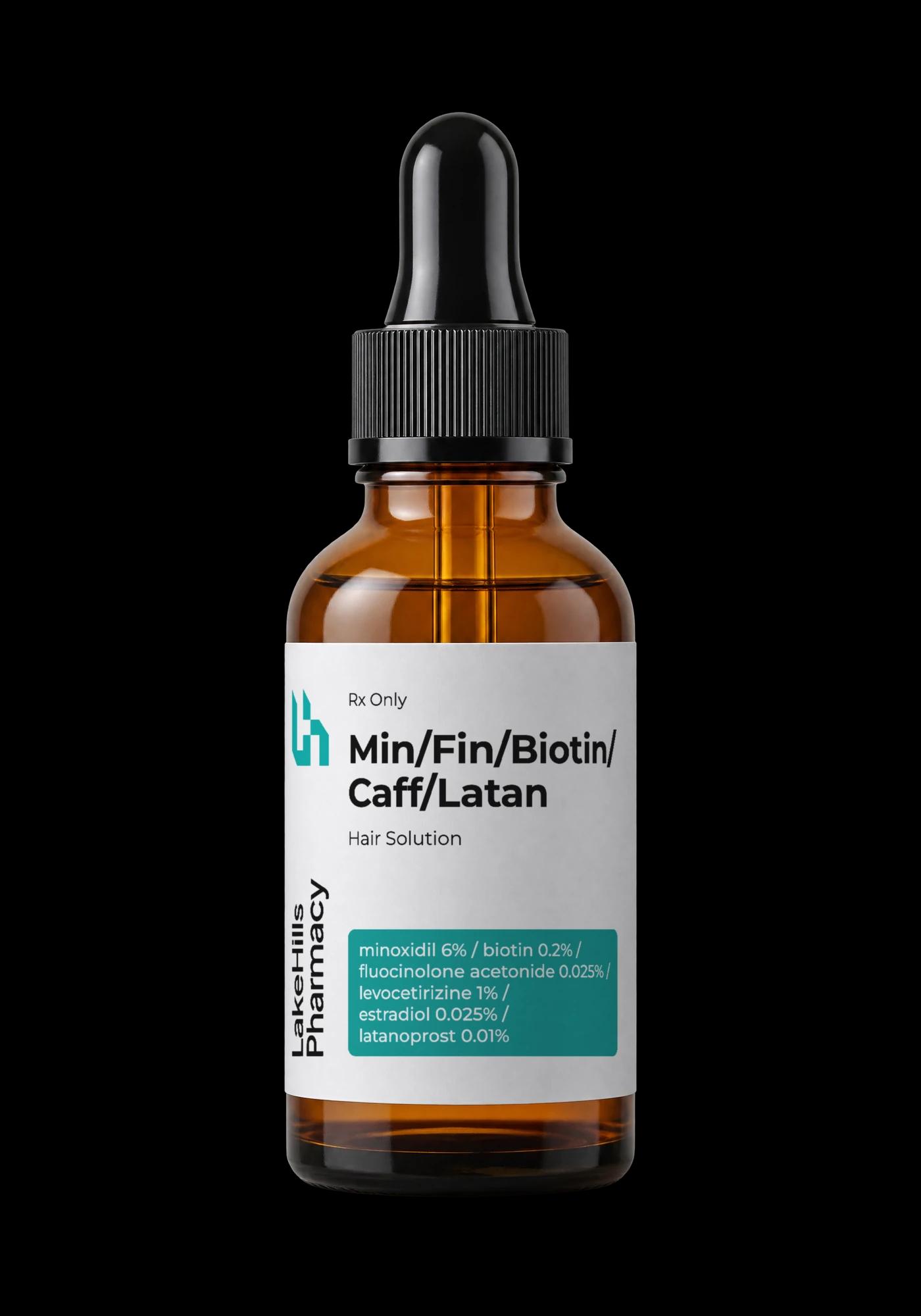
- Active ingredients
- Minoxidil / Finasteride / Biotin / Caffeine / Latanoprost
- Dosage form
- Solution
- Route
- Topical
- Care area
- Drug class
- Vasodilator / PDE5 inhibitor, Vitamin / Nutrient, Other, Estrogen, Prostaglandin
- DEA schedule
- Non-controlled
- Storage
- Room temperature


Compounded and dispensed by an NABP-accredited, LegitScript-certified pharmacy. Verify accreditation (opens in a new tab)
About compounded medications
All formulations are patient-specific prescriptions compounded by Lake Hills Pharmacy under FDA section 503A. Individual ingredients are FDA-approved; compounded products are not reviewed by the FDA for safety, effectiveness, or quality. For licensed healthcare providers only.
Available Dosage Strengths
Solution
minoxidil 6%/
biotin 0.2%/ fluocinolone acetonide 0.025%/ levocetirizine 1%/ estradiol 0.025%/ latanoprost 0.01% Unit size: 30 mL
Clinical information
Boxed Warning · Minoxidil
- Oral minoxidil tablets: a potent antihypertensive that can cause pericardial effusion, occasionally progressing to tamponade, and can exacerbate angina pectoris. Reserve for hypertensive patients who do not respond adequately to maximum therapeutic doses of a diuretic and two other antihypertensive agents.
- Give oral minoxidil under close supervision, usually with a beta-blocker to prevent tachycardia and increased myocardial workload, and with a diuretic, frequently a loop diuretic, to prevent serious fluid accumulation. Patients with malignant hypertension and those already on guanethidine should be hospitalized when oral minoxidil is first given.
Boxed Warning · Estradiol
- Endometrial cancer: an estrogen used without a progestogen in a woman with a uterus increases the risk of endometrial cancer; adding a progestogen reduces the risk. Evaluate persistent or recurring abnormal genital bleeding promptly.
- FDA's 2026 menopausal hormone therapy labeling revision removed cardiovascular disease, breast cancer and probable dementia from the boxed warning. Stroke, venous thromboembolism and breast cancer remain under Warnings & Precautions.
Product Overview
Female Hair Solution is a nonsterile topical scalp solution containing minoxidil 6%, biotin 0.2%, fluocinolone acetonide 0.025%, levocetirizine 1%, estradiol 0.025% and latanoprost 0.01%, compounded by Lake Hills Pharmacy as a 503A pharmacy pursuant to a patient-specific prescription.
Topical minoxidil is the active ingredient of OTC products (Women's Rogaine 2% solution and 5% foam) labeled to regrow hair on the scalp in hereditary hair loss. Fluocinolone acetonide is labeled in topical corticosteroid products for corticosteroid-responsive dermatoses, including scalp psoriasis and seborrheic dermatitis. Levocetirizine (levocetirizine dihydrochloride, the R-enantiomer of cetirizine; an H1 antihistamine, reference product Xyzal), estradiol, latanoprost and biotin have no FDA-labeled scalp use. Prescribers use this combination for hair loss in women. The vehicle is a TrichoSol base (TrichoSol is a trademark of PCCA).
Active Ingredients & Strengths
- Minoxidil 6%
- Biotin 0.2%
- Fluocinolone acetonide 0.025%
- Levocetirizine 1%
- Estradiol 0.025%
- Latanoprost 0.01%
Available as a single strength (6% / 0.2% / 0.025% / 1% / 0.025% / 0.01%) in a 30 mL container.
Dosing & Administration
No FDA-labeled dose exists for this combination; dosing is individualized by the prescriber. Apply to the scalp as prescribed. For reference, OTC topical minoxidil labeling for women directs 1 mL of 2% solution twice daily or half a capful of 5% foam once daily to the affected scalp.
- Administration: apply to a dry scalp in the affected area only, not to the face, eyes or broken skin. Wash hands after application and let the solution dry before contact with pillows or other people.
Key Safety Information
- Minoxidil: stop use and contact the prescriber for chest pain, rapid heartbeat, faintness, dizziness, sudden unexplained weight gain, or swelling of the hands or feet. Unwanted facial hair can occur, and temporary shedding may occur in the first weeks. Topical minoxidil is highly toxic to cats; keep pets away from treated skin, bedding and spills.
- Estradiol: contraindicated in pregnancy and in known or suspected breast cancer or other estrogen-dependent neoplasia, undiagnosed abnormal genital bleeding, active or past thromboembolic disease, and liver disease. Systemic exposure from scalp use is expected to be low but has not been characterized, so estrogen class cautions apply: US estrogen-alone labeling carries a boxed warning for endometrial cancer in women with a uterus, and stroke, venous thromboembolism and breast cancer are described under Warnings & Precautions. Estradiol on the skin can transfer to children and pets.
- Fluocinolone acetonide: prolonged use on large areas can cause skin atrophy, telangiectasia, folliculitis and, rarely, HPA-axis suppression. Do not apply to infected or broken skin.
- Latanoprost: avoid contact with the eyes and eyelids; it can cause eye irritation, darkening of the iris and periocular skin, and hair growth where it contacts the skin.
- Levocetirizine and biotin: hypersensitivity to levocetirizine or cetirizine is a contraindication. Oral levocetirizine labeling also lists end-stage renal disease (CrCl <10 mL/min) and hemodialysis as contraindications; systemic exposure from scalp use is expected to be low. High biotin intake can interfere with streptavidin-biotin lab immunoassays; patients should tell the lab about all biotin use.
- Contraindicated in pregnancy and in hypersensitivity to any ingredient. Not studied in children; use during breastfeeding is generally avoided.
Storage, Stability & BUD
- Storage: Room temperature. Keep away from heat; follow the prescription label if it specifies refrigeration.
- If the vehicle contains alcohol, the solution is flammable; keep away from flame.
- Beyond-use date: per the prescription label.
- USP default BUD (USP <795>): 35 days at controlled room temperature or refrigerated for a preserved aqueous preparation, 14 days refrigerated for a nonpreserved aqueous preparation, or 90 days for a nonaqueous preparation; the category follows the Lake Hills base and vehicle.
- Lake Hills may assign extended dating based on its own stability data.
Patient Counseling
- Use this medication exactly as your prescriber directs. Do not change the amount or how often you apply it on your own.
- Keep the solution away from your eyes; if it gets in your eyes, rinse with plenty of cool water. Wash your hands after each use.
- Keep children and pets, especially cats, away from the treated scalp, pillowcases and any spills.
- Stop using it and contact your prescriber for chest pain, a fast heartbeat, dizziness, sudden weight gain, swelling of the hands or feet, or scalp irritation that does not go away. Do not use it if you are pregnant or plan to become pregnant.
- Discard any unused solution after the beyond-use date on the label.
References
- Women's Rogaine (minoxidil topical solution 2% and topical aerosol 5%) Drug Facts label.
- Synalar (fluocinolone acetonide) Topical Cream, Ointment and Solution Prescribing Information.
- Xalatan (latanoprost ophthalmic solution) 0.005% Prescribing Information.
- Divigel (estradiol gel) 0.1% Prescribing Information.
- Xyzal (levocetirizine dihydrochloride) Prescribing Information.
- US Food and Drug Administration. Safety Communication: biotin interference with laboratory tests (2017, updated 2019).
- USP General Chapter <795> Pharmaceutical Compounding: Nonsterile Preparations.
Active ingredients
Minoxidil
Vasodilator / PDE5 inhibitor
Overview
Minoxidil is a direct-acting arteriolar vasodilator (potassium channel opener). FDA-approved products are oral minoxidil tablets (originally Loniten) for hypertension and OTC topical minoxidil 2% solution and 5% solution and foam for hereditary hair loss. Lake Hills Pharmacy compounds minoxidil, pursuant to patient-specific prescriptions, in oral capsules and topical scalp solutions.
Drug class: vasodilator (potassium channel opener). Non-controlled.
Indications & Uses
Oral minoxidil tablets are labeled for severe hypertension that is symptomatic or associated with target-organ damage and not manageable with maximum therapeutic doses of a diuretic plus two other antihypertensive drugs. OTC topical minoxidil is labeled to regrow hair on the scalp in hereditary hair loss: 2% solution and 5% foam for women, 2% and 5% solution and 5% foam for men.
Prescribers use low-dose oral minoxidil and compounded topical concentrations off label for androgenetic alopecia and other hair loss.
Mechanism of Action
Minoxidil is a prodrug converted by sulfotransferase to minoxidil sulfate, which opens ATP-sensitive potassium channels in vascular smooth muscle, causing hyperpolarization and arteriolar relaxation. The fall in peripheral resistance triggers reflex tachycardia, renin release and sodium and water retention. In hair follicles it prolongs the anagen phase and enlarges follicles; the exact mechanism is not fully defined.
Pharmacokinetics
Oral minoxidil is about 90% absorbed, with peak plasma levels within about 1 hour. It is not protein bound, is metabolized mainly by hepatic glucuronidation and is excreted in urine; it is removed by dialysis. The plasma half-life is about 4 hours, but the blood-pressure effect lasts much longer. After topical scalp use, only about 1 to 2% of the applied dose is absorbed systemically, and absorption increases with damaged skin, higher concentrations and penetration enhancers.
Contraindications
- Oral: pheochromocytoma; hypersensitivity to minoxidil.
- Topical (OTC labeling): do not use if there is no family history of hair loss, hair loss is sudden or patchy, or the cause is unknown; if the scalp is red, inflamed, infected, irritated or painful; or with other medicines on the scalp unless a prescriber directs. Not for use under age 18.
Warnings & Precautions
- Oral: salt and water retention and congestive heart failure; pericardial effusion and tamponade; reflex tachycardia and angina; too-rapid blood-pressure lowering can cause syncope or ischemic events; caution after recent myocardial infarction; hypertrichosis is common; ECG T-wave changes may occur; use lower doses in renal failure and dialysis.
- Topical: stop use and seek care for chest pain, rapid heartbeat, faintness, dizziness, sudden unexplained weight gain, or swelling of the hands or feet. Unwanted facial hair can result from transfer. Temporary shedding may occur at the start of treatment. Avoid eye contact. Hydroalcoholic solutions and foams are flammable.
- Pets: topical minoxidil is highly toxic to cats, even in small amounts from licking treated skin, bedding or spills.
Drug Interactions
- Guanethidine: profound orthostatic hypotension; labeling advises stopping guanethidine before oral minoxidil is started where possible.
- Other antihypertensives, vasodilators, nitrates and PDE5 inhibitors can add to the blood-pressure-lowering effect.
- Topical retinoids and other agents that disrupt the skin barrier may increase absorption of topical minoxidil.
Adverse Effects
Oral: fluid retention and edema, tachycardia, hypertrichosis, pericardial effusion, ECG changes, headache, rash and, rarely, Stevens-Johnson syndrome. Topical: scalp itching, dryness, scaling and redness, allergic or irritant contact dermatitis (often from propylene glycol), facial hypertrichosis, headache and dizziness.
Pregnancy & Lactation
Oral minoxidil crosses the placenta, and hypertrichosis and other effects have been reported in exposed newborns. Minoxidil passes into human milk; the oral minoxidil label states it should not be given to a nursing woman. Use in pregnancy only if the potential benefit justifies the potential risk to the fetus.
Monitoring
Oral: blood pressure, heart rate, body weight, edema and signs of pericardial effusion (dyspnea, chest pain, new murmur or rub), with echocardiography when effusion is suspected. Topical: scalp irritation, unwanted hair growth and cardiovascular symptoms.
References
- Loniten (minoxidil tablets) Prescribing Information, Pfizer.
- Minoxidil Tablets, USP Prescribing Information.
- Women's Rogaine (minoxidil topical solution 2% and topical aerosol 5%) Drug Facts label.
- Men's Rogaine (minoxidil topical solution 5%) Drug Facts label.
Biotin
Vitamin / Nutrient
Overview
Biotin (vitamin B7) is a water-soluble B vitamin and an essential enzyme cofactor. No single-ingredient biotin drug product is FDA approved; biotin is a component of FDA-approved parenteral multivitamin injections (for example, M.V.I. Adult) and is widely sold as a dietary supplement. Lake Hills Pharmacy uses biotin as a bulk ingredient in compounded preparations, such as a topical scalp solution, pursuant to patient-specific prescriptions.
Drug class: vitamin. Non-controlled.
Indications & Uses
Single-ingredient biotin has no FDA-labeled indication. As part of parenteral multivitamins it is labeled for maintenance vitamin supply in patients receiving parenteral nutrition. Biotin is used medically for biotinidase deficiency, holocarboxylase synthetase deficiency and biotin deficiency. Prescribers include biotin in compounded oral and topical hair and nail preparations; no FDA-labeled dose exists for topical use. The adequate intake for adults is 30 mcg per day.
Mechanism of Action
Biotin is covalently bound to five carboxylases (acetyl-CoA carboxylase 1 and 2, pyruvate carboxylase, propionyl-CoA carboxylase and methylcrotonyl-CoA carboxylase) that function in fatty-acid synthesis, gluconeogenesis and amino-acid catabolism. It is also attached to histones, which may affect gene expression. A pharmacologic role for topical biotin on the scalp has not been established.
Pharmacokinetics
Free biotin is absorbed in the small intestine, mainly by the sodium-dependent multivitamin transporter, which it shares with pantothenic acid. Absorption of free biotin is nearly complete. About half is metabolized to bisnorbiotin and biotin sulfoxide; biotin and its metabolites are excreted in urine, and excess intake is cleared quickly. Biotin crosses the placenta and passes into breast milk. Percutaneous absorption from topical preparations has not been well characterized.
Contraindications
- Hypersensitivity to biotin or any component of the preparation.
Warnings & Precautions
- Laboratory test interference: FDA has warned that biotin in blood samples can cause falsely high or falsely low results in immunoassays that use streptavidin-biotin technology. Affected tests include troponin (falsely low results, with a reported death after a missed myocardial infarction), thyroid tests (results that can mimic Graves' disease) and reproductive and other hormone assays.
- Ask patients about all biotin intake, including multivitamins and hair, skin and nail supplements, and tell the laboratory. Systemic exposure from a low-concentration topical preparation is expected to be small but has not been measured.
Drug Interactions
- Long-term anticonvulsant therapy (carbamazepine, phenytoin, fosphenytoin, phenobarbital, primidone) can lower biotin status by increasing its catabolism and reducing absorption.
- High-dose pantothenic acid or alpha-lipoic acid may compete with biotin for intestinal and cellular uptake.
- Avidin in raw egg white binds biotin and prevents its absorption; cooking denatures avidin.
Adverse Effects
Biotin is well tolerated, and no tolerable upper intake level has been set because no adverse effects have been established at high intakes. Mild gastrointestinal upset has been reported at high oral doses, and hypersensitivity is rare. With topical preparations, local irritation is usually related to the vehicle.
Pregnancy & Lactation
The adequate intake is 30 mcg per day in pregnancy and 35 mcg per day during lactation, and marginal biotin deficiency can develop in pregnancy. Supplementation above these needs has not been shown to be safe in pregnancy and is not recommended without a diagnosed deficiency. Biotin passes into breast milk.
Monitoring
No routine monitoring is needed. Before immunoassay testing, especially troponin and thyroid tests, document biotin use and alert the laboratory; consider biotin interference when results do not match the clinical picture.
References
- US Food and Drug Administration. Safety Communication: The FDA warns that biotin may interfere with lab tests (2017, updated 2019).
- National Institutes of Health, Office of Dietary Supplements. Biotin: Fact Sheet for Health Professionals.
- Institute of Medicine. Dietary Reference Intakes for Thiamin, Riboflavin, Niacin, Vitamin B6, Folate, Vitamin B12, Pantothenic Acid, Biotin, and Choline. National Academies Press; 1998.
- M.V.I. Adult (multiple vitamins injection) Prescribing Information, Hospira.
Fluocinolone Acetonide
Overview
Fluocinolone acetonide is a synthetic fluorinated corticosteroid. FDA-approved products include topical cream 0.01% and 0.025%, ointment 0.025% and solution 0.01% (Synalar), topical oil 0.01% (Derma-Smoothe/FS body and scalp oils), shampoo 0.01% (Capex), otic oil, a fixed combination cream with hydroquinone and tretinoin (Tri-Luma), and intravitreal implants. Lake Hills Pharmacy compounds fluocinolone in a topical scalp solution pursuant to patient-specific prescriptions.
Drug class: topical corticosteroid (0.025% is medium potency). Non-controlled.
Indications & Uses
Topical fluocinolone is labeled for relief of the inflammatory and pruritic manifestations of corticosteroid-responsive dermatoses. Derma-Smoothe/FS scalp oil is labeled for psoriasis of the scalp in adults, and Capex shampoo for seborrheic dermatitis of the scalp. Synalar labeling directs a thin film to the affected area two to four times daily. Prescribers include fluocinolone in compounded scalp preparations for hair loss with scalp inflammation.
Mechanism of Action
Fluocinolone acetonide binds the glucocorticoid receptor and alters gene transcription, inducing phospholipase A2 inhibitory proteins (lipocortins) and reducing prostaglandin and leukotriene synthesis. The result is anti-inflammatory, antipruritic, vasoconstrictive and immunosuppressive activity in the skin.
Pharmacokinetics
Percutaneous absorption depends on the vehicle, concentration, skin integrity, body site, area treated, duration and occlusion. Inflamed or damaged skin and occlusion increase absorption; the scalp absorbs more than many other body sites. Absorbed drug is handled like systemic corticosteroids: metabolized mainly in the liver and excreted by the kidneys, with some biliary excretion.
Contraindications
- Hypersensitivity to fluocinolone acetonide, other corticosteroids or any component of the preparation.
Warnings & Precautions
- Systemic effects: absorption can cause reversible HPA-axis suppression, Cushing's syndrome, hyperglycemia and glucosuria, especially with large areas, prolonged use, occlusion or higher potency. Children are more susceptible.
- Local effects: skin atrophy, striae, telangiectasia, folliculitis, acneiform eruptions, hypopigmentation and perioral dermatitis, more likely with long-term use.
- Infection: do not use on infected skin without appropriate anti-infective therapy; stop if a skin infection does not respond promptly.
- Allergic contact dermatitis to the corticosteroid or vehicle can occur and may look like failure to heal.
- Eyes: avoid contact with the eyes; topical corticosteroid use near the eyes has been associated with cataracts and glaucoma.
Drug Interactions
- No formal interaction studies. Concurrent topical, inhaled or systemic corticosteroids add to total corticosteroid exposure.
- Occlusion and penetration enhancers in the vehicle increase absorption.
Adverse Effects
Burning, itching, irritation, dryness, folliculitis, hypertrichosis, acneiform eruptions, hypopigmentation, perioral dermatitis, allergic contact dermatitis, maceration, secondary infection, skin atrophy, striae and miliaria.
Pregnancy & Lactation
Corticosteroids are teratogenic in animals at relatively low systemic doses, and some are teratogenic after dermal application in animals. Human data for topical use are limited; avoid large areas, prolonged use and occlusion in pregnancy. It is not known whether topical use produces detectable amounts in milk; do not apply to the breast during breastfeeding.
Monitoring
Examine treated skin for atrophy, infection and irritation. With large areas or long-term use, consider HPA-axis assessment (morning cortisol or ACTH stimulation test).
References
- Synalar (fluocinolone acetonide) Topical Cream, Ointment and Solution Prescribing Information.
- Derma-Smoothe/FS (fluocinolone acetonide) Topical Oil 0.01% Prescribing Information, Hill Dermaceuticals.
- Capex (fluocinolone acetonide) Shampoo 0.01% Prescribing Information, Galderma.
Levocetirizine Dihydrochloride
Overview
Levocetirizine dihydrochloride is the R-enantiomer of cetirizine and a second-generation H1-receptor antagonist. FDA-approved products include Xyzal (levocetirizine dihydrochloride) oral tablets and oral solution, available by prescription and over the counter. No FDA-approved product applies levocetirizine to skin or scalp. Lake Hills Pharmacy compounds levocetirizine in a topical scalp solution pursuant to patient-specific prescriptions.
Drug class: antihistamine (H1 antagonist). Non-controlled.
Indications & Uses
Oral levocetirizine is labeled for symptoms of seasonal and perennial allergic rhinitis and for uncomplicated skin manifestations of chronic idiopathic urticaria. No FDA-labeled indication or dose exists for topical scalp use, which is off-label; prescribers include levocetirizine in compounded hair-loss solutions.
Mechanism of Action
Levocetirizine is a selective peripheral H1-receptor antagonist with low penetration into the central nervous system and little anticholinergic activity. A mechanism for topical use on the scalp has not been established by labeling.
Pharmacokinetics
Oral levocetirizine is rapidly absorbed, with peak levels in about 1 hour, and is about 90% protein bound. It undergoes little metabolism; about 85% of a dose is excreted unchanged, and roughly 90% is eliminated through the kidneys. The elimination half-life is about 8 hours and is prolonged in renal impairment. Because use in this product is topical on the scalp, systemic exposure is expected to be low; it has not been characterized.
Contraindications
- Hypersensitivity to levocetirizine, cetirizine or any component of the preparation.
- End-stage renal disease (creatinine clearance below 10 mL/min) and patients undergoing hemodialysis (oral labeling).
- Children 6 months to 11 years of age with renal impairment (oral labeling).
Warnings & Precautions
- Somnolence and fatigue: oral levocetirizine can cause drowsiness; avoid alcohol and other CNS depressants.
- Urinary retention: oral labeling advises caution in patients with predisposing factors such as spinal cord lesions or prostatic hyperplasia.
- Renal impairment: oral dose reduction is recommended in labeling.
- Pruritus after discontinuation: FDA added a warning in 2025 about rare but severe itching after stopping long-term oral levocetirizine or cetirizine.
- Topical use: irritant or allergic contact dermatitis can occur; avoid the eyes and broken skin.
Drug Interactions
- Alcohol and other CNS depressants may add to sedation.
- Ritonavir increases levocetirizine exposure; theophylline modestly decreases levocetirizine clearance.
Adverse Effects
Oral: somnolence, nasopharyngitis, fatigue, dry mouth and pharyngitis. Topical: local irritation, redness and itching.
Pregnancy & Lactation
Available human data from oral use have not identified a pattern of increased major malformation risk. Levocetirizine passes into breast milk. Oral labeling advises weighing benefit against risk during pregnancy and lactation. Data for topical use are not available.
Monitoring
Monitor for sedation with oral use and for local irritation or contact dermatitis with topical use.
References
- Xyzal (levocetirizine dihydrochloride) Prescribing Information.
- US Food and Drug Administration. Drug Safety Communication: rare but severe itching (pruritus) after stopping long-term use of cetirizine or levocetirizine (2025).
Estradiol
Estrogen
Overview
Estradiol (17-beta-estradiol) is the principal endogenous human estrogen. FDA-approved estradiol products include oral tablets (Estrace), transdermal patches, gels (EstroGel, Divigel), spray, vaginal products and injectable esters. Lake Hills Pharmacy compounds estradiol, pursuant to patient-specific prescriptions, in creams, capsules, estriol/estradiol (Bi-Est) preparations and a topical scalp solution.
Drug class: estrogen. Non-controlled.
Indications & Uses
FDA-labeled indications vary by product and route. Oral estradiol tablets (Estrace) are labeled for moderate to severe vasomotor symptoms and moderate to severe vulvar and vaginal atrophy due to menopause, hypoestrogenism due to hypogonadism, castration or primary ovarian failure, prevention of postmenopausal osteoporosis, and palliative treatment of selected breast and advanced androgen-dependent prostate cancer. Transdermal gels are labeled for moderate to severe vasomotor symptoms due to menopause; vaginal products are labeled for vulvar and vaginal atrophy and dyspareunia.
Prescribers use compounded estradiol preparations for menopausal hormone therapy and, in combination topical products, for other uses such as hair loss, which have no FDA-labeled indication.
Mechanism of Action
Estradiol binds nuclear estrogen receptors (ER-alpha and ER-beta) in the reproductive tract, breast, bone, liver, brain and blood vessels, regulating gene transcription. In postmenopausal women it reduces vasomotor symptoms, maintains urogenital epithelium and reduces bone resorption. Oral estrogen also increases hepatic production of binding globulins and clotting factors.
Pharmacokinetics
Oral estradiol undergoes extensive first-pass metabolism to estrone and conjugates, giving low bioavailability and a high estrone-to-estradiol ratio. Transdermal and vaginal routes avoid first-pass metabolism; absorption depends on dose, vehicle and site, and varies between patients with compounded creams. Circulating estradiol is bound to sex hormone-binding globulin and albumin. It is metabolized in the liver, largely by CYP3A4, to estrone and estriol, undergoes sulfate and glucuronide conjugation and enterohepatic recirculation, and is excreted in urine.
Contraindications
- Undiagnosed abnormal genital bleeding.
- Known, suspected or past breast cancer, or known or suspected estrogen-dependent neoplasia.
- Active or past deep vein thrombosis or pulmonary embolism, or active or past arterial thromboembolic disease (stroke, myocardial infarction).
- Known liver impairment or disease.
- Known protein C, protein S or antithrombin deficiency, or another known thrombophilic disorder.
- Known anaphylactic reaction or angioedema with the drug or its ingredients.
- Known or suspected pregnancy.
Warnings & Precautions
- Starting hormone therapy for moderate to severe vasomotor symptoms can be considered for women under 60 or within 10 years of menopause.
- Cardiovascular disorders: stroke and venous thromboembolism have been reported with estrogen therapy; the WHI estrogen-alone substudy reported increased stroke and DVT, and the estrogen-plus-progestin substudy reported increased PE, DVT, stroke and MI.
- Thromboembolic disorders: discontinue immediately if stroke, DVT, PE or MI occurs or is suspected. If feasible, stop estrogen at least 4 to 6 weeks before surgery associated with increased thromboembolic risk or prolonged immobilization.
- Malignancy: breast cancer (estrogen plus progestin; invasive breast cancer was reported in the WHI estrogen-plus-progestin substudy), endometrial cancer (unopposed estrogen) and ovarian cancer have been reported. Women should have regular breast examinations and mammography based on age and risk.
- Other: gallbladder disease; hypercalcemia in patients with breast cancer and bone metastases; retinal vascular thrombosis; elevated blood pressure; hypertriglyceridemia and pancreatitis; cholestatic jaundice; fluid retention; hypocalcemia; and exacerbation of endometriosis, hereditary angioedema, asthma, diabetes, epilepsy, migraine, porphyria, lupus and hepatic hemangiomas.
- Secondary exposure with topical forms: estradiol on the skin can transfer to children and pets through contact with the application site. Reported effects in children include early breast development and genital changes.
- Older women: the 2022 NAMS position statement does not support routine discontinuation at age 65; continuing therapy is individualized with periodic reassessment of risks and benefits.
Drug Interactions
- CYP3A4 inducers (rifampin, carbamazepine, phenobarbital, phenytoin, St. John's wort) may reduce estradiol concentrations and effect.
- CYP3A4 inhibitors (ketoconazole, itraconazole, clarithromycin, erythromycin, ritonavir, grapefruit juice) may increase estradiol concentrations and adverse effects.
- Thyroid hormone: oral estrogen raises thyroxine-binding globulin, and patients on thyroid replacement may need a higher dose.
- Other estrogen- or hormone-containing products add to estrogen exposure.
Adverse Effects
Common adverse effects in labeling include headache, breast pain or tenderness, irregular vaginal bleeding or spotting, abdominal cramping or bloating, nausea, fluid retention, mood changes and, with topical forms, application-site reactions.
Pregnancy & Lactation
Estradiol has no indication in pregnancy and is contraindicated in known or suspected pregnancy. Estrogens are present in human milk and can reduce the quantity and quality of milk; use during breastfeeding is generally avoided.
Monitoring
Reassess the need for therapy periodically. Monitor blood pressure, breast examination and mammography, and abnormal genital bleeding (with endometrial evaluation when indicated in women with a uterus); check lipids in patients with hypertriglyceridemia and thyroid function in patients on thyroid replacement. Salivary hormone testing is not validated for dose adjustment.
References
- Estrace (estradiol tablets, USP) Prescribing Information.
- EstroGel (estradiol gel) 0.06% Prescribing Information.
- Divigel (estradiol gel) 0.1% Prescribing Information.
- The 2022 Hormone Therapy Position Statement of The North American Menopause Society. Menopause. 2022.
- National Academies of Sciences, Engineering, and Medicine. Report on the clinical utility of compounded bioidentical hormone therapy. 2020.
Latanoprost
Prostaglandin
Overview
Latanoprost is a prostaglandin F2-alpha analogue and an isopropyl-ester prodrug. FDA-approved products are 0.005% ophthalmic preparations (Xalatan and generics, the Xelpros emulsion and the preservative-free Iyuzeh) and latanoprost/netarsudil (Rocklatan). Lake Hills Pharmacy compounds latanoprost in a topical scalp solution pursuant to patient-specific prescriptions.
Drug class: prostaglandin analogue (FP-receptor agonist). Non-controlled.
Indications & Uses
Latanoprost ophthalmic solution is labeled to reduce elevated intraocular pressure in open-angle glaucoma or ocular hypertension, at one drop in the affected eye or eyes once daily in the evening; more frequent dosing may reduce the pressure-lowering effect. No FDA-labeled indication or dose exists for scalp use; prescribers include latanoprost in compounded hair-loss solutions.
Mechanism of Action
Corneal esterases hydrolyze latanoprost to latanoprost acid, a selective prostanoid FP-receptor agonist that lowers intraocular pressure by increasing uveoscleral outflow. FP-receptor activity in hair follicles prolongs the growth phase, seen clinically as eyelash growth with ophthalmic use; an effect on scalp hair is not established by labeling.
Pharmacokinetics
After ocular use, latanoprost is absorbed through the cornea and hydrolyzed to the active acid, which peaks in aqueous humor about 2 hours after dosing. Latanoprost acid reaching the circulation has a plasma half-life of about 17 minutes; it is metabolized in the liver by fatty-acid beta-oxidation, and the metabolites are excreted mainly in urine. Absorption after scalp application has not been characterized.
Contraindications
- Hypersensitivity to latanoprost, benzalkonium chloride or any other component of the preparation.
Warnings & Precautions
- Pigmentation: increased brown pigmentation of the iris, which may be permanent, and darkening of eyelid and periocular skin.
- Hair changes: eyelash changes (length, thickness, pigment, number) and hair growth where the solution repeatedly contacts the skin.
- Ocular: intraocular inflammation (iritis, uveitis), macular edema including cystoid macular edema (caution in aphakic or pseudophakic patients with a torn posterior lens capsule or known risk factors), and reactivation of herpetic keratitis.
- Scalp products: avoid contact with the eyes and eyelids, and wash hands after application.
- Stability: commercial latanoprost is stored refrigerated (2 to 8 C) and protected from light before opening, with limited room-temperature storage after opening; latanoprost is heat-labile.
Drug Interactions
- Eye drops containing thimerosal can cause precipitation; separate ophthalmic doses by at least 5 minutes.
- Using two prostaglandin analogues together can paradoxically raise intraocular pressure.
Adverse Effects
Ophthalmic: blurred vision, burning and stinging, conjunctival hyperemia, foreign-body sensation, itching, increased iris pigmentation and punctate keratopathy; systemic effects include upper respiratory symptoms, muscle, joint or back pain, and rash. Skin: redness, irritation, local hair growth and hyperpigmentation at contact sites.
Pregnancy & Lactation
There are no adequate human data in pregnancy; in animal studies, intravenous latanoprost caused embryofetal toxicity, including abortion, at doses well above clinical ocular exposure. It is not known whether latanoprost or its metabolites pass into human milk.
Monitoring
With ophthalmic use, monitor intraocular pressure, iris and eyelid pigmentation and signs of ocular inflammation. With scalp products, monitor for eye irritation, periocular pigment change and unwanted hair growth at contact sites.
References
- Xalatan (latanoprost ophthalmic solution) 0.005% Prescribing Information, Pfizer.
- Xelpros (latanoprost ophthalmic emulsion) 0.005% Prescribing Information, Sun Pharmaceutical Industries.
- Iyuzeh (latanoprost ophthalmic solution) 0.005% Prescribing Information.
More in Hair Restoration
Ask a pharmacist
Are compounded medications FDA approved?
All formulations are patient-specific prescriptions compounded by Lake Hills Pharmacy under FDA section 503A. Individual ingredients are FDA-approved; compounded products are not reviewed by the FDA for safety, effectiveness, or quality. For licensed healthcare providers only.
How do I get a prescription filled here?
You can have your doctor send prescriptions to us any time. We also transfer your medications from another pharmacy. Our pharmacy accepts all major insurance plans.
Can you ship this medication to my state?
It depends on the medication and on your state. Whether we can dispense or ship a medication to you depends on the laws and board of pharmacy rules of your state and on our licensure there. We confirm availability when we receive a prescription.
These answers cover the basics. For anything about a formula, a strength or a prescription, contact our pharmacists.
Mon - Fri: 8:30am - 6:30pm CTSaturday: 9:00am - 2:00pm CTSunday: Closed
12005 Bee Cave Rd, Suite 1-A, Austin, TX 78738