
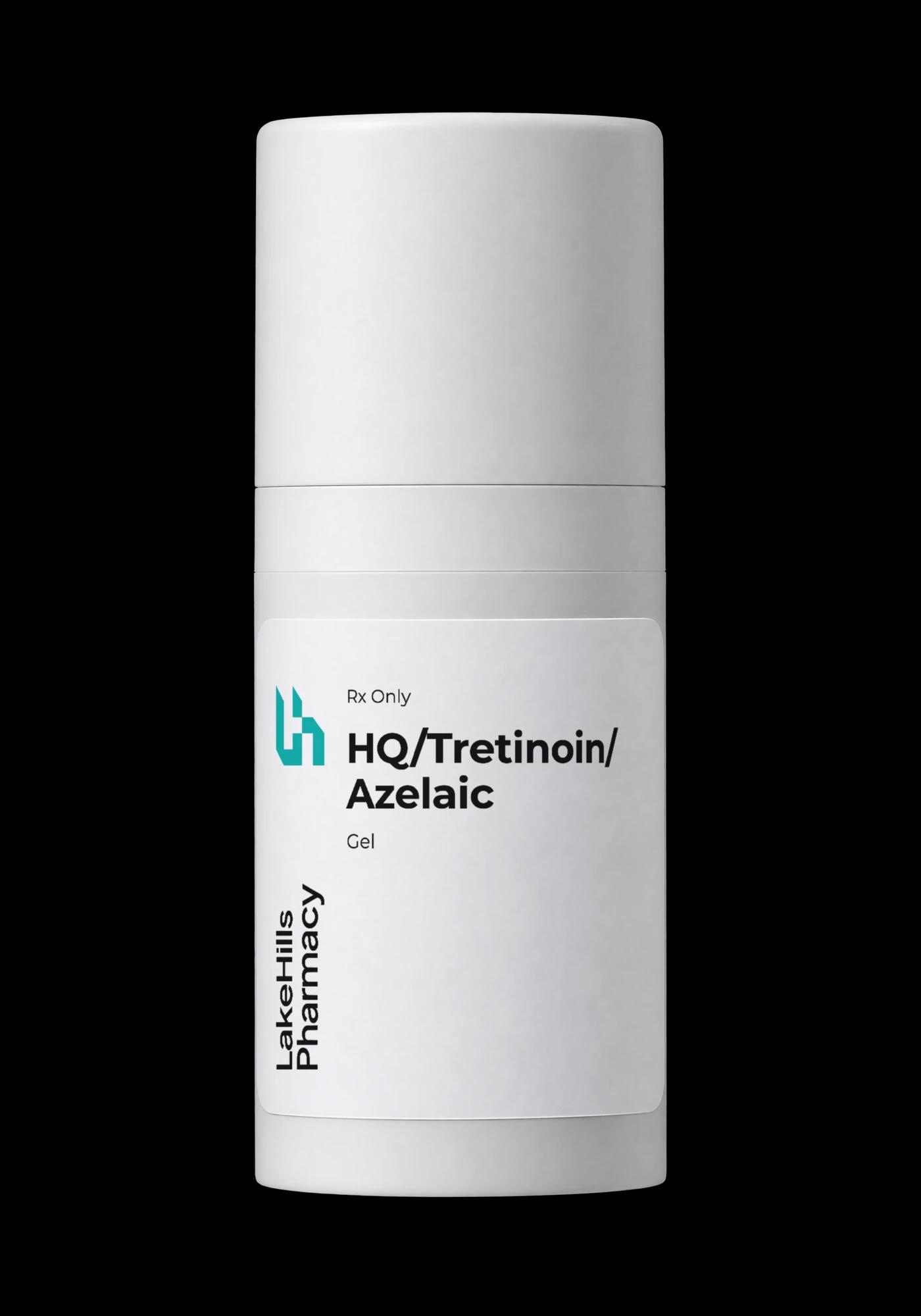
- Active ingredients
- Dosage form
- Gel
- Route
- Topical
- Care area
- Drug class
- Dermatologic agent, Retinoid
- DEA schedule
- Non-controlled
- Storage
- Room temperature


Compounded and dispensed by an NABP-accredited, LegitScript-certified pharmacy. Verify accreditation (opens in a new tab)
About compounded medications
All formulations are patient-specific prescriptions compounded by Lake Hills Pharmacy under FDA section 503A. Individual ingredients are FDA-approved; compounded products are not reviewed by the FDA for safety, effectiveness, or quality. For licensed healthcare providers only.
Available Dosage Strengths
Strengths are compounded to the prescriber's order.
Clinical information
Boxed Warning · Tretinoin
The boxed warning applies to oral tretinoin capsules only. Topical tretinoin products, including the topical preparations Lake Hills compounds, do not carry it. Oral capsule boxed warning: differentiation syndrome, which can be fatal, occurs in APL patients; at the first signs start corticosteroids and hemodynamic monitoring. Embryo-fetal toxicity: tretinoin can cause severe birth defects; exclude pregnancy before starting, use reliable contraception during and after treatment, and stop if pregnancy occurs.
Product Overview
Hydroquinone / Tretinoin / Azelaic Acid Gel. Lake Hills Pharmacy compounds this preparation as a 503A pharmacy, pursuant to a patient-specific prescription.
Hydroquinone is a tyrosinase inhibitor. The FDA-labeled indication of the hydroquinone-containing reference product Tri-Luma (topical cream) is short-term treatment of moderate to severe melasma of the face. Prescribers use compounded topical preparations of hydroquinone for melasma and other hyperpigmentation. Tretinoin is also a component of the labeled reference product. Azelaic acid is FDA labeled topically for acne vulgaris (Azelex cream) and inflammatory papules and pustules of rosacea (Finacea gel).
Active Ingredients & Strengths
A nonsterile topical gel containing hydroquinone, tretinoin and azelaic acid.
Strength is set on each prescription; contact Lake Hills Pharmacy for available strengths.
Dosing & Administration
Applied topically as prescribed. No FDA-labeled product contains this combination. No FDA-labeled dose exists for this route; dosing is individualized by the prescriber.
For reference, Tri-Luma cream, an FDA-labeled product containing hydroquinone 4% with tretinoin 0.05% and fluocinolone acetonide 0.01%, is applied as a thin film once daily at bedtime to the hyperpigmented areas, and its labeling covers up to 8 weeks of continuous use.
The prescriber sets the application frequency, treatment area and duration, and reassesses periodically.
Key Safety Information
- Hydroquinone: irritation, erythema and allergic contact dermatitis can occur. Prolonged use has been associated with exogenous ochronosis (blue-black darkening), more often in darker skin; stop use if darkening appears. Percutaneous absorption is higher than for many topical agents.
- Tretinoin: dryness, peeling, erythema and photosensitivity are common. Avoid excessive sun and UV exposure, and use with caution alongside other irritating or photosensitizing products. Oral tretinoin carries a boxed warning for embryo-fetal toxicity; topical exposure is low, but many prescribers avoid topical retinoids in pregnancy.
- Azelaic acid: burning, stinging and pruritus are common. Hypopigmentation has been reported, so watch for lightening beyond the treated area, particularly in darker skin. Azelaic acid labeling also reports worsening of asthma.
- General: for external use only. Avoid the eyes, mucous membranes and broken, sunburned or eczematous skin. Contraindicated with hypersensitivity to any component.
- Pregnancy and lactation: human data for these topical actives are limited. Use during pregnancy or breastfeeding is a prescriber decision after weighing the risks.
Storage, Stability & BUD
- Storage: Room temperature; keep the container tightly closed and protected from light.
- Beyond-use date: per the prescription label.
- USP default BUD (USP <795>): 35 days at controlled room temperature or refrigerated for a preserved aqueous preparation, 14 days refrigerated for a nonpreserved aqueous preparation, or 90 days for a nonaqueous preparation; the category follows the Lake Hills base and vehicle.
- Lake Hills may assign extended dating based on its own stability data.
Patient Counseling
- Use this medication exactly as your prescriber directs. Do not use more often or on a larger area than prescribed.
- Use a broad-spectrum sunscreen every day and limit sun exposure, including through windows. Sun exposure can darken pigment again.
- For external use only. Keep it away from the eyes, nose, mouth and broken or irritated skin. Wash your hands after each use.
- Stop use and contact your prescriber if you have severe redness, burning, blistering, swelling, or new darkening of the skin.
- Tell your prescriber if you are pregnant, planning a pregnancy or breastfeeding.
- Keep the container tightly closed, away from light and heat, and use it by the beyond-use date on the label.
References
- Tri-Luma (fluocinolone acetonide 0.01%, hydroquinone 4%, tretinoin 0.05%) Cream Prescribing Information, Galderma Laboratories.
- Retin-A (tretinoin) Cream and Gel Prescribing Information.
- Finacea (azelaic acid) Gel 15% Prescribing Information, LEO Pharma.
- USP General Chapter <795> Pharmaceutical Compounding: Nonsterile Preparations.
- Lexicomp Drug Information, Wolters Kluwer.
Active ingredients
Hydroquinone
Dermatologic agent
Overview
Hydroquinone (1,4-dihydroxybenzene) is a topical depigmenting agent. In the US it is available on prescription in Tri-Luma cream (fluocinolone acetonide 0.01%, hydroquinone 4%, tretinoin 0.05%). Since the CARES Act OTC monograph reform of 2020, hydroquinone can no longer be marketed in nonprescription skin-lightening products without FDA approval. Lake Hills Pharmacy compounds topical hydroquinone preparations as a 503A pharmacy on patient-specific prescriptions.
Indications & Uses
Tri-Luma cream is FDA labeled for short-term treatment of moderate to severe melasma of the face, used with sun avoidance and sunscreen. Prescribers use compounded topical hydroquinone, alone or with other agents, for melasma, post-inflammatory hyperpigmentation, solar lentigines and other hyperpigmentation.
Mechanism of Action
Hydroquinone inhibits tyrosinase, the enzyme that converts tyrosine to DOPA and then to melanin, reducing melanin synthesis. It also generates reactive oxygen species and quinones within melanocytes that damage melanosomes and melanocyte membranes. Its effect is reversible, and pigment can return with sun exposure or after stopping.
Pharmacokinetics
Hydroquinone is absorbed through the skin to a meaningful degree; studies of topical application have reported systemic absorption of a substantial fraction of the applied dose. Absorbed drug is conjugated to glucuronide and sulfate metabolites and excreted in urine. In formulation, hydroquinone oxidizes to p-benzoquinone, which turns the preparation brown; antioxidants and light protection slow this.
Contraindications
- Hypersensitivity to hydroquinone or any component of the preparation, including sulfites where present.
Warnings & Precautions
- Exogenous ochronosis: gradual blue-black darkening of treated skin with prolonged use, reported more often in darker skin types and with higher strengths. Discontinue if it appears; it may be persistent.
- Irritation and allergic contact dermatitis: test a small area first when the prescriber directs; stop if vesicles, marked erythema or itching develop.
- Sun exposure: UV exposure reverses depigmentation. Daily broad-spectrum sunscreen and sun avoidance are part of therapy.
- Sulfites: many hydroquinone products contain sodium metabisulfite, which can cause allergic and asthmatic reactions in sensitive people.
- Hypopigmentation and confetti-like depigmentation can occur, particularly with higher strengths or application beyond the target area. Avoid the eyes and mucous membranes.
Drug Interactions
- No clinically important systemic interactions are established for topical use.
- Use with benzoyl peroxide or hydrogen peroxide can cause transient dark staining of the skin.
- Additive irritation with other topical irritants, including retinoids, alpha-hydroxy acids and resorcinol.
Adverse Effects
Common: erythema, burning, stinging, dryness and pruritus. Less common: allergic contact dermatitis, hypopigmentation, nail discoloration. Rare with long-term use: exogenous ochronosis and colloid milium.
Pregnancy & Lactation
Adequate human pregnancy data are lacking. Because systemic absorption is meaningful, many prescribers defer hydroquinone during pregnancy. It is not known whether hydroquinone passes into breast milk; use during breastfeeding is a prescriber decision.
Monitoring
Assess response and tolerability at regular intervals set by the prescriber, watching for irritation, contact dermatitis, hypopigmentation and early signs of ochronosis, and reassess the need for continued use.
References
- Tri-Luma (fluocinolone acetonide 0.01%, hydroquinone 4%, tretinoin 0.05%) Cream Prescribing Information, Galderma Laboratories.
- Coronavirus Aid, Relief, and Economic Security (CARES) Act of 2020, OTC monograph reform provisions.
- Lexicomp Drug Information, Wolters Kluwer.
Tretinoin
Retinoid
Overview
Tretinoin (all-trans retinoic acid) is a retinoid. FDA-approved topical products include Retin-A cream and gel, Renova emollient cream, Atralin gel, Altreno lotion and Tri-Luma cream (with hydroquinone and fluocinolone). Oral tretinoin capsules are approved for acute promyelocytic leukemia. Lake Hills Pharmacy compounds topical tretinoin preparations as a 503A pharmacy on patient-specific prescriptions.
Indications & Uses
- Topical (Retin-A, Atralin, Altreno): acne vulgaris.
- Topical (Renova 0.02% and 0.05%): adjunct for mitigation of fine facial wrinkling, mottled hyperpigmentation and roughness associated with chronic sun exposure, with sun avoidance.
- Topical (Tri-Luma): short-term treatment of moderate to severe facial melasma, in combination.
- Oral capsules: induction of remission in acute promyelocytic leukemia (APL) with the t(15;17) translocation or PML/RARA gene.
- Prescribers use compounded topical tretinoin, alone or with other agents, for acne, photoaging and hyperpigmentation.
Mechanism of Action
Tretinoin binds nuclear retinoic acid receptors (RAR-alpha, beta, gamma), altering gene transcription. In skin it increases epidermal cell turnover, reduces cohesion of follicular keratinocytes, normalizes follicular keratinization and promotes dispersion of melanin granules. In APL it induces differentiation of leukemic promyelocytes.
Pharmacokinetics
Topical: systemic absorption is minimal, and plasma retinoid levels stay within the endogenous range in labeled studies. Oral: peak levels occur in 1 to 2 hours, elimination half-life is short (about 0.5 to 2 hours), and metabolism through CYP26 and CYP3A4 induces its own clearance with continued dosing.
Contraindications
- Hypersensitivity to tretinoin, other retinoids or any component of the preparation (oral capsules: also parabens).
Warnings & Precautions
- Topical: local irritation (erythema, peeling, dryness, burning) is common; reduce frequency or stop if severe. Avoid eyes, mouth, nasal folds and mucous membranes, and do not apply to eczematous, sunburned or broken skin.
- Photosensitivity: minimize sun and UV exposure and use sunscreen and protective clothing. Weather extremes such as wind or cold may increase irritation.
- Oral: leukocytosis, pseudotumor cerebri (risk rises with tetracyclines), hyperlipidemia, elevated liver enzymes, and thrombosis risk.
Drug Interactions
- Topical: additive irritation with keratolytics (salicylic acid, sulfur, resorcinol), astringents, alcohol-containing products and abrasive cleansers; benzoyl peroxide can degrade some tretinoin formulations. Use caution with photosensitizing drugs such as thiazides, tetracyclines, fluoroquinolones, phenothiazines and sulfonamides.
- Oral: CYP3A4 inhibitors and inducers alter exposure; antifibrinolytics such as tranexamic acid increase thrombotic risk; tetracyclines increase the risk of pseudotumor cerebri; avoid vitamin A supplements.
Adverse Effects
Topical: erythema, peeling, dryness, burning, stinging, pruritus, temporary hyper- or hypopigmentation and photosensitivity. Oral: headache, fever, dry skin and mucous membranes, bone pain, nausea, hyperlipidemia, liver enzyme elevation and differentiation syndrome.
Pregnancy & Lactation
Oral tretinoin causes fetal harm and requires pregnancy exclusion and contraception. Topical tretinoin labeling reports limited human data; systemic absorption is low, but isolated reports of birth defects exist and many prescribers avoid topical retinoids in pregnancy. It is not known whether topical tretinoin passes into breast milk; oral labeling advises against breastfeeding during treatment and for 1 week after the last dose.
Monitoring
Topical: skin tolerability and photosensitivity at intervals set by the prescriber; confirm pregnancy status and plans. Oral: complete blood counts, coagulation, lipids, liver tests, pregnancy testing and signs of differentiation syndrome.
References
- Retin-A (tretinoin) Cream and Gel Prescribing Information.
- Renova (tretinoin) Cream 0.02% Prescribing Information.
- Tri-Luma (fluocinolone acetonide 0.01%, hydroquinone 4%, tretinoin 0.05%) Cream Prescribing Information, Galderma Laboratories.
- Tretinoin Capsules, 10 mg, Prescribing Information (generic labeling).
- Lexicomp Drug Information, Wolters Kluwer.
Azelaic Acid
Dermatologic agent
Overview
Azelaic acid is a saturated nine-carbon dicarboxylic acid that occurs naturally in wheat, rye and barley and is produced by the skin yeast Malassezia. US products are Finacea Gel 15% (and generic azelaic acid gel 15%), Finacea Foam 15% and Azelex Cream 20%. Lake Hills Pharmacy uses azelaic acid in compounded topical preparations.
Indications & Uses
- Finacea Gel 15% and Foam 15%: topical treatment of the inflammatory papules and pustules of mild to moderate rosacea.
- Azelex Cream 20%: topical treatment of mild to moderate inflammatory acne vulgaris.
- Prescribers use compounded azelaic acid, alone or combined with other agents, for acne, rosacea, melasma, post-inflammatory hyperpigmentation and other hyperpigmentation disorders.
Mechanism of Action
Azelaic acid has several actions: it is antibacterial against Cutibacterium acnes and Staphylococcus epidermidis by inhibiting microbial protein synthesis; it normalizes keratinization and reduces follicular hyperkeratosis; it reduces reactive oxygen species from neutrophils and dampens the kallikrein-cathelicidin pathway implicated in rosacea; and it competitively inhibits tyrosinase and has an antiproliferative effect on hyperactive melanocytes, with little effect on normal melanocytes. The exact mechanism in rosacea is not fully known.
Pharmacokinetics
A small fraction, a few percent, of a topical dose is absorbed through the skin. Absorbed azelaic acid is excreted mainly unchanged in the urine, with some undergoing beta-oxidation. Its apparent half-life after topical application is longer than after oral dosing because absorption is rate-limiting. Plasma levels after topical use remain within the range seen from normal dietary intake.
Contraindications
Azelex Cream labeling contraindicates use in patients with hypersensitivity to any of its components; Finacea labeling lists no contraindications. Compounded preparations should not be used in patients with hypersensitivity to azelaic acid or any component.
Warnings & Precautions
- Skin reactions: burning, stinging, itching, dryness and erythema are common, mostly early in treatment; stop if severe or persistent.
- Hypopigmentation has been reported; monitor patients with darker complexions for early signs.
- Avoid contact with the eyes, mouth and other mucous membranes; rinse with water if contact occurs.
- Worsening of asthma has been reported in patients using azelaic acid products.
- Finacea Foam contains a flammable propellant; avoid fire, flame and smoking during and right after application.
Drug Interactions
No formal interaction studies exist and no clinically relevant systemic interactions are expected with topical use. Irritation can be additive with retinoids, benzoyl peroxide, abrasive or drying cleansers and alcohol-containing products.
Adverse Effects
Burning, stinging, tingling, itching, dryness, erythema, scaling and contact dermatitis. Less often: hypopigmentation, hypersensitivity reactions including angioedema and urticaria, eye irritation after accidental contact, and worsening of asthma.
Pregnancy & Lactation
Systemic absorption after topical use is minimal. In animal studies, oral doses far above human topical exposure caused embryotoxicity only at maternally toxic levels, with no teratogenicity. Human data are limited. Azelaic acid is not expected to raise milk levels meaningfully above those from diet after topical use; avoid application to the breast area while nursing.
Monitoring
Tolerability and skin irritation, pigmentary changes in patients with darker skin, asthma symptoms in patients with asthma, and clinical response at follow-up.
References
- Finacea (azelaic acid) Gel 15% Prescribing Information, LEO Pharma.
- Finacea (azelaic acid) Foam 15% Prescribing Information, LEO Pharma.
- Azelex (azelaic acid) Cream 20% Prescribing Information.
- Guidelines of Care for the Management of Acne Vulgaris (2024), American Academy of Dermatology.
More in Dermatology
- Azelaic AcidDermatology · Gel · TopicalRx only
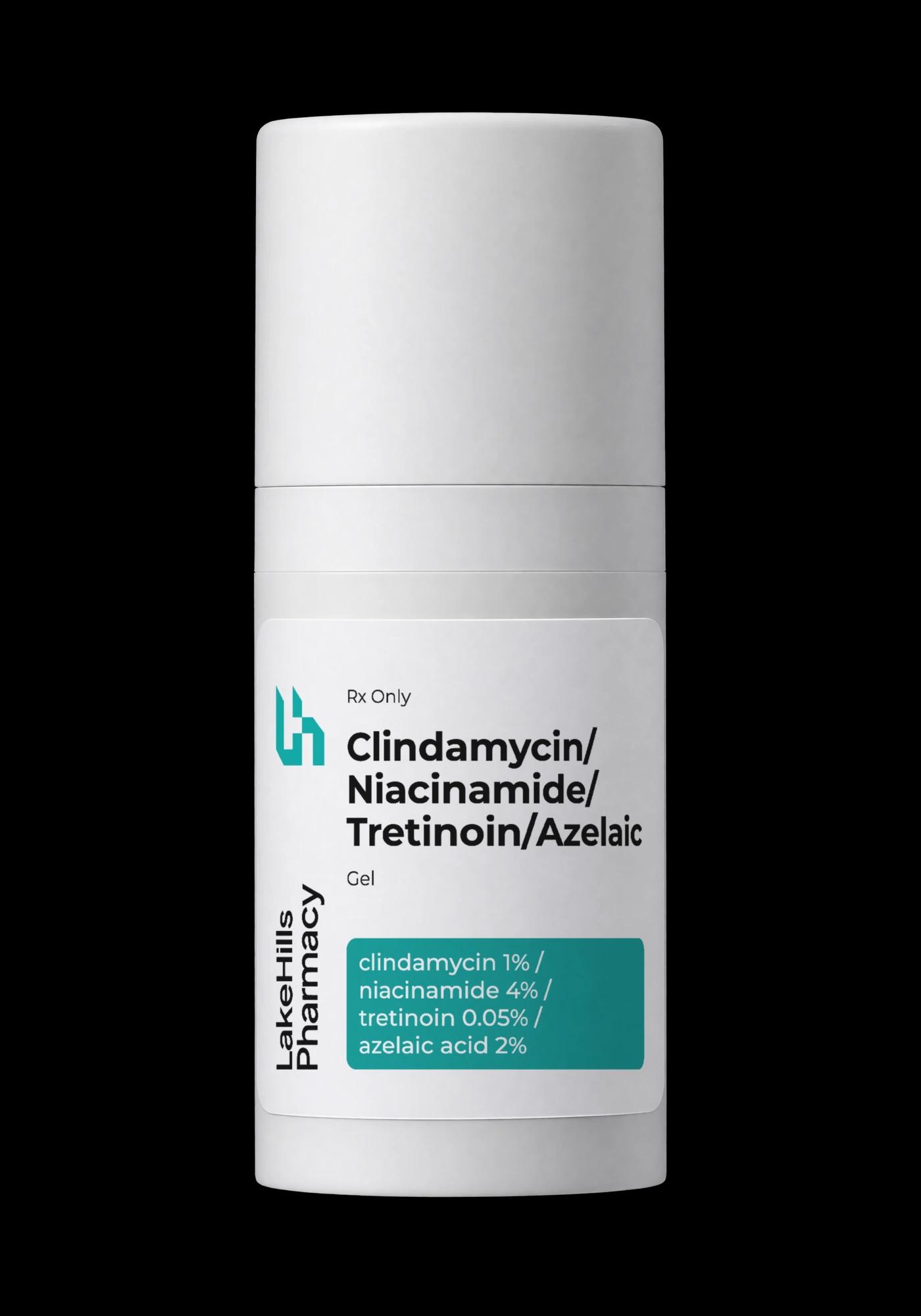
- Clindamycin/
Niacinamide/ Tretinoin/ AzelaicClindamycin/ Niacinamide/ Tretinoin/ Azelaic AcidDermatology · Gel · TopicalRx only - HQ/
Kojic/ Niacinamide/ Ascorbic/ TranexamicHydroquinone/ Kojic Acid/ Niacinamide/ Ascorbic Acid/ Tranexamic AcidDermatology · Gel · TopicalRx only
Ask a pharmacist
Are compounded medications FDA approved?
All formulations are patient-specific prescriptions compounded by Lake Hills Pharmacy under FDA section 503A. Individual ingredients are FDA-approved; compounded products are not reviewed by the FDA for safety, effectiveness, or quality. For licensed healthcare providers only.
How do I get a prescription filled here?
You can have your doctor send prescriptions to us any time. We also transfer your medications from another pharmacy. Our pharmacy accepts all major insurance plans.
Can you ship this medication to my state?
It depends on the medication and on your state. Whether we can dispense or ship a medication to you depends on the laws and board of pharmacy rules of your state and on our licensure there. We confirm availability when we receive a prescription.
These answers cover the basics. For anything about a formula, a strength or a prescription, contact our pharmacists.
Mon - Fri: 8:30am - 6:30pm CTSaturday: 9:00am - 2:00pm CTSunday: Closed
12005 Bee Cave Rd, Suite 1-A, Austin, TX 78738