
- Active ingredients
- Dosage form
- Gel
- Route
- Topical
- Care area
- Drug class
- Dermatologic agent
- DEA schedule
- Non-controlled
- Storage
- Room temperature


Compounded and dispensed by an NABP-accredited, LegitScript-certified pharmacy. Verify accreditation (opens in a new tab)
About compounded medications
All formulations are patient-specific prescriptions compounded by Lake Hills Pharmacy under FDA section 503A. Individual ingredients are FDA-approved; compounded products are not reviewed by the FDA for safety, effectiveness, or quality. For licensed healthcare providers only.
Available Dosage Strengths
Gel
12%
Clinical information
Product Overview
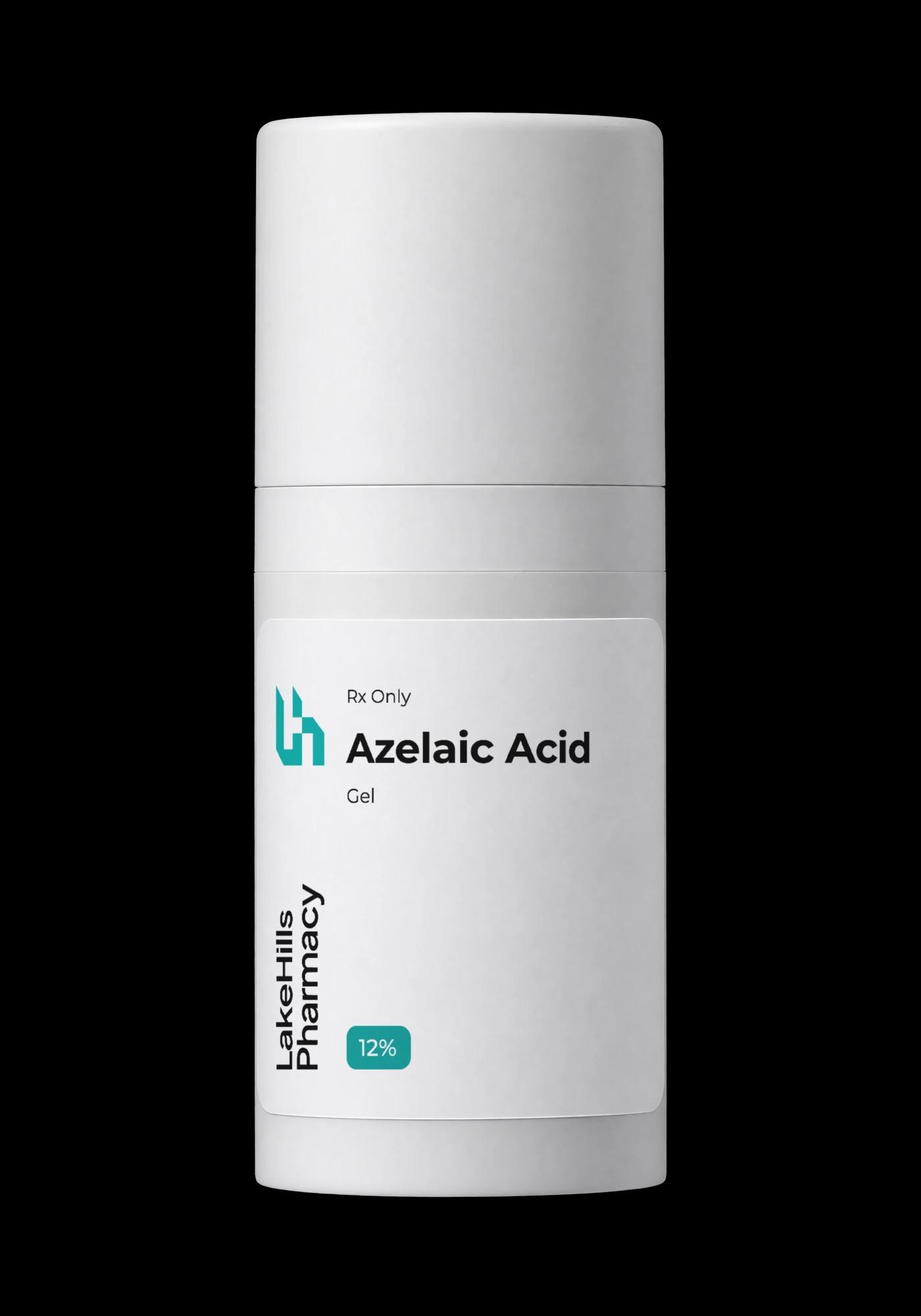
Azelaic Acid Gel is a nonsterile topical gel of azelaic acid 12% that Lake Hills Pharmacy compounds as a 503A pharmacy, pursuant to a patient-specific prescription. Azelaic acid is a naturally occurring dicarboxylic acid with antibacterial, anti-keratinizing, anti-inflammatory and tyrosinase-inhibiting activity.
FDA-labeled indications belong to manufactured products: Finacea (azelaic acid) Gel 15% and Foam 15% for the inflammatory papules and pustules of mild to moderate rosacea, and Azelex (azelaic acid) Cream 20% for mild to moderate inflammatory acne vulgaris. Prescribers use compounded azelaic acid preparations for acne, rosacea and hyperpigmentation disorders such as melasma and post-inflammatory hyperpigmentation.
Active Ingredients & Strengths
- Azelaic acid 12% topical gel (container size not listed in the Lake Hills record).
Dosing & Administration
Topical, as prescribed. No FDA-labeled dose exists for the 12% strength; dosing is individualized by the prescriber. For reference, Finacea Gel 15% and Azelex Cream 20% are labeled for twice-daily application of a thin layer to the affected skin.
Key Safety Information
- No boxed warning. Do not use with hypersensitivity to azelaic acid or any component of the gel.
- Skin irritation (burning, stinging, itching, dryness, redness, scaling) is common, mostly early in use; stop if it is severe or persistent.
- Hypopigmentation has been reported; watch patients with darker skin for unusual lightening.
- Avoid the eyes, mouth and other mucous membranes. Worsening of asthma has been reported with azelaic acid products.
- No clinically relevant drug interactions are known for topical use; irritation can add up with retinoids, benzoyl peroxide, abrasive cleansers or alcohol-based products.
Storage, Stability & BUD
Storage: room temperature, in the closed container, away from heat.
Beyond-use date: per the prescription label.
USP default BUD (USP <795>): 35 days at controlled room temperature or refrigerated for a preserved aqueous preparation, 14 days refrigerated for a nonpreserved aqueous preparation, or 90 days for a nonaqueous preparation; the category follows the Lake Hills base and vehicle.
Lake Hills may assign extended dating based on its own stability data.
Patient Counseling
Apply the gel exactly as the prescriber directs, only to the areas prescribed. Wash your hands after applying.
Mild stinging or tingling is common at first. Report severe or lasting irritation, unusual skin lightening, or new wheezing.
Keep the gel away from your eyes and mouth; rinse with water if contact occurs. Daily sunscreen is generally advised when treating pigmentation.
Tell the prescriber if you are pregnant or breastfeeding.
References
- Finacea (azelaic acid) Gel 15% Prescribing Information, LEO Pharma.
- Finacea (azelaic acid) Foam 15% Prescribing Information, LEO Pharma.
- Azelex (azelaic acid) Cream 20% Prescribing Information.
- USP General Chapter <795> Pharmaceutical Compounding — Nonsterile Preparations.
Active ingredients
Azelaic Acid
Dermatologic agent
Overview
Azelaic acid is a saturated nine-carbon dicarboxylic acid that occurs naturally in wheat, rye and barley and is produced by the skin yeast Malassezia. US products are Finacea Gel 15% (and generic azelaic acid gel 15%), Finacea Foam 15% and Azelex Cream 20%. Lake Hills Pharmacy uses azelaic acid in compounded topical preparations.
Indications & Uses
- Finacea Gel 15% and Foam 15%: topical treatment of the inflammatory papules and pustules of mild to moderate rosacea.
- Azelex Cream 20%: topical treatment of mild to moderate inflammatory acne vulgaris.
- Prescribers use compounded azelaic acid, alone or combined with other agents, for acne, rosacea, melasma, post-inflammatory hyperpigmentation and other hyperpigmentation disorders.
Mechanism of Action
Azelaic acid has several actions: it is antibacterial against Cutibacterium acnes and Staphylococcus epidermidis by inhibiting microbial protein synthesis; it normalizes keratinization and reduces follicular hyperkeratosis; it reduces reactive oxygen species from neutrophils and dampens the kallikrein-cathelicidin pathway implicated in rosacea; and it competitively inhibits tyrosinase and has an antiproliferative effect on hyperactive melanocytes, with little effect on normal melanocytes. The exact mechanism in rosacea is not fully known.
Pharmacokinetics
A small fraction, a few percent, of a topical dose is absorbed through the skin. Absorbed azelaic acid is excreted mainly unchanged in the urine, with some undergoing beta-oxidation. Its apparent half-life after topical application is longer than after oral dosing because absorption is rate-limiting. Plasma levels after topical use remain within the range seen from normal dietary intake.
Contraindications
Azelex Cream labeling contraindicates use in patients with hypersensitivity to any of its components; Finacea labeling lists no contraindications. Compounded preparations should not be used in patients with hypersensitivity to azelaic acid or any component.
Warnings & Precautions
- Skin reactions: burning, stinging, itching, dryness and erythema are common, mostly early in treatment; stop if severe or persistent.
- Hypopigmentation has been reported; monitor patients with darker complexions for early signs.
- Avoid contact with the eyes, mouth and other mucous membranes; rinse with water if contact occurs.
- Worsening of asthma has been reported in patients using azelaic acid products.
- Finacea Foam contains a flammable propellant; avoid fire, flame and smoking during and right after application.
Drug Interactions
No formal interaction studies exist and no clinically relevant systemic interactions are expected with topical use. Irritation can be additive with retinoids, benzoyl peroxide, abrasive or drying cleansers and alcohol-containing products.
Adverse Effects
Burning, stinging, tingling, itching, dryness, erythema, scaling and contact dermatitis. Less often: hypopigmentation, hypersensitivity reactions including angioedema and urticaria, eye irritation after accidental contact, and worsening of asthma.
Pregnancy & Lactation
Systemic absorption after topical use is minimal. In animal studies, oral doses far above human topical exposure caused embryotoxicity only at maternally toxic levels, with no teratogenicity. Human data are limited. Azelaic acid is not expected to raise milk levels meaningfully above those from diet after topical use; avoid application to the breast area while nursing.
Monitoring
Tolerability and skin irritation, pigmentary changes in patients with darker skin, asthma symptoms in patients with asthma, and clinical response at follow-up.
References
- Finacea (azelaic acid) Gel 15% Prescribing Information, LEO Pharma.
- Finacea (azelaic acid) Foam 15% Prescribing Information, LEO Pharma.
- Azelex (azelaic acid) Cream 20% Prescribing Information.
- Guidelines of Care for the Management of Acne Vulgaris (2024), American Academy of Dermatology.
More in Dermatology
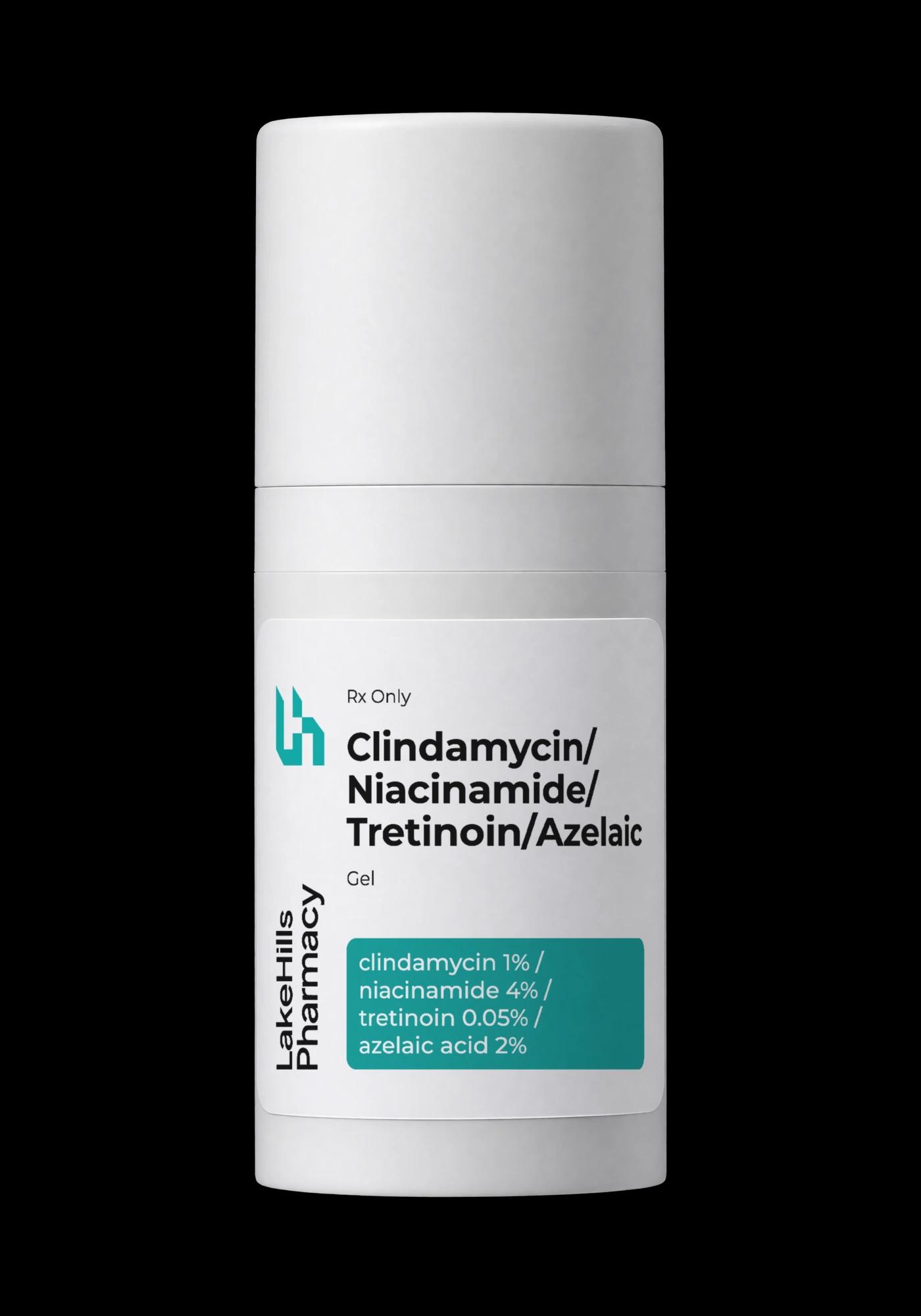
- Clindamycin/
Niacinamide/ Tretinoin/ AzelaicClindamycin/ Niacinamide/ Tretinoin/ Azelaic AcidDermatology · Gel · TopicalRx only - HQ/
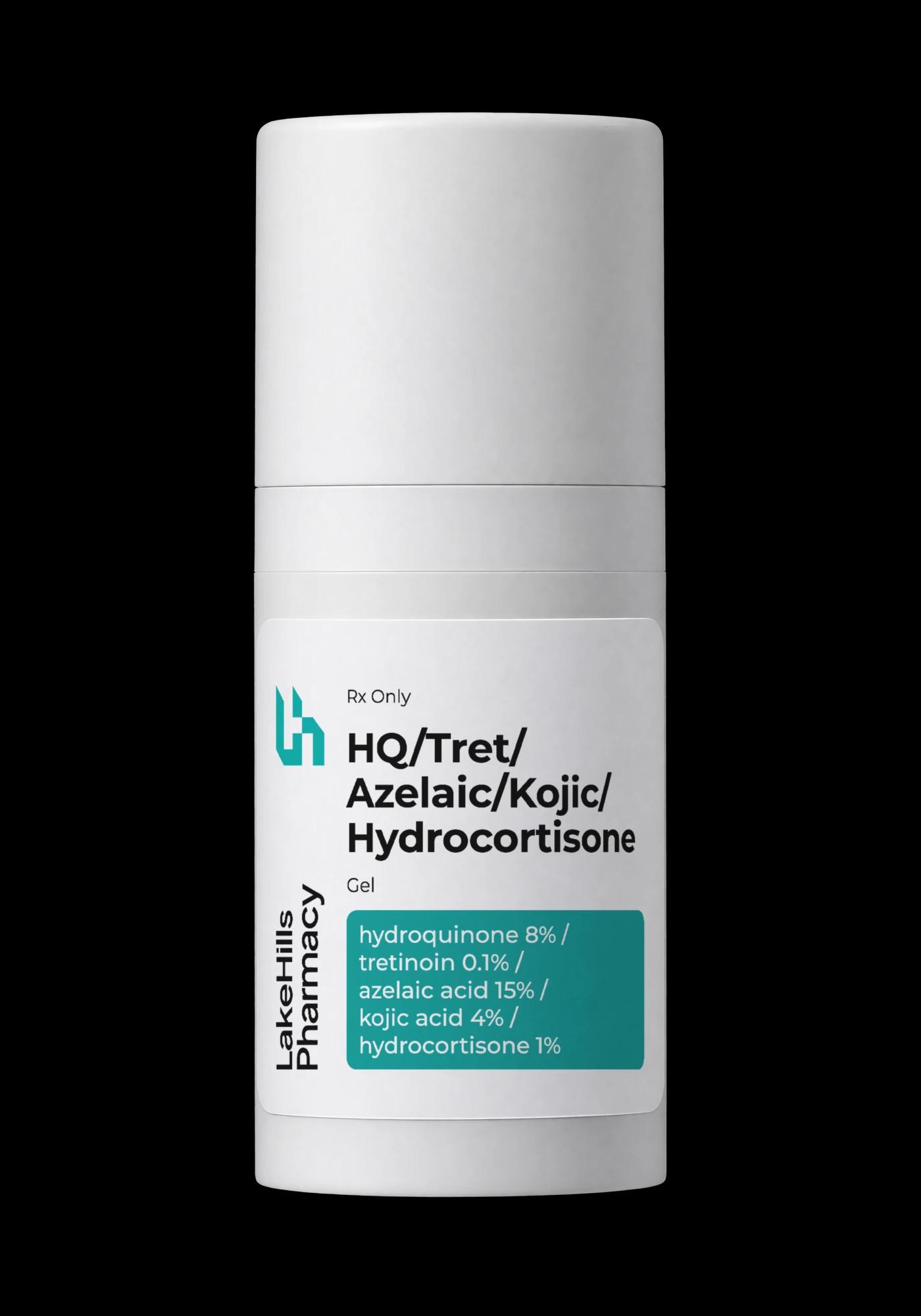
Tret/ Azelaic/ Kojic/ HydrocortisoneHydroquinone/ Tretinoin/ Azelaic Acid/ Kojic Acid/ HydrocortisoneDermatology · Gel · TopicalRx only - HQ/
Tretinoin/ AzelaicHydroquinone/ Tretinoin/ Azelaic AcidDermatology · Gel · TopicalRx only
Ask a pharmacist
Are compounded medications FDA approved?
All formulations are patient-specific prescriptions compounded by Lake Hills Pharmacy under FDA section 503A. Individual ingredients are FDA-approved; compounded products are not reviewed by the FDA for safety, effectiveness, or quality. For licensed healthcare providers only.
How do I get a prescription filled here?
You can have your doctor send prescriptions to us any time. We also transfer your medications from another pharmacy. Our pharmacy accepts all major insurance plans.
Can you ship this medication to my state?
It depends on the medication and on your state. Whether we can dispense or ship a medication to you depends on the laws and board of pharmacy rules of your state and on our licensure there. We confirm availability when we receive a prescription.
These answers cover the basics. For anything about a formula, a strength or a prescription, contact our pharmacists.
Mon - Fri: 8:30am - 6:30pm CTSaturday: 9:00am - 2:00pm CTSunday: Closed
12005 Bee Cave Rd, Suite 1-A, Austin, TX 78738