
- Active ingredients
- Dosage form
- Capsule
- Route
- Oral
- Care area
- Drug class
- Other
- DEA schedule
- Non-controlled
- Storage
- Room temperature


Compounded and dispensed by an NABP-accredited, LegitScript-certified pharmacy. Verify accreditation (opens in a new tab)
About compounded medications
All formulations are patient-specific prescriptions compounded by Lake Hills Pharmacy under FDA section 503A. Individual ingredients are FDA-approved; compounded products are not reviewed by the FDA for safety, effectiveness, or quality. For licensed healthcare providers only.
Available Dosage Strengths
Strengths are compounded to the prescriber's order.
Clinical information
Product Overview
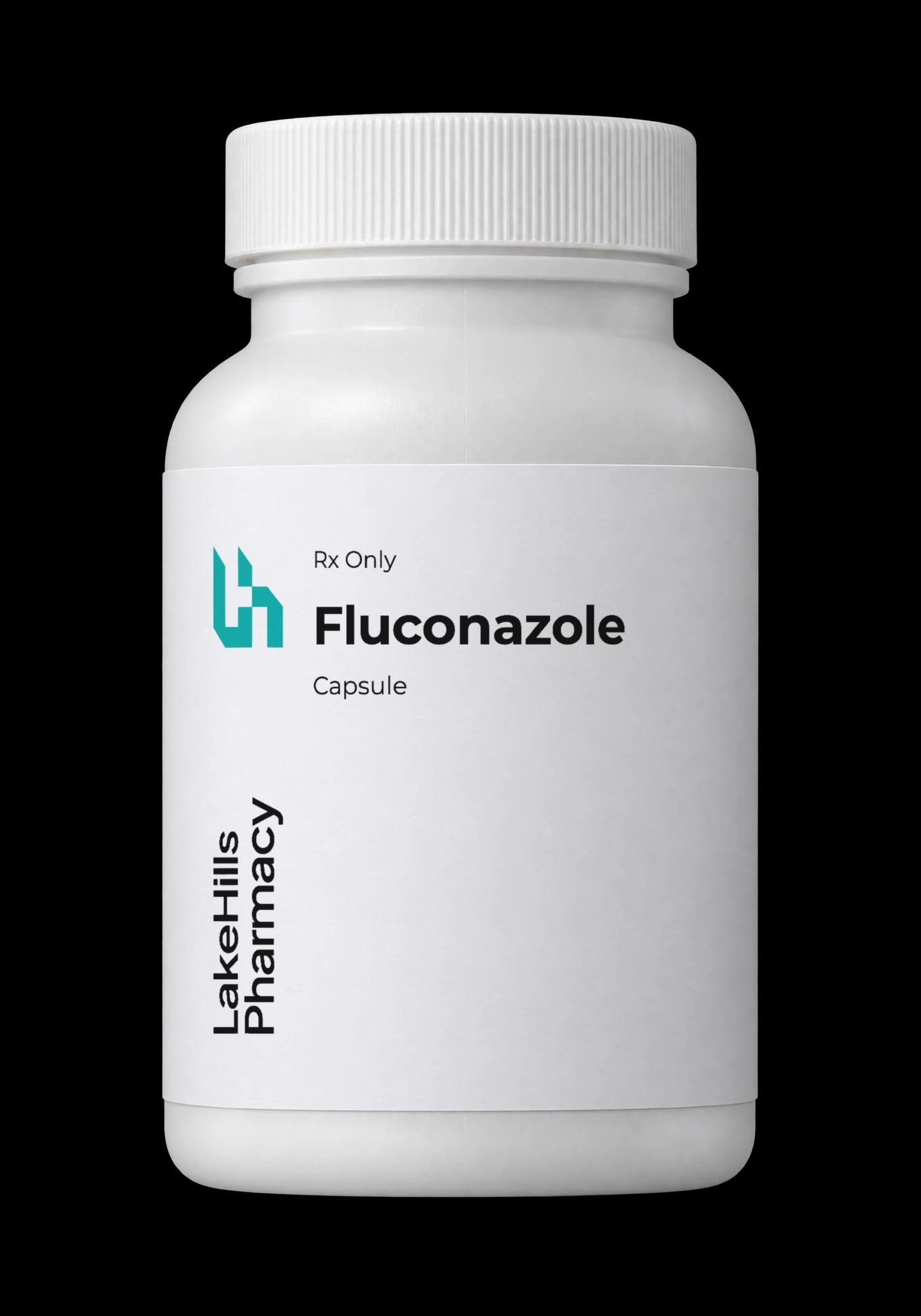
Fluconazole Capsule is an oral triazole antifungal capsule that Lake Hills Pharmacy compounds as a 503A pharmacy, pursuant to a patient-specific prescription. Fluconazole is the active ingredient of Diflucan (fluconazole) tablets and oral suspension, which are FDA-labeled for vaginal candidiasis, oropharyngeal and esophageal candidiasis, Candida urinary tract infection, peritonitis and systemic Candida infections, cryptococcal meningitis, and prophylaxis of candidiasis in bone marrow transplant patients receiving cytotoxic chemotherapy or radiation.
Fluconazole is fungistatic against Candida species. Prescribers use compounded capsules when a strength or excipient profile not available commercially is needed.
Active Ingredients & Strengths
- Active ingredient: fluconazole.
- Strength is set on each prescription; contact Lake Hills Pharmacy for available strengths.
- Route: oral.
Dosing & Administration
Dose and duration are as prescribed. For reference, Diflucan labeling for adults ranges from a single 150 mg oral dose for vaginal candidiasis to 50 to 400 mg once daily for other indications, depending on the infection. Pediatric labeled dosing is weight based.
For multiple-dose therapy in patients with creatinine clearance of 50 mL/min or less, the labeled maintenance dose is reduced by 50 percent after the loading dose. Capsules may be taken with or without food.
Key Safety Information
- Contraindicated with known hypersensitivity to fluconazole or any of its excipients, and with coadministration of other QT-prolonging drugs metabolized by CYP3A4, such as erythromycin, pimozide and quinidine. Use caution in patients with hypersensitivity to other azoles.
- Fluconazole is a moderate CYP2C9 and CYP3A4 inhibitor and a strong CYP2C19 inhibitor. Clinically important interactions include warfarin, phenytoin, sulfonylureas, cyclosporine, tacrolimus, sirolimus, certain statins, benzodiazepines such as midazolam and triazolam, methadone, fentanyl, amiodarone, tofacitinib and voriconazole. Rifampin lowers fluconazole levels.
- Warnings: hepatic injury, including rare fatal cases; QT prolongation and torsades de pointes, with greater risk when hypokalemia or other proarrhythmic conditions are present; anaphylaxis; exfoliative skin reactions including Stevens-Johnson syndrome and DRESS; adrenal insufficiency.
- Pregnancy: case reports describe a pattern of congenital anomalies with high-dose (400 to 800 mg/day) first-trimester use. FDA reviewed reports of miscarriage with oral fluconazole in pregnancy in a 2016 safety communication. Use in pregnancy is a prescriber decision; topical azoles are generally preferred for vaginal candidiasis in pregnancy.
- Common adverse effects include headache, nausea, abdominal pain, diarrhea, rash and taste change.
Storage, Stability & BUD
- Storage: room temperature, in a tightly closed container.
- Beyond-use date: per the prescription label.
- USP default BUD for this dosage form: 180 days at controlled room temperature (nonsterile solid).
- Lake Hills may assign extended dating based on its own stability data.
Patient Counseling
- Use this medication exactly as your prescriber directs. Do not change the amount or how often you use it without talking to your prescriber. Finish the course your prescriber orders.
- Tell your prescriber and pharmacist about every medication and supplement you take, because fluconazole interacts with many drugs, including blood thinners.
- Seek care for yellowing of the skin or eyes, dark urine, rash or blistering, fainting or a fast or irregular heartbeat.
- Tell your prescriber if you are pregnant, could become pregnant or are breastfeeding.
References
- Diflucan (fluconazole) Prescribing Information, Pfizer.
- FDA Drug Safety Communication: FDA to review study examining use of oral fluconazole (Diflucan) in pregnancy, April 2016.
- USP General Chapter <795> Pharmaceutical Compounding, Nonsterile Preparations.
Active ingredients
Fluconazole
Overview
Fluconazole is a synthetic triazole antifungal. FDA-approved products include Diflucan (fluconazole) tablets and powder for oral suspension and fluconazole in sodium chloride injection for intravenous use. Compounded oral preparations of fluconazole are used when a strength or excipient profile not available commercially is needed.
Indications & Uses
- FDA-labeled (Diflucan, oral and intravenous): vaginal candidiasis; oropharyngeal and esophageal candidiasis; Candida urinary tract infection, peritonitis and systemic Candida infections including candidemia, disseminated candidiasis and pneumonia; cryptococcal meningitis; and prophylaxis to decrease the incidence of candidiasis in bone marrow transplant patients receiving cytotoxic chemotherapy or radiation.
- Labeled adult oral doses range from a single 150 mg dose for vaginal candidiasis to 50 to 400 mg once daily for other indications, with weight-based dosing in children and dose reduction in renal impairment. Dose and duration are as prescribed.
Mechanism of Action
Fluconazole inhibits fungal cytochrome P450 lanosterol 14-alpha-demethylase, blocking conversion of lanosterol to ergosterol. Ergosterol depletion and accumulation of methylated sterols disrupt fungal cell membrane function. Fluconazole is fungistatic against Candida species and is active against Cryptococcus neoformans. Candida krusei is intrinsically resistant, and Candida glabrata often shows reduced susceptibility.
Pharmacokinetics
Oral bioavailability exceeds 90% and is not affected by food. Peak plasma concentrations occur 1 to 2 hours after an oral dose. Protein binding is about 11 to 12%. Fluconazole distributes widely into body fluids, including cerebrospinal fluid, saliva, sputum, vaginal tissue and breast milk.
Elimination is mainly renal, with about 80% of a dose excreted unchanged in the urine. The plasma half-life is about 30 hours in adults with normal renal function, which supports once-daily dosing, and is prolonged in renal impairment. Hemodialysis removes fluconazole.
Contraindications
- Known hypersensitivity to fluconazole or any of its excipients. Cross-hypersensitivity with other azoles is not established; use caution in patients with hypersensitivity to other azoles.
- Coadministration with other drugs that prolong the QT interval and are metabolized by CYP3A4, such as erythromycin, pimozide and quinidine.
Warnings & Precautions
- Hepatic injury: rare serious hepatotoxicity, including fatalities, mainly in patients with serious underlying conditions. Discontinue if signs of liver disease develop.
- QT prolongation and torsades de pointes: use caution with proarrhythmic conditions, electrolyte disturbances such as hypokalemia, and other QT-prolonging drugs; correct potassium, magnesium and calcium before and during therapy.
- Anaphylaxis and serious skin reactions, including exfoliative dermatitis, Stevens-Johnson syndrome, toxic epidermal necrolysis and DRESS. Monitor patients who develop rash, especially those with serious fungal infections or immunosuppression.
- Adrenal insufficiency has been reported, and was reversible on discontinuation. Use caution in renal impairment, adjusting the dose for multiple-dose therapy.
Drug Interactions
- Fluconazole is a moderate CYP2C9 and CYP3A4 inhibitor and a strong CYP2C19 inhibitor; inhibition persists for several days after the last dose because of the long half-life.
- It can increase exposure to warfarin (monitor INR), phenytoin, sulfonylureas, cyclosporine, tacrolimus, sirolimus, atorvastatin, simvastatin, lovastatin and fluvastatin, midazolam and triazolam, methadone, fentanyl, alfentanil, calcium channel blockers, celecoxib and other NSAIDs, theophylline, zidovudine, tofacitinib and vinca alkaloids.
- Avoid voriconazole with fluconazole. Use amiodarone and other QT-prolonging drugs with caution. Rifampin decreases and hydrochlorothiazide increases fluconazole concentrations.
Adverse Effects
Common adverse effects include headache, nausea, vomiting, abdominal pain, diarrhea, dyspepsia, taste disturbance, dizziness, rash and transaminase elevation. Less common or rare effects include hepatitis and hepatic failure, QT prolongation, anaphylaxis, angioedema, serious skin reactions, alopecia, hypokalemia, hypertriglyceridemia, agranulocytosis and thrombocytopenia.
Pregnancy & Lactation
Case reports describe a distinct pattern of congenital anomalies (including brachycephaly, abnormal facies, cleft palate and skeletal and cardiac defects) in infants of mothers given 400 to 800 mg/day for most or all of the first trimester. In a 2016 Drug Safety Communication, FDA reviewed a study reporting a possible increase in miscarriage with oral fluconazole in pregnancy. Use in pregnancy is a prescriber decision; topical azoles are generally preferred for vaginal candidiasis in pregnancy.
Fluconazole is present in breast milk at concentrations similar to plasma. Consider the dose, duration and infant age when deciding on use during breastfeeding.
Monitoring
Monitor clinical and mycologic response; liver function tests at baseline and periodically during prolonged or high-dose therapy; renal function for dose adjustment; ECG and electrolytes in patients with QT risk factors; INR with warfarin and levels of narrow-therapeutic-index drugs such as phenytoin, cyclosporine and tacrolimus; and skin for rash.
References
- Diflucan (fluconazole) Prescribing Information, Pfizer.
- FDA Drug Safety Communication: FDA to review study examining use of oral fluconazole (Diflucan) in pregnancy, April 2016.
Ask a pharmacist
Are compounded medications FDA approved?
All formulations are patient-specific prescriptions compounded by Lake Hills Pharmacy under FDA section 503A. Individual ingredients are FDA-approved; compounded products are not reviewed by the FDA for safety, effectiveness, or quality. For licensed healthcare providers only.
How do I get a prescription filled here?
You can have your doctor send prescriptions to us any time. We also transfer your medications from another pharmacy. Our pharmacy accepts all major insurance plans.
Can you ship this medication to my state?
It depends on the medication and on your state. Whether we can dispense or ship a medication to you depends on the laws and board of pharmacy rules of your state and on our licensure there. We confirm availability when we receive a prescription.
These answers cover the basics. For anything about a formula, a strength or a prescription, contact our pharmacists.
Mon - Fri: 8:30am - 6:30pm CTSaturday: 9:00am - 2:00pm CTSunday: Closed
12005 Bee Cave Rd, Suite 1-A, Austin, TX 78738