
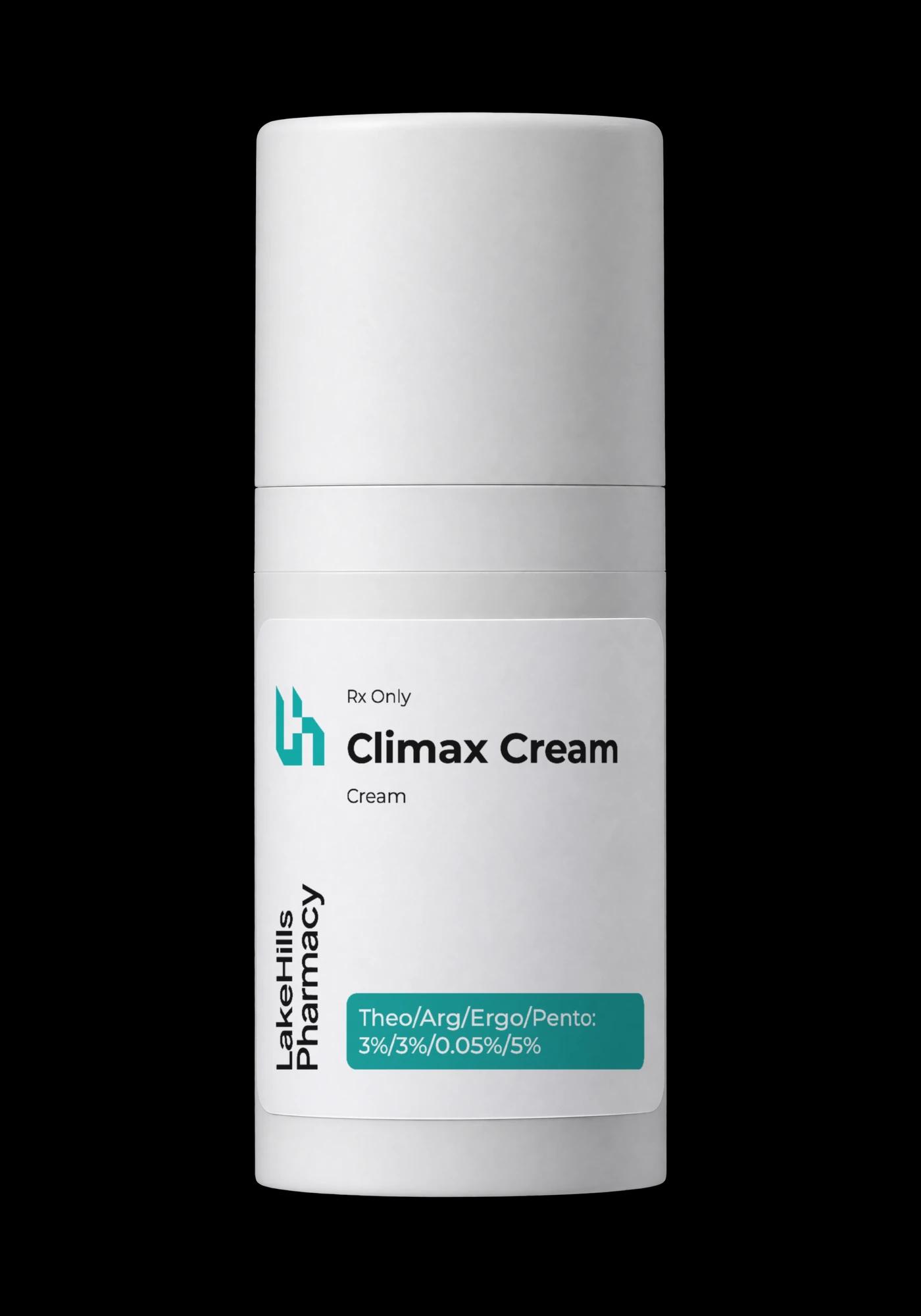
- Dosage form
- Cream
- Route
- Topical
- Care area
- Drug class
- Other, Amino acid
- DEA schedule
- Non-controlled


Compounded and dispensed by an NABP-accredited, LegitScript-certified pharmacy. Verify accreditation (opens in a new tab)
About compounded medications
All formulations are patient-specific prescriptions compounded by Lake Hills Pharmacy under FDA section 503A. Individual ingredients are FDA-approved; compounded products are not reviewed by the FDA for safety, effectiveness, or quality. For licensed healthcare providers only.
Available Dosage Strengths
Cream
3%/
3%/ 0.05%/ 5%
Clinical information
Product Overview
Climax Cream is a nonsterile topical cream containing theophylline, L-arginine, ergoloid mesylates and pentoxifylline, compounded by Lake Hills Pharmacy as a 503A pharmacy pursuant to a patient-specific prescription.
None of these actives has an FDA-labeled topical or genital use. Their labeled uses are oral or injectable: theophylline for asthma and chronic obstructive lung disease, ergoloid mesylates for idiopathic decline in mental capacity in people over 60, pentoxifylline (Trental) for intermittent claudication, and L-arginine injection (R-Gene 10) as a pituitary function test. Prescribers use this compounded combination for women with sexual arousal concerns; the actives are chosen for their vasodilating and blood-flow effects.
Active Ingredients & Strengths
- Theophylline 3% / L-arginine 3% / ergoloid mesylates 0.05% / pentoxifylline 5% topical cream.
Dosing & Administration
No FDA-labeled dose exists for this route; dosing is individualized by the prescriber.
For external use on the vulvar and clitoral area as prescribed. Do not apply to broken, irritated or infected skin, and keep away from the eyes.
Key Safety Information
- Do not use with known hypersensitivity to any ingredient, to ergot alkaloids, or to methylxanthines (caffeine, theophylline, theobromine).
- Genital mucosa absorbs drugs more readily than skin, so systemic effects cannot be ruled out. The oral labels of the actives contraindicate pentoxifylline after recent cerebral or retinal hemorrhage and ergoloid mesylates in psychosis.
- Interactions to consider: anticoagulants and antiplatelet drugs (bleeding risk with pentoxifylline); strong CYP3A4 inhibitors such as clarithromycin, ritonavir or ketoconazole (raise ergot alkaloid levels); CYP1A2 inhibitors such as ciprofloxacin or fluvoxamine (raise theophylline levels).
- Local effects: warmth, redness, tingling, itching or irritation. Stop use if irritation persists.
- Not recommended in pregnancy or breastfeeding; safety data for this use are lacking.
Storage, Stability & BUD
Storage: controlled room temperature, 20 to 25 °C (68 to 77 °F), protected from light.
Beyond-use date: per the prescription label.
USP default BUD (USP <795>): 35 days at controlled room temperature or refrigerated for a preserved aqueous preparation, 14 days refrigerated for a nonpreserved aqueous preparation, or 90 days for a nonaqueous preparation; the category follows the Lake Hills base and vehicle.
Lake Hills may assign extended dating based on its own stability data.
Patient Counseling
Use this cream exactly as your prescriber directs, on external skin only. Wash your hands after applying. Stop use and contact your prescriber if you have persistent burning, a rash, unusual bleeding or bruising, a fast or irregular heartbeat, or headache with dizziness. Tell your prescriber about all medicines you take, especially blood thinners and antibiotics. Oil-containing bases can weaken latex condoms; confirm compatibility with the pharmacy.
References
- Trental (pentoxifylline) extended-release tablets Prescribing Information.
- Ergoloid Mesylates Tablets USP Prescribing Information.
- Theophylline extended-release tablets Prescribing Information.
- R-Gene 10 (arginine hydrochloride injection) Prescribing Information.
- USP General Chapter <795> Pharmaceutical Compounding: Nonsterile Preparations.
Active ingredients
Theophylline
Overview
Theophylline is a methylxanthine bronchodilator. FDA-approved products include oral extended-release tablets and capsules (for example Theo-24), oral solution, and theophylline in 5% dextrose injection; aminophylline is its ethylenediamine salt. Systemic theophylline has a narrow therapeutic index. There is no FDA-approved topical theophylline product; compounded topical preparations, such as genital creams, use theophylline off-label, and their systemic absorption has not been characterized.
Indications & Uses
- Oral and intravenous theophylline: treatment of the symptoms and reversible airflow obstruction associated with chronic asthma and other chronic lung diseases such as emphysema and chronic bronchitis. Intravenous theophylline is also labeled as an adjunct for acute exacerbations of asthma and chronic lung disease.
- Prescribers use compounded topical preparations containing theophylline, alone or with other vasoactive agents, for local application; no FDA-labeled indication or dose exists for topical use.
Mechanism of Action
Theophylline relaxes bronchial and vascular smooth muscle. Its actions include nonselective inhibition of phosphodiesterase types III and IV, which raises intracellular cyclic AMP, and antagonism of adenosine receptors. It also increases diaphragmatic contractility, stimulates the central respiratory drive, and has mild diuretic and cardiac stimulant effects.
Pharmacokinetics
Oral theophylline is completely absorbed from immediate-release forms; extended-release forms vary in rate of absorption. Volume of distribution is about 0.45 L/kg and protein binding about 40%. Theophylline crosses the placenta and enters breast milk.
Theophylline is metabolized in the liver, mainly by CYP1A2, with contributions from CYP2E1 and CYP3A4; only about 10% is excreted unchanged in adults. Clearance varies widely: mean half-life is about 8 hours in healthy nonsmoking adults, shorter in smokers, and longer in neonates, adults over 60, and patients with heart failure, liver disease, hypothyroidism, sustained fever or sepsis. Elimination becomes nonlinear at higher concentrations, so small dose changes can produce large changes in serum concentration. Labeling generally targets peak serum concentrations of 10 to 15 mcg/mL.
Contraindications
- Known hypersensitivity to theophylline or any component of the product.
Warnings & Precautions
- Narrow therapeutic index: serious toxicity, including cardiac arrhythmias and seizures, can occur above about 20 mcg/mL and may appear without preceding minor symptoms. Persistent vomiting is a sign of toxicity, and the dose should not be increased for symptoms without checking a serum concentration.
- Use with caution in active peptic ulcer disease, seizure disorders and cardiac tachyarrhythmias, all of which theophylline can worsen.
- Reduced clearance and higher risk of toxicity occur with age over 60, acute pulmonary edema, heart failure, cor pulmonale, fever of 102 F or higher for 24 hours or more, hypothyroidism, liver disease, sepsis with multi-organ failure, shock, and in neonates and infants under 1 year. Stopping smoking lowers clearance.
- Topical use: systemic exposure from compounded topical preparations has not been characterized. Absorption across mucosal or irritated skin, use of large amounts, or concurrent systemic theophylline could add to serum concentrations. Accidental ingestion of a topical preparation by a child can cause serious toxicity.
Drug Interactions
- Drugs that raise theophylline concentrations include cimetidine, ciprofloxacin, enoxacin, fluvoxamine, erythromycin, clarithromycin, high-dose allopurinol, disulfiram, estrogen-containing oral contraceptives, interferon alfa, methotrexate, mexiletine, pentoxifylline, propafenone, propranolol, ticlopidine and zileuton. Fluvoxamine and ciprofloxacin can cause large increases.
- Drugs and exposures that lower theophylline concentrations include carbamazepine, phenobarbital, phenytoin, rifampin, ritonavir, St. John's wort, and tobacco or marijuana smoking.
- Theophylline lowers lithium concentrations, antagonizes adenosine and the sedation of benzodiazepines, and may antagonize nondepolarizing neuromuscular blockers. Ketamine may lower the seizure threshold, and halothane increases arrhythmia risk. Sympathomimetics and caffeine add to central and cardiac stimulation.
Adverse Effects
- Common at therapeutic concentrations: nausea, vomiting, headache, insomnia, irritability, restlessness, tremor, diarrhea and transient diuresis, often caffeine-like and more frequent when therapy starts.
- At elevated concentrations: persistent vomiting, sinus tachycardia, supraventricular and ventricular arrhythmias, hypokalemia, hyperglycemia and seizures.
- Topical preparations: local burning, tingling, erythema or irritation; systemic effects are possible if absorption is significant.
Pregnancy & Lactation
Theophylline crosses the placenta, and adequate controlled studies in pregnancy are lacking. Clearance can fall in the third trimester, so serum concentrations are monitored when systemic theophylline is used for asthma in pregnancy. Theophylline is excreted into breast milk and can cause irritability in nursing infants. Safety of topical genital theophylline preparations in pregnancy or breastfeeding has not been established.
Monitoring
For systemic therapy: serum theophylline concentrations at initiation, after dose changes, with new interacting drugs, changes in smoking status, or illness that affects clearance, and when toxicity is suspected; heart rate and rhythm; symptoms such as nausea, vomiting or tremor. For topical preparations: local skin reactions, and signs of systemic effects such as palpitations, tremor or nausea, especially in patients who also take oral theophylline or interacting drugs.
References
- Theo-24 (theophylline anhydrous) Extended-Release Capsules Prescribing Information.
- Theophylline in 5% Dextrose Injection Prescribing Information.
- Goodman & Gilman's The Pharmacological Basis of Therapeutics, McGraw Hill.
L-Arginine
Amino acid
Overview
L-arginine is a conditionally essential amino acid obtained from the diet and synthesized endogenously from citrulline. It is the substrate for nitric oxide synthase and a precursor of urea, ornithine, creatine, polyamines and agmatine.
The only FDA-approved arginine drug product is arginine hydrochloride injection 10% (R-Gene 10), for intravenous use. No FDA-approved oral arginine drug product exists; oral L-arginine is otherwise sold as a dietary supplement.
Indications & Uses
R-Gene 10 (arginine hydrochloride injection) is FDA-labeled as an intravenous stimulant of pituitary growth hormone release, for use as a diagnostic aid when measuring pituitary growth hormone reserve.
There is no FDA-labeled indication or dose for oral L-arginine. Prescribers use compounded oral preparations when they determine a patient-specific need; dosing is individualized by the prescriber.
Mechanism of Action
Nitric oxide synthase converts L-arginine to nitric oxide and citrulline; nitric oxide activates soluble guanylate cyclase, raising cGMP and relaxing vascular smooth muscle. Arginase converts arginine to ornithine and urea in the urea cycle. Arginine decarboxylase yields agmatine, and peptidyl-arginine deiminases convert protein arginine residues to citrulline.
Given intravenously, arginine stimulates release of growth hormone, prolactin, insulin and glucagon. This secretagogue response is the basis of the labeled diagnostic use.
Pharmacokinetics
Oral absorption occurs in the small intestine by cationic amino acid transporters. Oral bioavailability is low and variable, roughly 20% in pharmacokinetic studies, because of extensive first-pass metabolism by intestinal and hepatic arginase. Peak plasma concentrations occur about 1 hour after an oral dose.
The plasma half-life is about 1 to 2 hours. Arginine is metabolized mainly by arginase and nitric oxide synthase; it is filtered by the kidney and largely reabsorbed, with urinary loss rising at high plasma concentrations.
Contraindications
- Hypersensitivity to arginine or any component of the preparation. R-Gene 10 labeling also contraindicates use in patients with highly allergic tendencies.
- Avoid after a recent or acute myocardial infarction (see Warnings & Precautions).
Warnings & Precautions
- Post-myocardial infarction: a randomized trial of oral L-arginine added to standard care after acute myocardial infarction was stopped early because of excess deaths in the arginine group. Avoid after recent MI.
- Hyperkalemia: arginine shifts potassium out of cells; life-threatening hyperkalemia has been reported with arginine hydrochloride, particularly in renal or hepatic impairment.
- Acid–base: arginine hydrochloride carries a chloride load and can cause hyperchloremic metabolic acidosis. Pediatric overdosage of the injection has caused cerebral edema and death.
- Hypotension: additive vasodilation with nitrates, PDE5 inhibitors and antihypertensives.
- Herpes simplex: arginine supports herpesvirus replication in vitro; use caution in patients with frequent recurrences.
- Glucose: arginine stimulates insulin and glucagon release; monitor glucose in patients with diabetes.
Drug Interactions
- Nitrates and riociguat: additive hypotension; avoid unless the prescriber determines otherwise.
- PDE5 inhibitors, alpha-blockers and antihypertensives: additive blood-pressure lowering.
- Potassium-sparing diuretics, ACE inhibitors, ARBs and potassium supplements: increased risk of hyperkalemia.
- Insulin and other antidiabetic agents: possible changes in glucose; monitor.
- Anticoagulants and antiplatelets: a theoretical additive effect on platelet function; monitor in combination.
Adverse Effects
Oral: nausea, abdominal pain or cramping, bloating and diarrhea are reported, mostly dose-related. Hypotension, flushing and headache can occur. Hypersensitivity, including airway reactions, is uncommon.
Intravenous (arginine hydrochloride): flushing, nausea, vomiting, headache, numbness, local irritation and extravasation injury at the infusion site, hyperkalemia and metabolic acidosis.
Pregnancy & Lactation
Arginine is a normal dietary amino acid, but the safety of supplemental or compounded doses in pregnancy has not been established, and animal reproduction studies of R-Gene 10 have not been conducted. Use in pregnancy is at the prescriber's discretion after weighing risk and benefit.
Arginine is a normal component of human milk. The effect of supplemental maternal doses on the breastfed infant has not been studied.
Monitoring
Blood pressure and symptoms of hypotension, especially with vasodilators or antihypertensives. Serum potassium and renal function in renal or hepatic impairment or with potassium-raising drugs. Blood glucose in patients with diabetes. Gastrointestinal tolerance.
References
- R-Gene 10 (arginine hydrochloride injection) Prescribing Information, Pfizer.
- Natural Medicines Comprehensive Database, L-Arginine monograph.
- Goodman & Gilman's The Pharmacological Basis of Therapeutics, McGraw Hill.
Ergoloid Mesylates
Overview
Ergoloid mesylates (dihydroergotoxine, co-dergocrine) is an equal-part mixture of the methanesulfonate salts of three hydrogenated ergot alkaloids: dihydroergocornine, dihydroergocristine and dihydroergocryptine (alpha and beta). It was marketed in the United States as Hydergine and as generic oral and sublingual tablets; availability of manufactured products is now limited. It is not a controlled substance. Compounding pharmacies use ergoloid mesylates bulk drug substance in topical preparations.
Indications & Uses
FDA-labeled indication (oral and sublingual tablets): relief of signs and symptoms of an idiopathic decline in mental capacity in some individuals over 60 years of age, after reversible or treatable causes have been excluded. The labeled oral dose is 1 mg three times daily, as prescribed.
There is no FDA-labeled topical use. Prescribers use compounded topical ergoloid mesylates in combination preparations applied to the genital area for sexual arousal concerns; no FDA-labeled dose exists for this route.
Mechanism of Action
The mechanism is not fully established. Ergoloid alkaloids have mixed effects at adrenergic (alpha-blocking), dopaminergic and serotonergic receptors. Originally described as a peripheral and cerebral vasodilator, ergoloid is now thought to act mainly on neuronal metabolism and neurotransmission. Hydrogenation reduces the vasoconstrictor activity seen with nonhydrogenated ergot alkaloids such as ergotamine.
Pharmacokinetics
After oral dosing, ergoloid mesylates are absorbed rapidly, but bioavailability is low because of extensive first-pass hepatic metabolism, largely by CYP3A4. Peak plasma concentrations occur within about 1 to 3 hours and the elimination half-life is a few hours. Elimination is mainly biliary, in feces. Systemic absorption after topical or mucosal application has not been characterized.
Contraindications
- Hypersensitivity to ergoloid mesylates or other ergot alkaloids.
- Acute or chronic psychosis, regardless of cause (FDA label).
Warnings & Precautions
- Exclude reversible and treatable causes of cognitive decline before oral use; the label states the drug is not for psychosis.
- Ergot derivatives as a class have been associated with fibrotic reactions (pleural, retroperitoneal, cardiac valve) and ergotism with long-term use. In 2013 the European Medicines Agency restricted dihydroergotoxine and related ergot derivatives for these risks.
- Hypotension and bradycardia can occur, particularly in patients on antihypertensives.
- Use caution in severe hepatic impairment because of first-pass hepatic metabolism.
- Topical use: genital mucosa absorbs drugs more readily than skin, so systemic effects cannot be excluded.
Drug Interactions
- Strong CYP3A4 inhibitors (for example clarithromycin, ritonavir and other HIV protease inhibitors, ketoconazole, itraconazole): raise ergot alkaloid levels. Ergotamine and dihydroergotamine carry boxed warnings for serious ischemia with these inhibitors; avoid the combination with ergoloid as well.
- Other ergot alkaloids and vasoconstrictors, including triptans: additive vascular effects.
- Antihypertensives: additive hypotension.
Adverse Effects
Oral and sublingual use: transient nausea and gastrointestinal upset, sublingual irritation, flushing, nasal congestion, blurred vision, rash, orthostatic hypotension and bradycardia. Rare with long-term ergot use: fibrosis and ergotism (cold extremities, numbness, tingling, ischemia). Topical use: local irritation, warmth and redness.
Pregnancy & Lactation
No adequate studies exist in pregnancy. Ergot alkaloids as a class have uterotonic and vasoconstrictive effects and are generally avoided in pregnancy. Ergot alkaloids can reduce prolactin and may suppress lactation; use while breastfeeding is not recommended.
Monitoring
- Blood pressure and heart rate, especially with antihypertensive therapy.
- Signs of ergotism or fibrosis with prolonged use (cold or numb extremities, chest pain, dyspnea, flank pain).
- Review interacting CYP3A4 inhibitors at each prescription.
- Topical use: local tolerability.
References
- Ergoloid Mesylates Tablets USP Prescribing Information.
- Hydergine (ergoloid mesylates) Prescribing Information.
- Martindale: The Complete Drug Reference (ergoloid mesylates / co-dergocrine).
Pentoxifylline
Overview
Pentoxifylline is a methylxanthine derivative available as 400 mg extended-release oral tablets (Trental and generics). It is not a controlled substance. Compounding pharmacies also use pentoxifylline bulk drug substance in topical preparations.
Indications & Uses
FDA-labeled indication: treatment of intermittent claudication due to chronic occlusive arterial disease of the limbs; it can improve function and symptoms but is not a substitute for surgical bypass or removal of arterial obstructions. The labeled oral dose is 400 mg three times daily with meals, reduced to twice daily if digestive or central nervous system side effects occur.
There is no FDA-labeled topical use. Prescribers use compounded topical pentoxifylline, including in combination preparations applied to the genital area for sexual arousal concerns; no FDA-labeled dose exists for this route.
Mechanism of Action
Pentoxifylline and its metabolites improve blood flow by decreasing blood viscosity and improving erythrocyte flexibility. It inhibits phosphodiesterase, raising cyclic AMP, reduces platelet aggregation and plasma fibrinogen, and inhibits production of tumor necrosis factor-alpha and other inflammatory cytokines.
Pharmacokinetics
Oral pentoxifylline is almost completely absorbed but undergoes extensive first-pass metabolism; peak concentrations occur about 2 to 4 hours after an extended-release dose. It is converted to active metabolites, including metabolite I (a hydroxy metabolite) and metabolite V. The apparent half-life is about 0.4 to 0.8 hours for the parent and 1 to 1.6 hours for metabolites. Excretion is almost entirely urinary, mainly as metabolite V. Exposure rises in renal and hepatic impairment. Systemic absorption after topical or mucosal application has not been characterized.
Contraindications
- Intolerance to pentoxifylline or other methylxanthines such as caffeine, theophylline and theobromine.
- Recent cerebral or retinal hemorrhage.
Warnings & Precautions
- Bleeding: prolonged prothrombin time and bleeding have been reported. Patients at risk of bleeding (recent surgery, peptic ulcer disease, anticoagulant or antiplatelet therapy) need periodic examination for bleeding, including hemoglobin and hematocrit.
- Cardiovascular: angina, hypotension and arrhythmias have been reported occasionally, mostly in patients with coexisting coronary or cerebrovascular disease.
- Renal or hepatic impairment: metabolites accumulate; dose reduction is advised in significant renal impairment.
- Topical use: genital mucosa absorbs drugs more readily than skin, so systemic effects cannot be excluded.
Drug Interactions
- Warfarin and other anticoagulants or antiplatelet drugs: increased bleeding risk; monitor INR more often.
- Theophylline: pentoxifylline can raise theophylline levels; monitor for theophylline toxicity.
- Cimetidine and other CYP1A2 inhibitors such as ciprofloxacin and fluvoxamine: can raise pentoxifylline levels.
- Antihypertensives: small additional blood pressure reductions; adjust as needed.
Adverse Effects
Oral use: nausea, vomiting, dyspepsia, bloating, dizziness, headache and tremor are most common. Less common: flushing, chest pain, palpitations, arrhythmia and edema. Rare: bleeding (including gastrointestinal and retinal), aseptic meningitis, hepatitis and blood dyscrasias. Topical use: local irritation, warmth and redness.
Pregnancy & Lactation
There are no adequate studies of pentoxifylline in pregnant women; use only if the potential benefit justifies the potential risk. Pentoxifylline and its metabolites pass into human milk, and the label advises deciding whether to stop breastfeeding or the drug.
Monitoring
- Signs of bleeding; hemoglobin and hematocrit in patients at bleeding risk.
- INR in patients taking warfarin.
- Theophylline levels when co-prescribed.
- Renal and hepatic function when dosing orally in impaired patients.
- Topical use: local tolerability.
References
- Trental (pentoxifylline) extended-release tablets Prescribing Information.
- Pentoxifylline Extended-Release Tablets USP Prescribing Information.
Ask a pharmacist
Are compounded medications FDA approved?
All formulations are patient-specific prescriptions compounded by Lake Hills Pharmacy under FDA section 503A. Individual ingredients are FDA-approved; compounded products are not reviewed by the FDA for safety, effectiveness, or quality. For licensed healthcare providers only.
How do I get a prescription filled here?
You can have your doctor send prescriptions to us any time. We also transfer your medications from another pharmacy. Our pharmacy accepts all major insurance plans.
Can you ship this medication to my state?
It depends on the medication and on your state. Whether we can dispense or ship a medication to you depends on the laws and board of pharmacy rules of your state and on our licensure there. We confirm availability when we receive a prescription.
These answers cover the basics. For anything about a formula, a strength or a prescription, contact our pharmacists.
Mon - Fri: 8:30am - 6:30pm CTSaturday: 9:00am - 2:00pm CTSunday: Closed
12005 Bee Cave Rd, Suite 1-A, Austin, TX 78738