
- Active ingredients
- Dosage form
- Capsule
- Route
- Oral
- Care area
- Drug class
- Thyroid hormone
- DEA schedule
- Non-controlled
- Storage
- Room temperature


Compounded and dispensed by an NABP-accredited, LegitScript-certified pharmacy. Verify accreditation (opens in a new tab)
About compounded medications
All formulations are patient-specific prescriptions compounded by Lake Hills Pharmacy under FDA section 503A. Individual ingredients are FDA-approved; compounded products are not reviewed by the FDA for safety, effectiveness, or quality. For licensed healthcare providers only.
Available Dosage Strengths
Strengths are compounded to the prescriber's order.
Clinical information
Boxed Warning · Liothyronine Sodium
Not for obesity or weight loss. Thyroid hormones, including liothyronine, alone or with other therapeutic agents, should not be used to treat obesity or for weight loss. In euthyroid patients, doses within the range of daily hormonal requirements do not produce weight reduction. Larger doses may produce serious or even life-threatening toxicity, especially when given with sympathomimetic amines such as those used for their anorectic effects.
Boxed Warning · Levothyroxine Sodium
Not for obesity or weight loss: thyroid hormones, including levothyroxine, alone or with other agents, should not be used to treat obesity or for weight loss. In euthyroid patients, doses within the range of daily hormonal requirements do not produce weight reduction. Larger doses may produce serious or even life-threatening toxicity, especially when given with sympathomimetic amines such as those used for their anorectic effects.
Product Overview
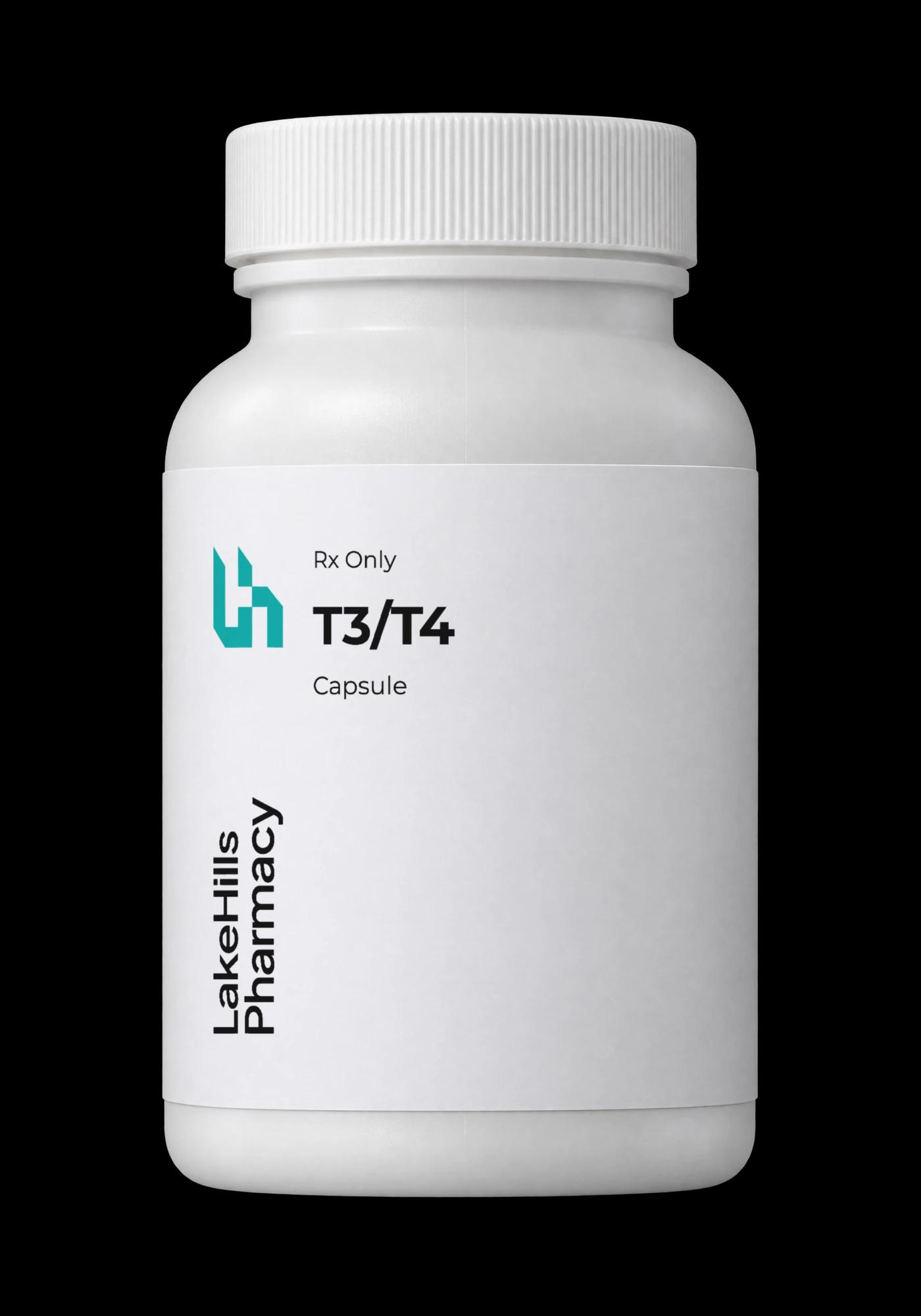
Liothyronine Sodium / Levothyroxine Sodium Capsules, a nonsterile oral capsule containing synthetic liothyronine (T3) and levothyroxine (T4). Lake Hills Pharmacy compounds this preparation as a 503A pharmacy, pursuant to a patient-specific prescription, in the T3 and T4 amounts and ratio the prescriber specifies, as immediate- or sustained-release capsules per the prescription.
Each active is FDA approved as a single-ingredient oral tablet for hypothyroidism: liothyronine as Cytomel and levothyroxine as Synthroid and other products. No combination T3/T4 capsule is FDA approved. Prescribers use compounded T3/T4 capsules for selected patients with hypothyroidism. Evidence for routine combination therapy is mixed, and guidelines keep levothyroxine monotherapy as the standard approach.
Active Ingredients & Strengths
- Liothyronine sodium (T3).
- Levothyroxine sodium (T4).
Strength is set on each prescription; contact Lake Hills Pharmacy for available strengths. Capsules are dispensed by the capsule (quantity per prescription).
Dosing & Administration
Given orally as prescribed. No FDA-labeled dose exists for a combined liothyronine/levothyroxine capsule; the T3 and T4 amounts, ratio, release type and frequency are individualized by the prescriber from clinical status and thyroid function tests. For context only, Synthroid labeling describes full adult replacement near 1.6 mcg/kg/day of levothyroxine, and Cytomel labeling describes usual adult maintenance of 25 to 75 mcg/day of liothyronine, each as monotherapy.
Levothyroxine labeling directs dosing on an empty stomach with water, 30 to 60 minutes before breakfast. Its half-life is about 7 days, so steady state takes about 6 weeks, and labeling advises rechecking thyroid function 6 to 8 weeks after any dose or product change.
Key Safety Information
- Boxed warning (thyroid hormones): not for obesity or weight loss. In euthyroid patients, doses within the range of daily hormonal requirements do not produce weight reduction, and larger doses may cause serious or life-threatening toxicity, especially with sympathomimetic amines such as those used for their anorectic effects.
- Contraindicated in uncorrected adrenal insufficiency; treat it with glucocorticoids before starting thyroid hormone. Not for untreated thyrotoxicosis or for myxedema coma, which requires intravenous therapy.
- Cardiac: over-replacement can cause tachycardia, atrial fibrillation and other arrhythmias, angina and myocardial infarction; elderly patients and those with cardiovascular disease start at lower doses.
- Over-replacement decreases bone mineral density, especially in postmenopausal women. Thyroid hormone can worsen glycemic control; antidiabetic therapy may need adjustment.
- Interactions: calcium, iron, antacids, bile acid sequestrants, sucralfate and proton pump inhibitors can reduce absorption; warfarin effect may increase; digoxin levels may fall; estrogens and enzyme inducers can raise requirements; sympathomimetics, tricyclic antidepressants and ketamine add cardiac stimulation.
- Pregnancy: requirements often rise and TSH is monitored each trimester. Levothyroxine alone is generally preferred during pregnancy unless combination or T3 therapy is directed under specialist care.
Storage, Stability & BUD
- Storage: Room temperature, in a tightly closed container protected from light and moisture.
- Beyond-use date: per the prescription label.
- USP default BUD for this dosage form: 180 days (USP <795> nonsterile solid preparation), at controlled room temperature.
- Lake Hills may assign extended dating based on its own stability data.
Patient Counseling
- Use this medication exactly as your prescriber directs, at the same time each day and in the same way relative to food.
- Do not change your dose or switch thyroid products without talking to your prescriber. This medication is not for weight loss; taking more than prescribed can cause serious heart problems.
- Keep calcium, iron and antacids at least 4 hours apart from your dose unless your prescriber says otherwise, and keep your scheduled blood tests.
- Call your prescriber for chest pain, a racing or irregular heartbeat, shortness of breath, tremor, nervousness, trouble sleeping, heat intolerance or unusual sweating.
- Tell your prescriber if you are pregnant or planning pregnancy. Tell anyone ordering lab tests if you take biotin, which can distort thyroid test results.
References
- Cytomel (liothyronine sodium tablets) Prescribing Information, Pfizer.
- Synthroid (levothyroxine sodium tablets) Prescribing Information, AbbVie.
- Jonklaas J, et al. Guidelines for the Treatment of Hypothyroidism, American Thyroid Association Task Force on Thyroid Hormone Replacement. Thyroid. 2014.
- Alexander EK, et al. 2017 Guidelines of the American Thyroid Association for the Diagnosis and Management of Thyroid Disease During Pregnancy and the Postpartum. Thyroid. 2017.
- USP General Chapter <795> Pharmaceutical Compounding: Nonsterile Preparations.
Active ingredients
Liothyronine Sodium
Thyroid hormone
Overview
Liothyronine sodium is the synthetic sodium salt of L-triiodothyronine (T3), the most active thyroid hormone. FDA-approved products are Cytomel and generic liothyronine sodium tablets for oral use, and Triostat and generic liothyronine sodium injection for intravenous use. Compounded preparations include oral capsules of liothyronine alone and combined with levothyroxine.
Indications & Uses
- Oral (Cytomel): replacement therapy for primary (thyroidal), secondary (pituitary) and tertiary (hypothalamic) congenital or acquired hypothyroidism in adults and pediatric patients.
- Oral (Cytomel): adjunct to surgery and radioiodine therapy for pituitary TSH suppression in well-differentiated thyroid cancer, and diagnostic agent in suppression tests for suspected mild hyperthyroidism or thyroid gland autonomy.
- Intravenous (Triostat): myxedema coma and precoma.
- Labeled oral dosing, as prescribed: Cytomel labeling describes usual adult maintenance doses of 25 to 75 mcg daily for hypothyroidism, given once daily, with lower starting doses in elderly patients and those with cardiovascular disease. Prescribers may divide daily doses.
- Prescribers also use liothyronine, alone or with levothyroxine, in selected patients with hypothyroidism outside these labeled regimens.
Mechanism of Action
Liothyronine enters cells through membrane transporters such as MCT8 and binds nuclear thyroid hormone receptors (TR-alpha and TR-beta), which pair with retinoid X receptors on thyroid response elements to regulate gene transcription. Effects include increased basal metabolic rate, oxygen consumption and thermogenesis, increased heart rate and contractility, and changes in protein, lipid and carbohydrate metabolism. T3 binds the receptor with roughly 10-fold higher affinity than T4; most circulating T3 normally comes from peripheral deiodination of T4.
Pharmacokinetics
Liothyronine is rapidly absorbed after an oral dose. T3 is more than 99% protein bound but less tightly than T4, giving a faster onset and offset of effect. Liothyronine has a shorter half-life (about 2.5 days, per Cytomel labeling) than levothyroxine (about 6 to 7 days); it is shorter in hyperthyroidism and longer in hypothyroidism. Elimination is mainly by hepatic deiodination, with glucuronide and sulfate conjugation; metabolites are excreted in urine and bile.
Contraindications
- Uncorrected adrenal insufficiency.
- Hypersensitivity to liothyronine or to any component of the preparation.
Warnings & Precautions
- Cardiac adverse reactions in the elderly and in patients with cardiovascular disease: start at a lower dose. Over-treatment can cause arrhythmias, angina and myocardial infarction; monitor for arrhythmias during surgery in patients with coronary artery disease.
- Myxedema coma: oral thyroid hormone is not recommended because absorption is unpredictable; use intravenous products.
- Acute adrenal crisis: treat coexisting adrenal insufficiency with glucocorticoids before starting liothyronine.
- Narrow therapeutic index: over- or under-treatment can affect growth, cardiovascular function, bone metabolism, reproduction, cognition, mood and glucose and lipid metabolism. Doses are adjusted carefully by the prescriber with laboratory monitoring.
- Worsening of diabetic control: antidiabetic or insulin doses may need adjustment.
- Decreased bone mineral density with over-replacement, particularly in postmenopausal women.
Drug Interactions
- Calcium and iron preparations, antacids, bile acid sequestrants and ion-exchange resins can reduce absorption; separate by at least 4 hours.
- Warfarin and other oral anticoagulants: thyroid hormone increases catabolism of vitamin K-dependent clotting factors; monitor INR when starting or changing doses.
- Digitalis glycosides: serum digoxin levels and effect may fall.
- Insulin and oral antidiabetic agents: requirements may rise; monitor glucose.
- Sympathomimetics, tricyclic and tetracyclic antidepressants and ketamine: increased risk of tachycardia, hypertension and arrhythmia. T3 may enhance the effects of antidepressants; monitor.
- Estrogens, androgens, glucocorticoids, amiodarone, lithium, enzyme inducers such as rifampin and carbamazepine, and tyrosine kinase inhibitors can change thyroid hormone binding, levels or requirements. Biotin can interfere with thyroid immunoassays.
Adverse Effects
Adverse reactions are mainly those of over-replacement: palpitations, tachycardia, arrhythmias, angina, increased blood pressure, tremor, nervousness, anxiety, insomnia, headache, heat intolerance, sweating, fever, diarrhea, increased appetite, weight loss, menstrual irregularity, muscle weakness and decreased bone mineral density. Hypersensitivity to inactive ingredients can occur. Under-replacement leaves symptoms of hypothyroidism.
Pregnancy & Lactation
Pregnancy: thyroid hormone requirements often increase during pregnancy, and untreated maternal hypothyroidism carries risks for the mother and fetus. TSH is monitored and the dose adjusted. Fetal neurodevelopment depends on maternal T4, which T3 does not replace, so guidelines prefer levothyroxine monotherapy in pregnancy; T3 or combination therapy is generally continued only under specialist care.
Lactation: liothyronine is present in human milk in small amounts, and replacement doses are not expected to harm a breastfed infant. Dose requirements generally return to pre-pregnancy levels after delivery, with TSH monitoring.
Monitoring
- TSH in primary hypothyroidism, and serum T3 in secondary or tertiary disease; serum T4 is low during T3-only therapy, and T3 levels vary with time since the last dose.
- Heart rate, rhythm and blood pressure, especially in older patients and those with cardiovascular disease.
- Bone mineral density in at-risk patients on long-term therapy, glucose control in diabetes, and INR in patients on warfarin.
- Signs of over- or under-replacement, and growth and development in pediatric patients.
References
- Cytomel (liothyronine sodium tablets) Prescribing Information, Pfizer.
- Triostat (liothyronine sodium injection) Prescribing Information.
- Synthroid (levothyroxine sodium tablets) Prescribing Information, AbbVie.
- Jonklaas J, et al. Guidelines for the Treatment of Hypothyroidism, American Thyroid Association Task Force on Thyroid Hormone Replacement. Thyroid. 2014.
- Alexander EK, et al. 2017 Guidelines of the American Thyroid Association for the Diagnosis and Management of Thyroid Disease During Pregnancy and the Postpartum. Thyroid. 2017.
Levothyroxine Sodium
Thyroid hormone
Overview
Levothyroxine sodium is the synthetic sodium salt of L-thyroxine (T4), identical to the hormone produced by the thyroid gland. It has a narrow therapeutic index.
FDA-approved products include oral tablets (Synthroid, Levoxyl, Unithroid, Euthyrox and generics), oral capsules (Tirosint), oral solutions, and levothyroxine sodium for injection for intravenous use.
Indications & Uses
Oral levothyroxine is FDA-labeled as replacement therapy for primary (thyroidal), secondary (pituitary) and tertiary (hypothalamic) congenital or acquired hypothyroidism, and as an adjunct to surgery and radioiodine for TSH suppression in well-differentiated thyroid cancer.
Labeling states it is not indicated for suppression of benign thyroid nodules or nontoxic diffuse goiter in iodine-sufficient patients, or for transient hypothyroidism during recovery from subacute thyroiditis. Intravenous levothyroxine is labeled for myxedema coma.
Mechanism of Action
Levothyroxine is deiodinated in peripheral tissues to triiodothyronine (T3), the principal active hormone. T3 enters the nucleus and binds thyroid hormone receptors on DNA, regulating gene transcription and protein synthesis. Effects include increased basal metabolic rate and oxygen consumption, and regulation of carbohydrate, lipid and protein metabolism, growth and development, and cardiovascular function.
Pharmacokinetics
Oral absorption is 40% to 80%, mainly in the jejunum and upper ileum, and increases with fasting; food, fiber, soy, coffee and binding agents reduce it. Levothyroxine is more than 99% bound to thyroxine-binding globulin, transthyretin and albumin.
It is metabolized mainly by sequential deiodination in liver, kidney and other tissues, with some conjugation and biliary excretion. Elimination is renal, with about 20% excreted in feces. The half-life is 6 to 7 days in euthyroid patients, longer in hypothyroidism and shorter in hyperthyroidism, so steady state takes about 4 to 6 weeks after a dose change.
Contraindications
- Uncorrected adrenal insufficiency.
Warnings & Precautions
- Cardiac adverse reactions in the elderly and in patients with underlying cardiovascular disease: start at a lower dose; overtreatment can cause arrhythmias, angina or myocardial infarction.
- Myxedema coma: oral thyroid hormone is not recommended; use intravenous therapy.
- Acute adrenal crisis in patients with concomitant adrenal insufficiency: treat with glucocorticoids before starting levothyroxine.
- Over- or undertreatment: the narrow therapeutic index requires careful dose adjustment, and products may not be interchangeable without monitoring.
- Worsening of diabetic control: antidiabetic requirements may increase.
- Decreased bone mineral density with overreplacement, particularly in postmenopausal women.
Drug Interactions
- Reduced absorption: calcium carbonate, ferrous sulfate and phosphate binders such as sevelamer and lanthanum; give levothyroxine at least 4 hours apart from these agents. Give levothyroxine at least 4 hours before bile acid sequestrants such as cholestyramine or colesevelam and ion exchange resins, or monitor TSH. Proton pump inhibitors, sucralfate, aluminum- and magnesium-containing antacids and orlistat can also reduce absorption; monitor thyroid function.
- Altered binding: estrogens and oral contraceptives raise thyroxine-binding globulin and may increase requirements; androgens and glucocorticoids may lower them.
- Increased metabolism: phenytoin, carbamazepine, phenobarbital and rifampin may increase requirements. Tyrosine kinase inhibitors such as imatinib may cause hypothyroidism.
- Warfarin: increased anticoagulant effect; monitor INR. Digoxin: levels may fall. Sympathomimetics and ketamine: increased risk of tachycardia and hypertension.
- Biotin can interfere with thyroid immunoassays.
Adverse Effects
Adverse reactions mainly reflect overtreatment and hyperthyroidism: palpitations, arrhythmias, tachycardia, angina, dyspnea, tremor, nervousness, anxiety, irritability, insomnia, headache, heat intolerance, sweating, increased appetite, weight loss, diarrhea, menstrual irregularities, muscle weakness and decreased bone mineral density. Partial hair loss may occur early in therapy in children; pseudotumor cerebri and slipped capital femoral epiphysis are reported in children. Hypersensitivity to inactive ingredients can occur.
Pregnancy & Lactation
Levothyroxine should not be discontinued in pregnancy; untreated maternal hypothyroidism carries risks for mother and fetus. Requirements often rise. Labeling recommends measuring TSH and free T4 when pregnancy is confirmed and at least each trimester, and returning to the prepregnancy dose after delivery with a TSH check 4 to 8 weeks postpartum.
Levothyroxine is present in human milk in small amounts, and no adverse effects in breastfed infants are reported. Adequate replacement supports normal lactation.
Monitoring
TSH in primary hypothyroidism, reassessed 6 to 8 weeks after any dose or product change and periodically once stable. Free T4 in secondary or tertiary hypothyroidism. TSH and free T4 each trimester in pregnancy. Clinical signs of over- or undertreatment, heart rate and rhythm in cardiac patients, glucose in diabetes, INR on warfarin, and bone health with long-term TSH suppression.
References
- Synthroid (levothyroxine sodium tablets) Prescribing Information, AbbVie.
- Tirosint (levothyroxine sodium capsules) Prescribing Information, IBSA Pharma.
- Levothyroxine Sodium for Injection Prescribing Information.
- Jonklaas J, et al. Guidelines for the Treatment of Hypothyroidism, American Thyroid Association. Thyroid. 2014.
Ask a pharmacist
Are compounded medications FDA approved?
All formulations are patient-specific prescriptions compounded by Lake Hills Pharmacy under FDA section 503A. Individual ingredients are FDA-approved; compounded products are not reviewed by the FDA for safety, effectiveness, or quality. For licensed healthcare providers only.
How do I get a prescription filled here?
You can have your doctor send prescriptions to us any time. We also transfer your medications from another pharmacy. Our pharmacy accepts all major insurance plans.
Can you ship this medication to my state?
It depends on the medication and on your state. Whether we can dispense or ship a medication to you depends on the laws and board of pharmacy rules of your state and on our licensure there. We confirm availability when we receive a prescription.
These answers cover the basics. For anything about a formula, a strength or a prescription, contact our pharmacists.
Mon - Fri: 8:30am - 6:30pm CTSaturday: 9:00am - 2:00pm CTSunday: Closed
12005 Bee Cave Rd, Suite 1-A, Austin, TX 78738