
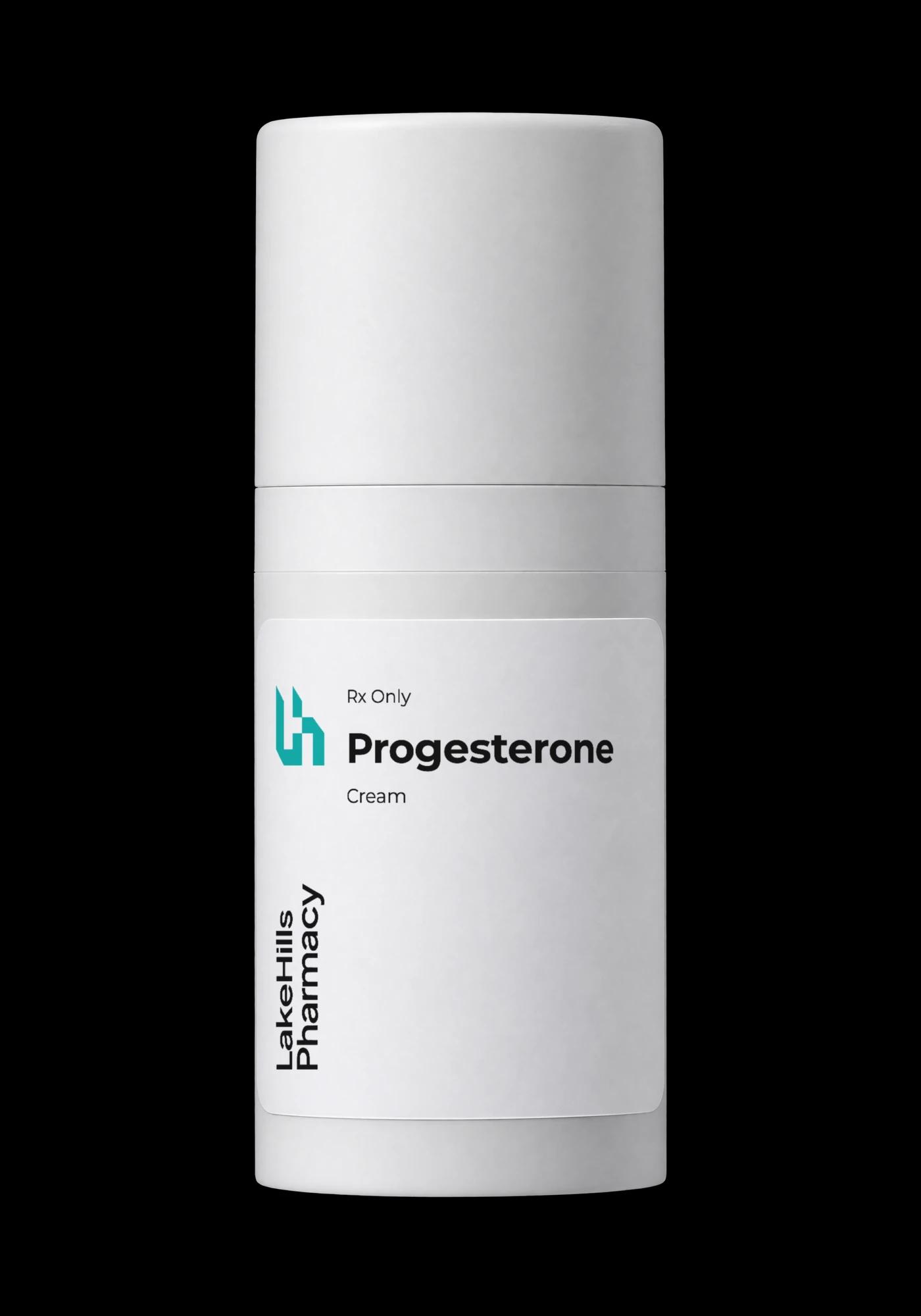
- Active ingredients
- Dosage form
- Cream
- Route
- Topical
- Care area
- Drug class
- Progestin
- DEA schedule
- Non-controlled
- Storage
- Room temperature


Compounded and dispensed by an NABP-accredited, LegitScript-certified pharmacy. Verify accreditation (opens in a new tab)
About compounded medications
All formulations are patient-specific prescriptions compounded by Lake Hills Pharmacy under FDA section 503A. Individual ingredients are FDA-approved; compounded products are not reviewed by the FDA for safety, effectiveness, or quality. For licensed healthcare providers only.
Available Dosage Strengths
Cream
50 mg/
mL Unit size: 30 g
100 mg/
mL Unit size: 30 g
200 mg/
mL Unit size: 30 g
Clinical information
Boxed Warning
None. Progesterone and other progestogen labeling carries no boxed warning under FDA's 2026 menopausal hormone therapy labeling revision. Cardiovascular and breast cancer risks with estrogen plus progestogen therapy are described under Warnings & Precautions: the WHI estrogen-plus-progestin substudy reported increased risks of myocardial infarction, stroke, invasive breast cancer, pulmonary embolism and deep vein thrombosis in postmenopausal women aged 50 to 79. Estrogen labeling warns that unopposed estrogen raises endometrial cancer risk in women with a uterus, who therefore need a progestogen regimen with established endometrial protection.
Product Overview
Progesterone Cream is a topical preparation of micronized progesterone, a hormone identical in structure to the progesterone produced by the ovary. Lake Hills Pharmacy compounds it as a 503A pharmacy, pursuant to a patient-specific prescription, for application to the skin.
No FDA-approved topical progesterone cream exists. FDA-labeled progesterone products are oral capsules (Prometrium), vaginal gel and inserts (Crinone, Endometrin) and intramuscular injection. Prescribers use compounded topical progesterone as part of individualized menopausal hormone therapy.
Active Ingredients & Strengths
- Progesterone 50 mg/mL, 30 g
- Progesterone 100 mg/mL, 30 g
- Progesterone 200 mg/mL, 30 g
Dosing & Administration
Apply topically as prescribed. No FDA-labeled dose exists for this route; dosing is individualized by the prescriber. Oral Prometrium doses do not translate to topical application, and systemic absorption from the skin is variable.
This preparation should not be relied on for endometrial protection in a woman with a uterus who is using estrogen.
Key Safety Information
- No boxed warning applies to progesterone. Cardiovascular and breast cancer risks with estrogen plus progestogen therapy are described under Warnings & Precautions: the WHI estrogen-plus-progestin substudy reported increased risks of myocardial infarction, stroke, invasive breast cancer, pulmonary embolism and deep vein thrombosis.
- Endometrial cancer: estrogen labeling warns that unopposed estrogen increases endometrial cancer risk, so women with a uterus who use estrogen need a progestogen regimen with established endometrial protection. That protection is established for the labeled oral Prometrium regimen; it has not been established for this route.
- Contraindications (progesterone labeling): undiagnosed abnormal genital bleeding; known, suspected or past breast cancer; active or past deep vein thrombosis or pulmonary embolism; active or past arterial thromboembolic disease (for example, stroke or myocardial infarction); known liver dysfunction or disease; hypersensitivity to progesterone or any excipient.
- Warnings: thromboembolic events, retinal vascular thrombosis (stop if sudden vision loss), fluid retention, worsening depression, and decreased glucose tolerance. Evaluate any abnormal vaginal bleeding promptly.
- Interactions: progesterone is metabolized mainly by CYP3A4. Inducers (rifampin, carbamazepine, phenytoin, St John's wort) may lower exposure and inhibitors (ketoconazole, itraconazole, ritonavir, grapefruit) may raise it. Sedation can be additive with alcohol and other CNS depressants.
- Common adverse effects: application-site irritation, breast tenderness, headache, bloating, mood changes, dizziness and drowsiness.
Storage, Stability & BUD
- Storage: Room temperature.
- Beyond-use date: per the prescription label.
- USP default BUD (USP <795>): 35 days at controlled room temperature or refrigerated for a preserved aqueous preparation, 14 days refrigerated for a nonpreserved aqueous preparation, or 90 days for a nonaqueous preparation; the category follows the Lake Hills base and vehicle.
- Lake Hills may assign extended dating based on its own stability data.
Patient Counseling
Use this medication exactly as your prescriber directs. Wash your hands after each application and keep the cream away from children and pets.
Report any unexpected vaginal bleeding, a new breast lump, leg pain or swelling, chest pain, shortness of breath, sudden vision changes, severe headache or marked mood changes. Tell your prescriber about all other hormones and medicines you use, and keep scheduled breast and pelvic exams.
References
- Prometrium (progesterone) capsules Prescribing Information.
- The 2022 Hormone Therapy Position Statement of The North American Menopause Society. Menopause. 2022.
- USP General Chapter <795> Pharmaceutical Compounding: Nonsterile Preparations.
Active ingredients
Progesterone
Progestin
Overview
Progesterone is the endogenous C21 steroid hormone secreted mainly by the corpus luteum and, in pregnancy, the placenta. Pharmaceutical progesterone is chemically identical to the native hormone and is distinct from synthetic progestins such as medroxyprogesterone acetate or norethindrone. FDA-approved forms include oral micronized capsules (Prometrium), vaginal gel (Crinone), vaginal inserts (Endometrin) and intramuscular injection in oil.
Indications & Uses
- Prometrium (oral): prevention of endometrial hyperplasia in nonhysterectomized postmenopausal women receiving conjugated estrogens, and treatment of secondary amenorrhea.
- Progesterone injection (intramuscular): amenorrhea and abnormal uterine bleeding due to hormonal imbalance without organic pathology.
- Crinone (vaginal): supplementation or replacement as part of assisted reproductive technology, and secondary amenorrhea. Endometrin (vaginal): support of embryo implantation and early pregnancy in assisted reproduction.
- Prescribers also use compounded progesterone preparations, including topical creams, troches and capsules, for individualized menopausal hormone therapy. Endometrial protection against estrogen is established only for labeled regimens such as oral Prometrium.
Mechanism of Action
Progesterone binds intracellular progesterone receptors PR-A and PR-B; PR-B carries an additional 164 amino acids at the N-terminus. The ligand-bound receptor binds progesterone response elements on DNA and regulates transcription of target genes. In estrogen-primed endometrium it converts proliferative to secretory tissue and opposes estrogen-driven proliferation. It also slows hypothalamic GnRH pulse frequency, raises basal body temperature and relaxes uterine smooth muscle.
Membrane progesterone receptors mediate some rapid effects. The metabolite allopregnanolone is a positive allosteric modulator of GABA-A receptors, which accounts for the sedation and dizziness seen with oral and transmucosal dosing.
Pharmacokinetics
Oral micronized progesterone is well absorbed but undergoes extensive first-pass metabolism, so bioavailability is low; food increases absorption, and peak concentrations occur in about 1.5 to 3 hours. It is 96 to 99 percent protein bound, mainly to albumin and corticosteroid-binding globulin.
Metabolism is hepatic, chiefly by CYP3A4 (with CYP2C19 contributing), to pregnanediols and pregnanolones, including allopregnanolone; glucuronide and sulfate conjugates are excreted in urine and bile. Vaginal and intramuscular routes avoid first-pass metabolism. Sublingual and buccal absorption is variable. Topical absorption through skin is variable and produces low, inconsistent serum concentrations that may not reflect tissue exposure.
Contraindications
- Undiagnosed abnormal genital bleeding.
- Known, suspected or past breast cancer.
- Active or past deep vein thrombosis or pulmonary embolism, or active or past arterial thromboembolic disease such as stroke or myocardial infarction.
- Known liver dysfunction or disease.
- Hypersensitivity to progesterone or any excipient. Prometrium capsules contain peanut oil and are contraindicated with peanut allergy.
Warnings & Precautions
- Cardiovascular and thromboembolic events: stop immediately if stroke, myocardial infarction, deep vein thrombosis or pulmonary embolism occurs or is suspected; where feasible, stop 4 to 6 weeks before surgery associated with increased thrombosis risk or prolonged immobilization.
- Breast cancer: estrogen plus progestin therapy increased invasive breast cancer in WHI, and the increase appeared after about 3 years of use; ensure breast examination and mammography.
- Visual abnormalities: discontinue pending evaluation for sudden partial or complete vision loss, proptosis, diplopia or migraine, which may signal retinal vascular thrombosis.
- Other: fluid retention (caution in cardiac or renal dysfunction), worsening depression, decreased glucose tolerance, and drowsiness or dizziness with oral and transmucosal dosing.
Drug Interactions
- Strong CYP3A4 inducers such as rifampin, carbamazepine, phenytoin, phenobarbital and St John's wort may reduce progesterone exposure.
- CYP3A4 inhibitors such as ketoconazole, itraconazole, clarithromycin, ritonavir and grapefruit juice may increase exposure and sedation.
- Alcohol, benzodiazepines, opioids and other CNS depressants may add to sedation from oral or transmucosal progesterone.
Adverse Effects
In the PEPI trial of Prometrium with conjugated estrogens, frequent adverse effects included headache, breast tenderness, joint pain, depression, dizziness, abdominal bloating, hot flashes, urinary problems, abdominal pain, vaginal discharge, nausea and mood changes. Drowsiness is common with oral and sublingual dosing. Topical products can cause local skin irritation. Breakthrough bleeding or spotting can occur and needs evaluation when unexpected.
Pregnancy & Lactation
Menopausal progesterone therapy is not intended for use in pregnancy. Vaginal progesterone products (Crinone 8%, Endometrin) are FDA-labeled for luteal-phase support in assisted reproduction; intramuscular progesterone is used there off-label. Progesterone is used in pregnancy only under specialist direction. Detectable amounts of progestins appear in breast milk; the effect on the nursing infant is not established.
Monitoring
Reassess the need for hormone therapy periodically. Evaluate persistent or recurrent abnormal vaginal bleeding, including endometrial sampling where indicated. Maintain breast examination and mammography, blood pressure checks, attention to signs of thrombosis and visual changes, mood assessment, and glucose monitoring in patients with diabetes. Serum progesterone levels after topical use may not reflect tissue exposure.
References
- Prometrium (progesterone) capsules Prescribing Information.
- Crinone (progesterone gel) Prescribing Information.
- Endometrin (progesterone) vaginal insert Prescribing Information.
- Progesterone Injection USP (in sesame oil) Prescribing Information.
- The 2022 Hormone Therapy Position Statement of The North American Menopause Society. Menopause. 2022.
Ask a pharmacist
Are compounded medications FDA approved?
All formulations are patient-specific prescriptions compounded by Lake Hills Pharmacy under FDA section 503A. Individual ingredients are FDA-approved; compounded products are not reviewed by the FDA for safety, effectiveness, or quality. For licensed healthcare providers only.
How do I get a prescription filled here?
You can have your doctor send prescriptions to us any time. We also transfer your medications from another pharmacy. Our pharmacy accepts all major insurance plans.
Can you ship this medication to my state?
It depends on the medication and on your state. Whether we can dispense or ship a medication to you depends on the laws and board of pharmacy rules of your state and on our licensure there. We confirm availability when we receive a prescription.
These answers cover the basics. For anything about a formula, a strength or a prescription, contact our pharmacists.
Mon - Fri: 8:30am - 6:30pm CTSaturday: 9:00am - 2:00pm CTSunday: Closed
12005 Bee Cave Rd, Suite 1-A, Austin, TX 78738