
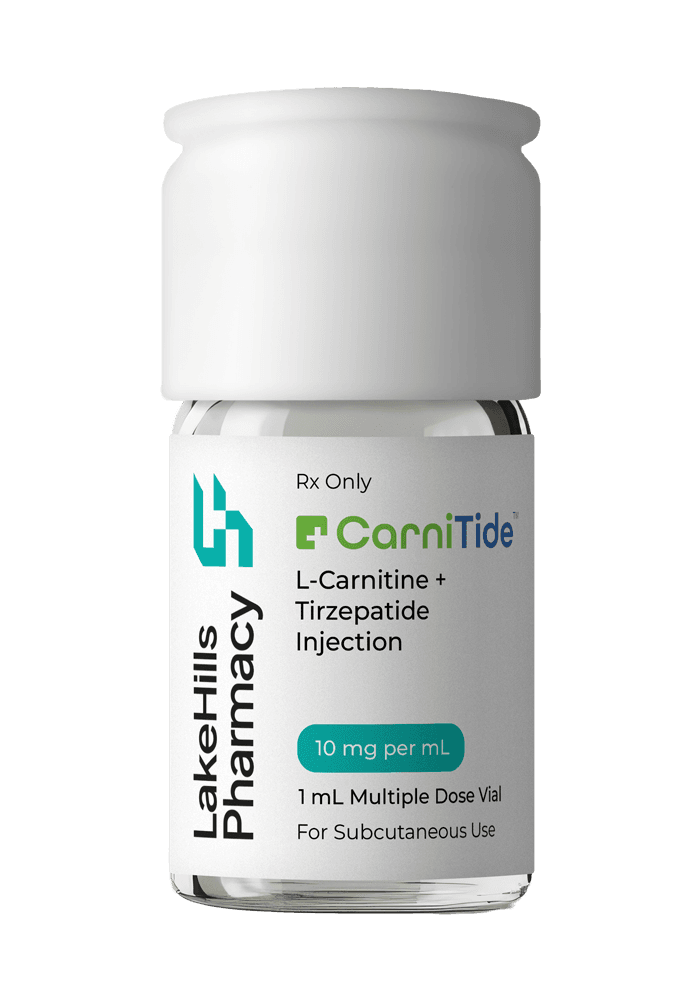
- Active ingredients
- Dosage form
- Injection
- Route
- Subcutaneous injection
- Care area
- Drug class
- GLP-1 / incretin agonist, Amino acid
- DEA schedule
- Non-controlled
- Storage
- Refrigerated
- Sterile preparation
- Yes


Compounded and dispensed by an NABP-accredited, LegitScript-certified pharmacy. Verify accreditation (opens in a new tab)
About compounded medications
All formulations are patient-specific prescriptions compounded by Lake Hills Pharmacy under FDA section 503A. Individual ingredients are FDA-approved; compounded products are not reviewed by the FDA for safety, effectiveness, or quality. For licensed healthcare providers only.
Available Dosage Strengths
Injection
10 mg/
mL Unit size: 1 mL, 2 mL, 3 mL, 4 mL
20 mg/
mL Unit size: 3 mL
Clinical information
Boxed Warning · Tirzepatide
Risk of thyroid C-cell tumors: tirzepatide causes thyroid C-cell tumors in rats. Whether it causes thyroid C-cell tumors, including medullary thyroid carcinoma (MTC), in humans is unknown. It is contraindicated in patients with a personal or family history of MTC or with multiple endocrine neoplasia syndrome type 2 (MEN 2). Counsel patients on the risk and on symptoms of thyroid tumors (neck mass, dysphagia, dyspnea, persistent hoarseness).
Product Overview
CarniTide® (tirzepatide / levocarnitine) Injection is a sterile, multi-dose solution of tirzepatide (10 mg/mL or 20 mg/mL) with levocarnitine (L-carnitine) 100 mg/mL for subcutaneous injection. Lake Hills Pharmacy compounds CarniTide® as a 503A pharmacy, pursuant to a patient-specific prescription for an individual patient.
Tirzepatide is a dual glucose-dependent insulinotropic polypeptide (GIP) and glucagon-like peptide-1 (GLP-1) receptor agonist. Levocarnitine is the L-isomer of carnitine, which carries long-chain fatty acids into mitochondria. The FDA-labeled indications of each active are described in the tirzepatide and levocarnitine drug monographs.
Active Ingredients & Strengths
- Tirzepatide 10 mg/mL with levocarnitine 100 mg/mL, multi-dose vial: 1 mL, 2 mL, 3 mL or 4 mL.
- Tirzepatide 20 mg/mL with levocarnitine 100 mg/mL, multi-dose vial: 3 mL.
The levocarnitine content is fixed by the vial ratio and cannot be dosed independently.
Dosing & Administration
Route: subcutaneous injection only, once weekly, as prescribed. The prescription states the dose in mg of tirzepatide, the vial concentration and the corresponding volume in mL.
Labeled once-weekly tirzepatide injection doses start at 2.5 mg and are escalated in 2.5 mg steps; maintenance doses differ by indication. Dose and titration as prescribed. Labeling requires no dose adjustment for renal or hepatic impairment.
Inject into the abdomen, thigh or upper arm, rotating sites. Do not use in combination with any other GLP-1 receptor agonist.
Key Safety Information
- Boxed warning (tirzepatide): risk of thyroid C-cell tumors. Tirzepatide causes thyroid C-cell tumors in rats; human relevance is unknown. Contraindicated in patients with a personal or family history of medullary thyroid carcinoma (MTC) or multiple endocrine neoplasia syndrome type 2 (MEN 2). Counsel patients on neck mass, dysphagia, dyspnea or persistent hoarseness.
- Contraindicated with serious hypersensitivity to tirzepatide, levocarnitine or any component.
- Warnings (tirzepatide): acute pancreatitis; acute gallbladder disease; hypoglycemia with insulin or a sulfonylurea; acute kidney injury from dehydration with GI losses (monitor renal function); severe gastrointestinal disease, including gastroparesis; diabetic retinopathy complications; pulmonary aspiration during general anesthesia or deep sedation. (The suicidal behavior and ideation warning was removed from Zepbound labeling in 2026; monitor mood as clinically appropriate.)
- Interactions: tirzepatide delays gastric emptying and may alter absorption of oral drugs; it reduces oral hormonal contraceptive exposure, so labeling advises a non-oral method or a barrier method for 4 weeks after starting and after each dose increase. Levocarnitine may raise INR with warfarin and may blunt the effect of thyroid hormone.
- Pregnancy: discontinue when pregnancy is recognized.
- Levocarnitine: accumulation of metabolites can occur in severe renal impairment; seizures have been reported; a fishy body odor may occur.
Storage, Stability & BUD
Storage: refrigerated, 2–8°C (36–46°F). Do not freeze. Protect from light.
Beyond-use date: per the prescription label.
USP default BUD (USP <797>, Category 2, no sterility testing): 1 day at room temperature, 4 days refrigerated or 45 days frozen when prepared from one or more nonsterile starting components; 4, 10 or 45 days when prepared only from sterile starting components. Longer USP dating applies after terminal sterilization or a passing sterility test.
Lake Hills may assign extended dating based on its own stability data.
Follow the prescription label for in-use dating after first puncture.
Patient Counseling
Use this medication exactly as your prescriber directs. Do not change the dose, how often you use it, or stop it without talking to your prescriber. Inject only under the skin, once a week, using the volume your prescriber and label specify. Check the vial concentration on the label each time.
Keep the vial in the refrigerator and do not freeze it. Use a new sterile syringe and needle for each injection and never share them.
Get medical help right away for a lump or swelling in the neck, trouble swallowing, hoarseness, severe stomach pain that does not go away (with or without vomiting), pain in the upper right abdomen or yellowing of the skin or eyes, or signs of a serious allergic reaction.
Nausea, vomiting, diarrhea and constipation are common. Drink enough fluids and tell your prescriber about persistent vomiting or diarrhea, which can cause dehydration and kidney problems.
If you use birth control pills, ask your prescriber about a non-oral or backup method. Tell your prescriber if you take insulin, a sulfonylurea, warfarin or thyroid medicine, if you have new mood changes or thoughts of self-harm, if you are pregnant or plan to become pregnant, and before any surgery or procedure with anesthesia or sedation.
References
- US Prescribing Information for tirzepatide injection, Eli Lilly and Company.
- Carnitor (levocarnitine) Prescribing Information, Leadiant Biosciences.
- USP General Chapter <797> Pharmaceutical Compounding—Sterile Preparations.
Active ingredients
Tirzepatide
GLP-1 / incretin agonist
Overview
Tirzepatide is a once-weekly, injectable dual agonist of the glucose-dependent insulinotropic polypeptide (GIP) receptor and the glucagon-like peptide-1 (GLP-1) receptor. It is a 39-amino-acid linear peptide with a C20 fatty diacid moiety that binds albumin and prolongs its half-life.
FDA-approved products are tirzepatide injection for subcutaneous use (Mounjaro and Zepbound, Eli Lilly and Company), supplied as single-dose pens and vials and as multiple-dose KwikPen pens.
Indications & Uses
Mounjaro (subcutaneous): adjunct to diet and exercise for glycemic control in adults and pediatric patients 10 years and older with type 2 diabetes; and reduction of the risk of major adverse cardiovascular events (cardiovascular death, nonfatal myocardial infarction or nonfatal stroke) in adults with type 2 diabetes at high risk for these events.
Zepbound (subcutaneous): with a reduced-calorie diet and increased physical activity, chronic weight management in adults with obesity, or with overweight and at least one weight-related comorbid condition; and moderate to severe obstructive sleep apnea in adults with obesity.
Prescribers also use compounded subcutaneous preparations of tirzepatide pursuant to patient-specific prescriptions.
Mechanism of Action
Tirzepatide binds the GIP and GLP-1 receptors, with greater affinity for the GIP receptor. It increases glucose-dependent insulin secretion, lowers glucagon secretion, improves insulin sensitivity, delays gastric emptying and reduces food intake through central appetite regulation. Insulin release is glucose-dependent, so hypoglycemia risk is low unless combined with insulin or a sulfonylurea.
Pharmacokinetics
Subcutaneous bioavailability is about 80%; peak concentrations occur 8 to 72 hours after dosing, and steady state is reached after about 4 weeks of once-weekly dosing. Exposure is similar across abdomen, thigh and upper-arm sites.
The volume of distribution is about 10 L and albumin binding is about 99%. Tirzepatide is metabolized by proteolytic cleavage of the peptide backbone, beta-oxidation of the C20 fatty diacid moiety and amide hydrolysis, and metabolites are excreted in urine and feces. The half-life is about 5 days. No dose adjustment is labeled for renal or hepatic impairment.
Contraindications
- Personal or family history of medullary thyroid carcinoma or MEN 2.
- Known serious hypersensitivity to tirzepatide or any excipient.
Warnings & Precautions
- Severe gastrointestinal adverse reactions; not recommended in severe gastrointestinal disease, including severe gastroparesis.
- Acute kidney injury from dehydration due to nausea, vomiting or diarrhea; monitor renal function in patients reporting severe GI reactions.
- Acute pancreatitis: discontinue if suspected and do not restart if confirmed. Acute gallbladder disease, including cholelithiasis and cholecystitis.
- Hypoglycemia with insulin or an insulin secretagogue; a lower dose of the concomitant agent may be needed.
- Hypersensitivity, including anaphylaxis and angioedema. Diabetic retinopathy complications in patients with type 2 diabetes.
- The suicidal behavior and ideation warning was removed from Zepbound labeling in 2026 (Mounjaro labeling did not carry it); monitor for depression or mood change as clinically appropriate.
- Pulmonary aspiration during general anesthesia or deep sedation: inform anesthesia providers of use before procedures.
Drug Interactions
- Insulin and sulfonylureas: increased risk of hypoglycemia; consider reducing the dose of the concomitant agent.
- Oral hormonal contraceptives: tirzepatide reduces their exposure. Labeling advises switching to a non-oral method, or adding a barrier method, for 4 weeks after starting and for 4 weeks after each dose increase.
- Oral medications: delayed gastric emptying may affect absorption of concomitant oral drugs; monitor drugs with a narrow therapeutic index, such as warfarin.
- Other GLP-1 receptor agonists: do not combine.
Adverse Effects
The most common adverse reactions are nausea, diarrhea, vomiting, constipation, abdominal pain, dyspepsia, eructation, flatulence and decreased appetite. Others include injection-site reactions, fatigue, hypersensitivity reactions, hair loss, gastroesophageal reflux, increased heart rate, increased lipase and amylase, and hypoglycemia in patients with diabetes. Postmarketing reports include ileus and severe constipation.
Pregnancy & Lactation
Animal studies showed fetal harm at clinically relevant exposures, and human data are insufficient. When used for weight reduction or obstructive sleep apnea, discontinue when pregnancy is recognized, since weight loss offers no benefit in pregnancy. In type 2 diabetes, use in pregnancy only if the potential benefit justifies the fetal risk. A pregnancy exposure registry is available.
No data exist on tirzepatide in human milk or on the breastfed infant; weigh the benefits of breastfeeding against the mother's need for therapy.
Monitoring
Glycemic control (HbA1c, glucose) in patients with diabetes, especially with insulin or a sulfonylurea. Renal function in patients with significant GI fluid loss. Signs of pancreatitis or gallbladder disease. Retinal status in patients with diabetic retinopathy. Mood, depression and suicidal thoughts. Symptoms of thyroid tumors. Contraceptive method in patients using oral contraceptives.
References
- Mounjaro (tirzepatide) injection Prescribing Information, Eli Lilly and Company.
- Zepbound (tirzepatide) injection Prescribing Information, Eli Lilly and Company.
Levocarnitine
Amino acid
Overview
Levocarnitine (L-carnitine) is the biologically active L-isomer of carnitine, a quaternary amine synthesized in liver and kidney from lysine and methionine and obtained from dietary meat and dairy. It is required for mitochondrial oxidation of long-chain fatty acids.
FDA-approved products include Carnitor (levocarnitine) tablets, oral solution and injection (Leadiant Biosciences) and generic equivalents.
Indications & Uses
Oral levocarnitine is FDA-labeled for primary systemic carnitine deficiency and for acute and chronic treatment of inborn errors of metabolism that cause secondary carnitine deficiency.
Intravenous levocarnitine is labeled for those uses and for prevention and treatment of carnitine deficiency in patients with end-stage renal disease on dialysis.
No FDA-labeled dose exists for subcutaneous administration. Prescribers use compounded preparations that include levocarnitine, such as combination subcutaneous injections, pursuant to patient-specific prescriptions.
Mechanism of Action
Levocarnitine combines with long-chain acyl-CoA to form acylcarnitines, which carnitine palmitoyltransferase I, carnitine–acylcarnitine translocase and carnitine palmitoyltransferase II shuttle across the inner mitochondrial membrane for beta-oxidation. It also buffers the mitochondrial acyl-CoA to free CoA ratio and removes excess or toxic acyl groups as urinary acylcarnitines, the basis for its use in organic acidemias.
Pharmacokinetics
Oral bioavailability is low, about 15% for tablets and oral solution, because of saturable absorption and gut metabolism; the remainder is degraded by colonic bacteria to trimethylamine (TMA) and gamma-butyrobetaine. After intravenous dosing, levocarnitine distributes into muscle and other tissues, is not bound to plasma proteins and has an elimination half-life of about 17 hours.
Elimination is predominantly renal, with most of an intravenous dose recovered in urine as unchanged carnitine and acylcarnitines; tubular reabsorption is saturable. Subcutaneous absorption has not been characterized in labeling.
Contraindications
- None known (Carnitor labeling lists no contraindications). Hypersensitivity reactions are described under Warnings & Precautions.
Warnings & Precautions
- Hypersensitivity: rash, urticaria, facial edema, laryngeal edema and bronchospasm have been reported; discontinue and treat if they occur.
- Seizures have been reported in patients with or without pre-existing seizure activity; patients with a seizure history may have an increase in seizure frequency or severity.
- Renal impairment: chronic high oral doses in severely reduced renal function or in dialysis patients may lead to accumulation of TMA and trimethylamine-N-oxide (TMAO). Use caution and individualize dosing.
- Thyroid: levocarnitine acts as a peripheral antagonist of thyroid hormone entry into cell nuclei and may blunt thyroid hormone effects.
Drug Interactions
- Warfarin and other coumarins: postmarketing reports of increased INR; monitor INR when starting, changing or stopping levocarnitine.
- Thyroid hormone (levothyroxine, liothyronine): possible reduced effect; monitor thyroid function.
- Valproic acid, pivalate-conjugated antibiotics, and some chemotherapeutic agents (cisplatin, ifosfamide) deplete carnitine; this is a reason for supplementation rather than a hazard.
Adverse Effects
Oral: nausea, vomiting, abdominal cramps, diarrhea, gastritis and a fishy body odor from TMA. Intravenous (dialysis patients): headache, hypertension, hypotension, nausea, vomiting, diarrhea, paresthesia, fever and other effects that also reflect the underlying disease. Injection-site irritation can occur. Hypersensitivity and seizures are uncommon.
Pregnancy & Lactation
Animal reproduction studies in rats and rabbits showed no evidence of fetal harm; adequate human studies are lacking. Carnitine is a normal endogenous and dietary nutrient, but supplemental doses in pregnancy are given only when clearly needed.
Levocarnitine is a normal component of human milk. The effect of supplemental maternal doses on the breastfed infant has not been studied; consider the infant's total carnitine intake.
Monitoring
In carnitine deficiency, plasma free and total carnitine and the acylcarnitine profile. INR in patients on warfarin. Thyroid function in patients on thyroid hormone. Renal function, and seizure frequency in patients with a seizure history. Gastrointestinal tolerance and body odor.
References
- Carnitor (levocarnitine) Tablets and Oral Solution Prescribing Information, Leadiant Biosciences.
- Carnitor (levocarnitine) Injection Prescribing Information, Leadiant Biosciences.
- Natural Medicines Comprehensive Database, L-Carnitine monograph.
More in Weight Management
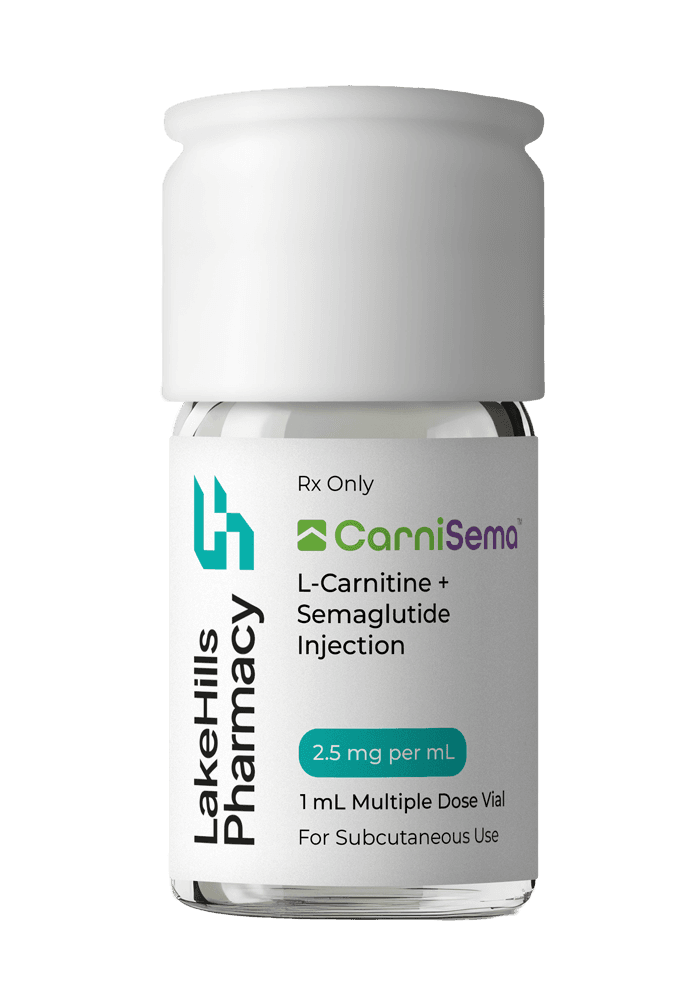
Ask a pharmacist
Are compounded medications FDA approved?
All formulations are patient-specific prescriptions compounded by Lake Hills Pharmacy under FDA section 503A. Individual ingredients are FDA-approved; compounded products are not reviewed by the FDA for safety, effectiveness, or quality. For licensed healthcare providers only.
How do I get a prescription filled here?
You can have your doctor send prescriptions to us any time. We also transfer your medications from another pharmacy. Our pharmacy accepts all major insurance plans.
Can you ship this medication to my state?
It depends on the medication and on your state. Whether we can dispense or ship a medication to you depends on the laws and board of pharmacy rules of your state and on our licensure there. We confirm availability when we receive a prescription.
These answers cover the basics. For anything about a formula, a strength or a prescription, contact our pharmacists.
Mon - Fri: 8:30am - 6:30pm CTSaturday: 9:00am - 2:00pm CTSunday: Closed
12005 Bee Cave Rd, Suite 1-A, Austin, TX 78738